Cognitive Science bridges the gap between the brain and the mind - tracing how networks of neurons shape perception, attention, memory, and imagination. This section explores the science of thinking and awareness, from the role of the default mode network in creativity to the mechanisms of focus, flow, and altered states. By bringing together neuroscience, psychology, and philosophy, we highlight the discoveries that reveal not only how the mind works, but how it can be expanded.
From food to friendship, the human brain is constantly learning what to seek and what to avoid. But new research suggests that reward - the driving force behind learning - is not just an external event or a burst of dopamine. It begins deep inside the body, where every meal, heartbeat, and breath shapes the way we learn, connect, and evolve. A trio of recent papers in Trends in Cognitive Sciences is reshaping how neuroscientists understand learning and motivation - revealing that reward signals arise from internal physiological states, extend through social dynamics, and may hold the key to more natural forms of artificial intelligence.
Your brain doesn't just tell time - it runs on it. Every thought, reaction, and mood is synchronized to a 24-hour rhythm written into your genes. In a comprehensive new review, neuroscientists Christian Cajochen and Christina Schmidt reveal how the circadian system orchestrates cognition, attention, and emotional balance through an intricate dance between the body's internal clocks and the rising and setting of the sun. Disrupting this harmony - through shift work, chronic sleep loss, or artificial light - can distort attention, weaken memory, and even heighten risks for depression, dementia, and epilepsy. Time, it seems, isn't just something we measure. It's the architecture that sustains the mind.
Every thought we have is born not in silence, but in motion. Beneath the brain's surface-level responses lies a vast field of hidden activity - waves, fluctuations, and timescales that organize consciousness itself. In a groundbreaking paper, Brain Dynamics Shape Cognition (Northoff, Wolman, Zhang, 2025), scientists reveal how these neural rhythms form the Dynamic Layer Model of the Brain (DLB) - showing that cognition is not built on static functions, but on temporal architecture. Spatiotemporal Neuroscience now offers a unified view: the brain's background dynamics continuously sculpt its foreground thoughts, making perception itself a dance between time, structure, and awareness.
For decades, we've been told the brain "slows down" with age - but new research is rewriting that story. A paper published in Ageing Research Reviews reveals how neuroplasticity, the brain's innate ability to rewire and adapt, remains active throughout life. When stimulated through the right cognitive and emotional experiences, this flexibility can enhance intelligence, sharpen focus, and even delay the effects of aging. In other words, our mental potential is not fixed; it's sculpted by what we do, think, and feel.
Your surroundings don't just hold your life - they help shape your mind. A new Innovation in Aging study introduces the idea of cognitive capital: the mental richness of a neighborhood measured by its cultural, social, and physical opportunities. Researchers found that older adults living in intellectually stimulating areas - those filled with libraries, museums, and spaces for movement - maintained higher cognitive performance and experienced slower decline. Where there is curiosity, connection, and conversation, the mind stays alive.
What if emotional balance isn't lost with age - but rewritten? A new Brain Communications study shows that heart rate variability, once a sign of resilience in youth, may reflect compensation and deeper effort in older adults. As the heart and brain adapt to time, emotion itself changes language - moving from reflex to awareness, from reaction to resonance.
Virtual reality is no longer a novelty - it's a perceptual experiment reshaping how we experience being itself. Unlike paintings or films, VR doesn't ask us to look at a world, but to stand inside one. It blurs the boundary between image and environment, forcing the brain to negotiate between belief and awareness. What we see becomes an act of participation, not observation - a modern echo of philosophy's oldest question: when perception feels real, does it matter if it isn't?
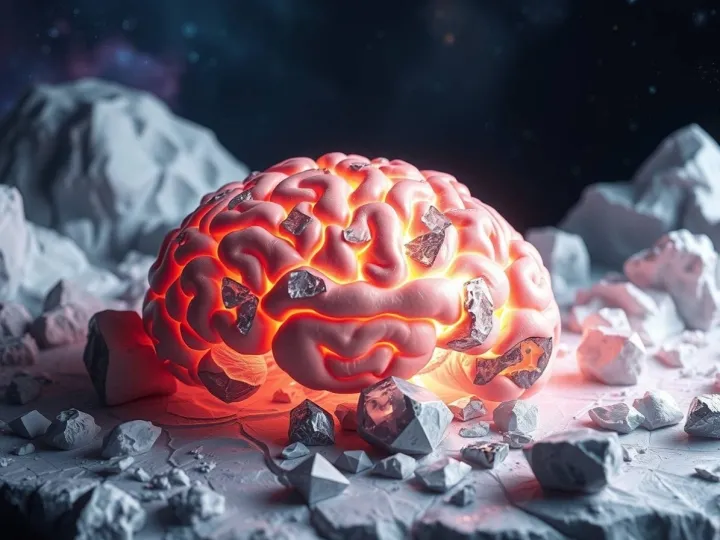
In rare individuals, the brain builds its own fossils. Calcium crystals bloom across the basal ganglia and cortex, leaving a quiet constellation of stone within thought itself. Once called "Fahr's disease," primary brain calcification is more than a neurological curiosity - it is the story of the brain's internal geology, a slow translation of energy into matter. A new study from the German Fahr-NET register, published in Brain Communications, has uncovered the biological fingerprints of this transformation, showing that beneath every calcified region lies the signature of glial activation, neuronal wear, and a cellular decision to harden what cannot heal.
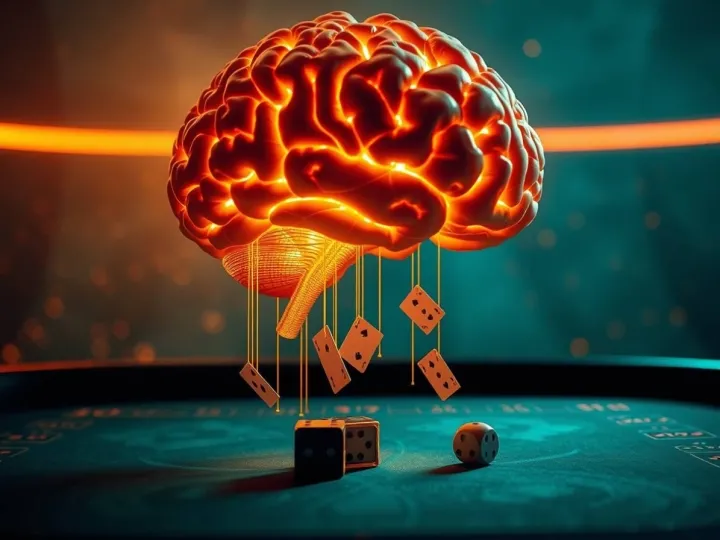
Every gamble begins in the same place - a pulse of anticipation that briefly suspends logic. Researchers in Japan have now traced that moment to a specific cluster of neurons: the orexin system, deep in the hypothalamus. When these neurons activate, the brain shifts its strategy - leaning toward risk, hunger, and reward. In new experiments published in PNAS Nexus, scientists found that stimulating orexin neurons in rats made them choose riskier options, while blocking orexin made them cautious. This discovery doesn't just explain gambling - it illuminates the biology of desire itself.