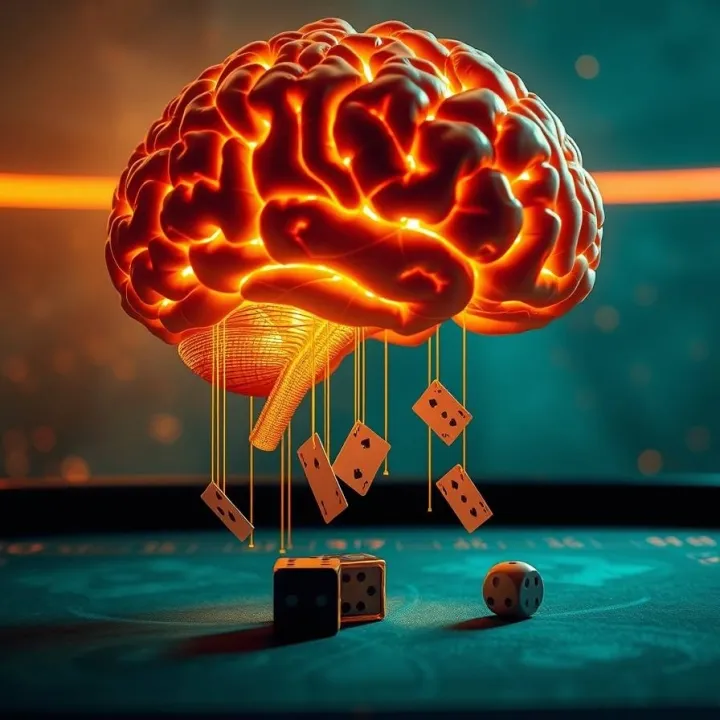
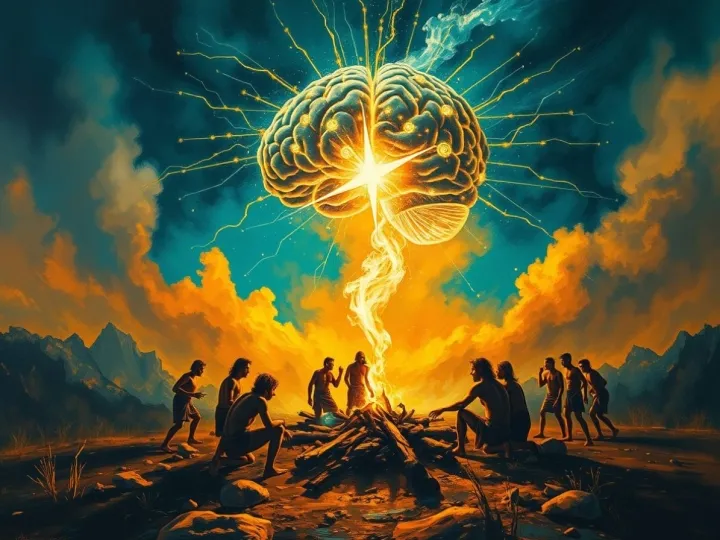
Strong hard light, electric vivid colors, direct harsh shadows illuminating a surreal, photo-realistic brain of golden light above a casino table with suspended cards and dice

Why Our Brains Crave Risk When Reward Feels Near

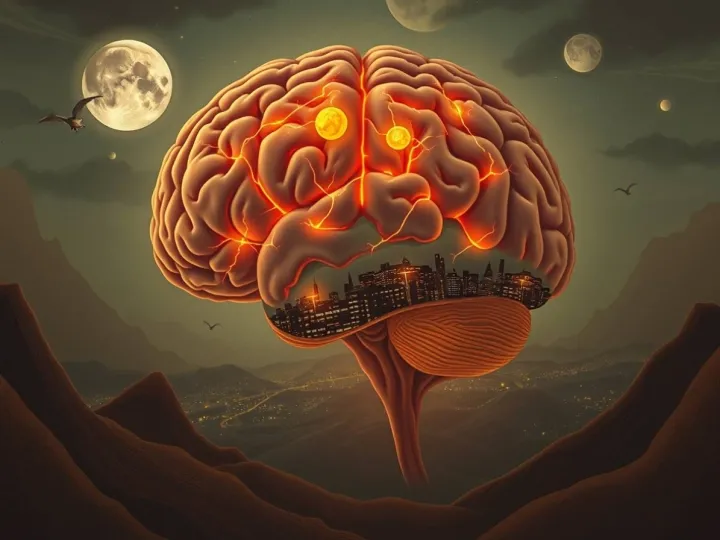
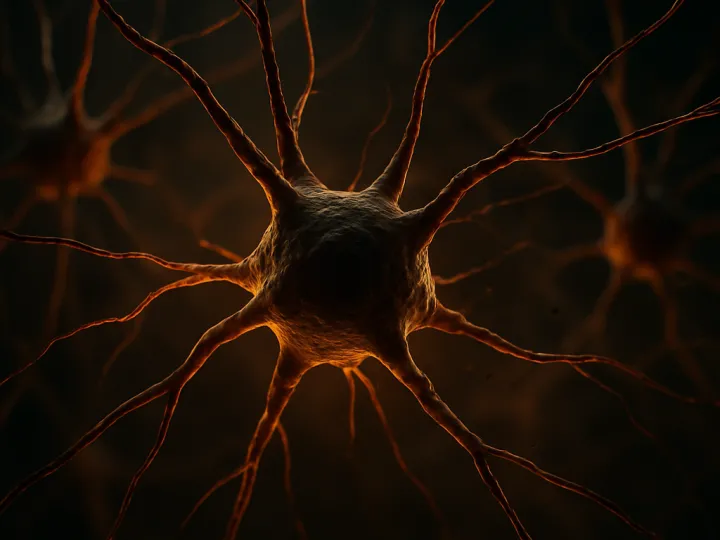
Every gamble begins in the same place - a pulse of anticipation that briefly suspends logic. Researchers in Japan have now traced that moment to a specific cluster of neurons: the orexin system, deep in the hypothalamus. When these neurons activate, the brain shifts its strategy - leaning toward risk, hunger, and reward. In new experiments published in PNAS Nexus, scientists found that stimulating orexin neurons in rats made them choose riskier options, while blocking orexin made them cautious. This discovery doesn't just explain gambling - it illuminates the biology of desire itself.

October 8, 2025 in Cognitive Science


When faced with a decision - the safe path or the bold one - our choice is rarely logical. It's biochemical. The study led by Hiroyuki Mizoguchi and colleagues offers one of the clearest demonstrations yet that the brain's orexin neurons act as internal negotiators between survival and ambition.

Orexin (also known as hypocretin) is already famous for regulating wakefulness and appetite. Without it, people suffer narcolepsy - a sudden collapse of alertness. But these same neurons also tune our motivation - and, as this study shows, they can tilt the balance between patience and risk.

Using a gambling test with rats, researchers found that chemogenetic activation of orexin neurons made the animals choose risky options more often, even when outcomes were uncertain. The effect wasn't random - it was selective. The rats didn't simply lose caution; they learned differently. The reward-prediction circuits in their brains changed: they weighted positive prediction errors (when outcomes were better than expected) more heavily than negative ones. In simple terms - the promise of reward overshadowed the memory of loss.

When the researchers gave the animals suvorexant, a drug that blocks orexin receptors and is already used as a sleep aid in humans, the risk-taking vanished. The rats switched to conservative, careful behavior. Suvorexant made them slower, more deliberate, less motivated by reward.

The team used computational modeling to show that orexin activation actually recalibrates learning itself. It amplifies the emotional weight of success while dampening the signal of failure. The result is a mind optimized for pursuit - but blind to caution.


The Chemistry of Boldness

Humans are wired much the same way. Orexin neurons sit at the crossroads of hunger, alertness, and reward, integrating physical energy with mental drive. They fire when we anticipate something meaningful - a meal, a win, a goal - and they fall silent when satisfaction fades.

This system is evolution's way of balancing safety and exploration. A hungry animal must take risks to find food; a satiated one can afford restraint. Orexin ensures that the thrill of possibility feels stronger when the stakes are high.

But in modern life, where "reward" is no longer survival but stimulation - money, attention, dopamine - the same circuitry can misfire. The orexin system fuels late-night trading, endless scrolling, and our cultural addiction to "just one more try." It is the biology behind overwork and overreach - not because we fail to calculate risk, but because risk itself feels rewarding.


Sleep, Drive, and the Edge of Control

That the drug suvorexant both blocks orexin and induces sleep is no coincidence. When the drive for reward is chemically silenced, the body collapses into rest. Wakefulness and desire are part of the same circuit. The same neurons that push us to chase outcomes also keep us awake long enough to chase them.

This explains why fatigue dulls ambition - and why overstimulation breeds insomnia. Orexin is the body's motivational throttle. Too little, and the world loses color. Too much, and we run ourselves into burnout.

In this sense, the new research is not only about gambling rats, but about the economy of human energy - how we distribute risk across our days, how our physiology negotiates between "enough" and "more."


When the Reward Is the Risk

What's most striking is that orexin doesn't simply reward success - it rewards anticipation. The act of striving becomes pleasurable long before any goal is achieved. This is the same reason that uncertainty - a 50/50 chance, a spin of the wheel - can be addictive. It keeps orexin neurons firing, stretching desire into an endless curve of expectation.

Our rational minds may know the odds, but our orexin-driven instincts whisper otherwise: "Maybe this time."

The brain's ancient chemistry is not evil - it's poetic. It was built for hunger and hope, not slot machines and social feeds. But in understanding orexin, we glimpse something humbling: the line between purpose and obsession is written not in morality, but in molecules.

The challenge of the modern mind is not to silence the orexin system, but to master it - to channel our craving for risk into meaningful creation rather than compulsive pursuit.

Because the same neurons that make us gamble are the ones that make us dream.

References

Hiroyuki Mizoguchi, Kentaro Katahira, Ayumu Inutsuka, Ryosuke Kaneko, at al. (2025). Activation of orexin neurons changes reward-based decision-making strategies. [PNAS Nexus] https://doi.org/10.1093/pnasnexus/pgaf32...

Leave a Comment


How the Brain Learns: The Hidden Architecture of Reward and Connection
Oct 18, 2025 Cognitive Science

How the Brain Learns: The Hidden Architecture of Reward and Connection

From food to friendship, the human brain is constantly learning what to seek and what to avoid. But new research suggests that reward - the driving force behind learning - is not just an external event or a burst of dopamine. It begins deep inside the body, where every meal, heartbeat, and breath shapes the way we learn, connect, and evolve. A trio of recent papers in Trends in Cognitive Sciences is reshaping how neuroscientists understand learning and motivation - revealing that reward signals arise from internal physiological states, extend through social dynamics, and may hold the key to more natural forms of artificial intelligence.

Why Parkinsons Drugs Can Trigger Compulsive Behavior: A New Striatal Circuit Model

Why Parkinson's Drugs Can Trigger Compulsive Behavior: A New Striatal Circuit Model

A new study from UCSF pinpoints the brain circuitry behind a troubling side effect of Parkinson's treatment. Dopamine agonist drugs, prescribed to ease motor symptoms, can in some patients trigger compulsive gambling, shopping, or risky behaviors. The research shows that the culprit lies in how these drugs rewire firing patterns in the striatum, driving impulsive decision-making.

Sleep Restriction Increases Reward Sensitivity and Disrupts Goal-Directed Learning
Nov 6, 2025 Sleep & Dreaming

Sleep Restriction Increases Reward Sensitivity and Disrupts Goal-Directed Learning

A new open-access study in Sleep reveals that chronic sleep restriction - just five hours per night for a week - makes the human brain more reactive to rewards and less stable in decision making. Researchers from Monash University and the University of Sydney found that after limited sleep, participants updated their choices faster in response to rewards but lost consistency in strategy, suggesting heightened impulsivity. The results show how even mild, sustained sleep loss shifts our cognitive balance between exploration, control, and reward-seeking behavior.

GLP-1 and the Biology of Desire: A New Frontier in Treating Addiction
Oct 10, 2025 Neuroscience & Health

GLP-1 and the Biology of Desire: A New Frontier in Treating Addiction

What if addiction isn't just psychological, but metabolic - a feedback loop between hunger, energy, and awareness? New research in the Journal of the Endocrine Society shows that GLP-1, the same hormone behind the global weight-loss revolution, may also reshape how the brain processes craving and reward. As scientists uncover the hormone's role in modulating dopamine and stress pathways, a new picture of addiction is emerging: one where biology, behavior, and consciousness share the same circuitry.

Beyond Uniformity: How Individual Sensitivities Shape the Brains Conflict Signals
Oct 31, 2025 Cognitive Science

Beyond Uniformity: How Individual Sensitivities Shape the Brain's Conflict Signals

Everyday choices often pit temptation against caution. Should we take the risk or stay safe? A new study from Osnabrück University shows that this internal tug-of-war looks very different for each of us. Using EEG to measure mid-frontal theta waves - neural rhythms linked to cognitive control - researchers found no single "universal" pattern of decision conflict. Instead, the brain's response depends on how strongly each person values reward or fears punishment, revealing the deeply individual nature of self-control and motivation.