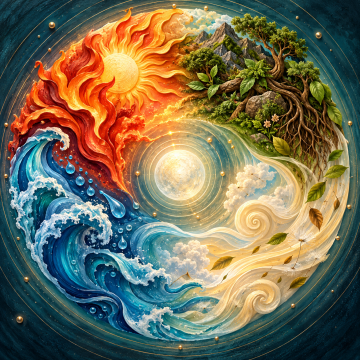
The elements do not exist in isolation. They generate, transform, and resolve one another through natural cycles. Perception, desire, action, and integration all unfold through these elemental states, allowing awareness to move from initiation to completion and back again. Understanding the elements as a system reveals why imbalance creates instability - and why coherence restores flow.
The Field of Continuity (What Allows the Elements to Act)
Before any element can express itself, there must be a field in which expression is possible. In Seven Reflections, this field is not treated as a fifth element, but as the condition that allows all elements to arise, interact, and dissolve. It provides space, coherence, and continuity - without imposing form of its own.
The field does not initiate, stabilize, connect, or integrate. Those functions belong to Fire, Earth, Air, and Water. Instead, the field allows these states to appear in sequence and remain related to one another. It is what makes transition possible. Without it, experience would fragment into isolated events with no memory, resonance, or progression.
This field also governs transmission. Sound, vibration, and resonance belong here - not as physical phenomena, but as systemic ones. Information moves through the field before it takes form within any element. Meaning, rhythm, and continuity are carried across cycles by this underlying coherence rather than by any single mode of expression.
Perception depends on the field as much as on the elements themselves. While the elements shape how experience is encountered, the field allows experience to be known at all. It is the silent continuity through which sensing, learning, and integration occur over time.
In practical astrology, the field ensures that elemental activity does not collapse into chaos or freeze into rigidity. It allows completion to return naturally to initiation, and resolution to become the ground for the next cycle. The elements act; the field connects. Together, they form a living system rather than a static classification.
Elements as Modes of Experience
In Seven Reflections, the elements are not treated as substances or personality labels. They describe how experience behaves at any given moment. Each element represents a distinct mode through which energy, awareness, and interaction take form within the field of continuity.
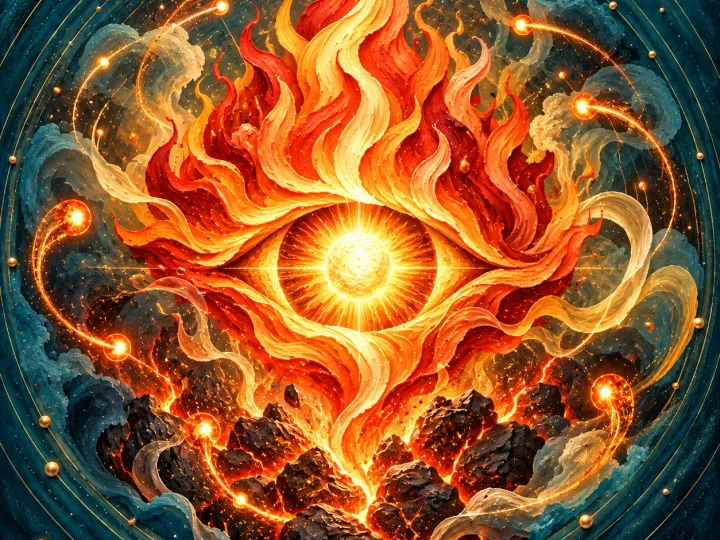
Fire expresses experience through initiation and illumination. It brings visibility, direction, and the impulse to begin. Fire introduces differentiation - the moment something stands out, becomes defined, or demands action.
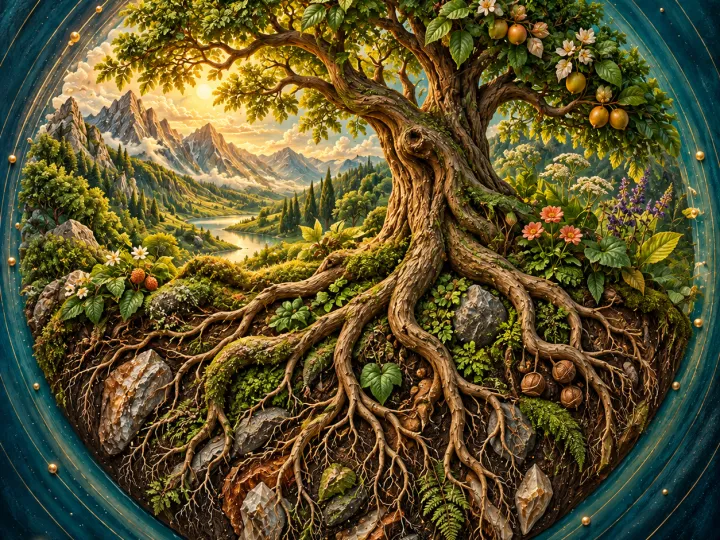
Earth gives experience form and stability. It consolidates what has been initiated, making it tangible, reliable, and durable. Earth governs structure, continuity, and the ability to hold energy in usable form over time.
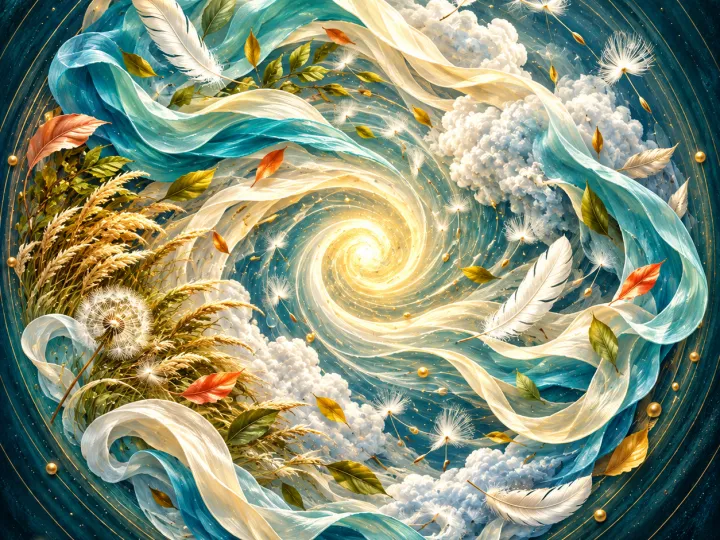
Air moves experience through connection and exchange. It distributes, links, and relates what has been formed. Air enables communication, interaction, and the adjustment of perspective, allowing experience to circulate rather than remain fixed.
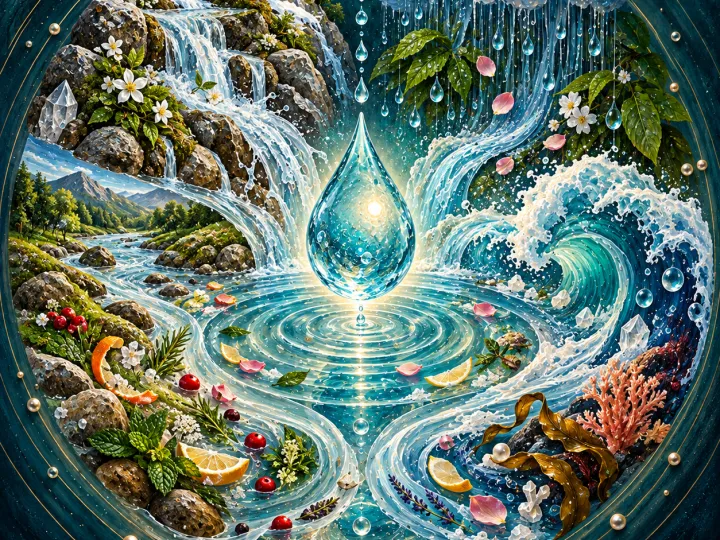
Water completes experience through integration and dissolution. It blends, absorbs, and resolves what has been distributed, restoring coherence. Water allows completion, release, and the return of energy to a unified state where the next cycle can emerge.
These modes do not operate independently. At any moment, experience may pass through several elemental states in sequence. The elements describe process, not identity - a living cycle of initiation, stabilization, connection, and integration unfolding continuously within the field.
Elements and the Senses
The elements describe how experience takes form, but experience is known through perception. In Seven Reflections, the senses function as interfaces between awareness and the elemental modes of experience. They do not create desire or meaning; they allow interaction with what is already unfolding within the field.
Each element aligns naturally with a primary sense, reflecting how that mode of experience is most directly perceived:
- Fire corresponds to sight. Fire reveals. Through illumination and contrast, sight initiates awareness by making distinction visible.
- Earth corresponds to smell. Earth anchors. Smell registers presence, substance, and material reality at the most physical level.
- Air corresponds to touch. Air connects. Touch perceives interaction, movement, pressure, and relational contact.
- Water corresponds to taste. Water integrates. Taste requires dissolution, blending, and absorption, mirroring how experience is unified.
The fifth sense - sound - does not belong to any single element. Sound belongs to the field itself. It operates through resonance and transmission, carrying information across elemental states without requiring form. Sound enables continuity, memory, rhythm, and coherence across cycles.
Desire arises when perception is partial or unresolved. The senses do not generate desire; they provide the means through which imbalance is addressed and resolved. When experience reaches completion, the system returns to equilibrium - a state often recognized as calm or clarity.
In this way, the elements shape experience, the senses engage it, and the field ensures continuity. Perception is not separate from the system; it is how the system knows itself in motion.
The Generative Cycle (Life-Promoting)
The elements operate as a continuous, life-promoting cycle of experience, not as isolated states or substances. Each mode describes how energy behaves once form already exists, and how that behavior naturally gives rise to the next. This generative cycle explains how initiation becomes stabilized, how stability enables connection, and how connection resolves into coherence before a new initiation emerges.
Emergence explains how form appears. Experience explains how form lives.
The cycle begins with Fire, which initiates movement. Fire introduces distinction, direction, and impulse - the moment something comes into focus and demands expression. Without Fire, nothing begins.
Earth follows by stabilizing what Fire initiates. It gives structure, substance, and durability to emerging activity, allowing energy to be held, built upon, and sustained over time.
From stability, Air emerges as movement and exchange. Air distributes what has been formed, enabling communication, interaction, and adjustment. It prevents structure from becoming isolated or rigid by allowing information and influence to circulate.
Through circulation, experience moves into Water, where integration occurs. Water absorbs, blends, and resolves what has been distributed, restoring coherence and completion. Tension softens, fragmentation dissolves, and experience returns to unity.
Completion does not end the process. Integrated experience returns naturally to the field, where coherence becomes the ground for a new spark of initiation. From resolution, Fire arises again - informed by what has already occurred.
This generative cycle supports growth, learning, and continuity. When the elements flow in sequence, energy remains adaptive, experience remains meaningful, and life advances without rupture.
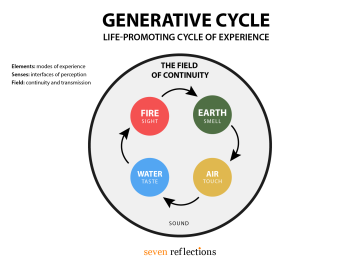
This diagram illustrates the generative, life-promoting cycle of experience in Seven Reflections. The elements are shown as modes of behavior operating within a continuous field. Each element expresses a distinct phase of experience, perceived through a corresponding sense, and gives rise to the next without stagnation.
The field provides continuity and transmission, allowing completion to return naturally to initiation. Sound belongs to the field rather than to any element, carrying resonance and coherence across the entire cycle.
Balance, Excess, and Deficiency
Within a living system, the elements function best when they move in sequence and proportion. Balance does not mean equal presence, but appropriate expression within the generative cycle. When each mode of experience can arise, complete its function, and give way to the next, energy remains coherent and life-promoting.
Excess occurs when an element dominates beyond its functional role. Energy becomes trapped in a single mode, disrupting flow. Initiation without stabilization leads to volatility. Structure without circulation leads to rigidity. Connection without integration leads to fragmentation. Integration without renewal leads to stagnation.
Deficiency occurs when an element is unable to express sufficiently. Gaps appear in the cycle. Without initiation, momentum fails to arise. Without structure, activity lacks durability. Without connection, experience becomes isolated. Without integration, resolution cannot occur.
At the system level, imbalance is not a moral condition or a personality flaw. It is a functional signal indicating where flow has been interrupted. Excess and deficiency describe where energy is unable to move forward or complete its cycle, not what is "wrong" with an individual.
Restoration of balance occurs naturally when the cycle is allowed to resume. Supporting the missing function or releasing the dominant one returns energy to coherence. In this way, balance is not enforced - it is recovered through continuity of process.
Element Interaction (Promotion & Constraint)
The elements do not operate independently. They influence one another through patterns of promotion and constraint, ensuring that energy neither collapses nor overwhelms the system. These interactions regulate flow, maintaining coherence across the generative cycle.
Promotion occurs when one element supports the healthy expression of the next. Initiation gains durability through stabilization. Structure gains relevance through connection. Connection gains meaning through integration. Integration restores coherence, making new initiation possible. Promotion allows energy to move forward smoothly, preventing interruption or excess accumulation.
Constraint occurs when an element limits another to prevent imbalance. Structure restrains unchecked initiation. Integration softens excessive circulation. Connection prevents rigidity. Constraint is not opposition; it is regulation. Without it, energy would either dissipate or harden into immobility.
These interactions are not fixed rules but dynamic relationships. At different moments, the same element may promote one function while constraining another. The system self-adjusts through these interactions, responding to conditions rather than enforcing static balance.
At the system level, promotion ensures continuity and growth, while constraint preserves stability and coherence. Together, they prevent extremes and allow the elements to operate as a unified process rather than competing forces.
The elements are not symbolic decorations or personality labels.
The elements describe how coherence is maintained within a living system. When the elements move in sequence, experience unfolds without fragmentation. When the cycle is interrupted, tension, instability, or stagnation appears. Understanding the elements as a system restores clarity to how energy moves, completes, and renews itself.
Cycles are essential to continuity. Initiation, stabilization, connection, and integration are not separate events, but phases of a single process. Each phase prepares the conditions for the next, allowing awareness to move forward without rupture. Completion is not an ending - it is the resolution that makes the next beginning possible.
This elemental system underlies the zodiac laws explored throughout Seven Reflections. Each sign expresses a specific function within the same cycle, translating elemental behavior into lived patterns of action, perception, and integration. The zodiac does not override the elements; it refines them.
At a deeper level, the elements describe the movement of consciousness itself. Awareness differentiates, engages, integrates, and returns to coherence before initiating again. This is the consciousness cycle - not abstract or mystical, but functional and observable through experience.
Seen this way, the elements form the structural foundation of the Seven Reflections framework. They explain how energy behaves, how perception engages reality, and how completion restores balance. Coherence is not imposed; it emerges naturally when the cycle is understood and allowed to function as a whole.
The elements describe how energy behaves as a system. The zodiac signs show how these elemental functions specialize, differentiate, and express themselves across experience. Each sign applies the same elemental logic through a specific law, timing, and mode of action.