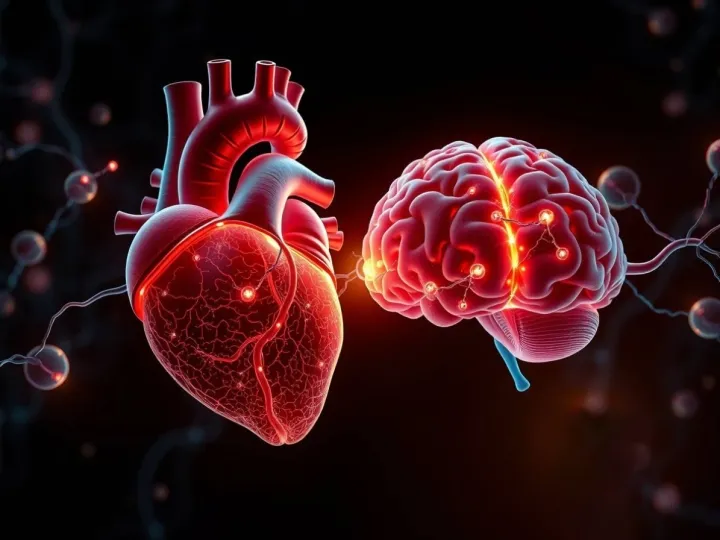
For decades, scientists have known that the heart and the brain move together - their rhythms subtly synchronized through the autonomic nervous system. When we breathe calmly or shift perspective, heart rate variability (HRV) changes. When the mind loses control, so does the heart.
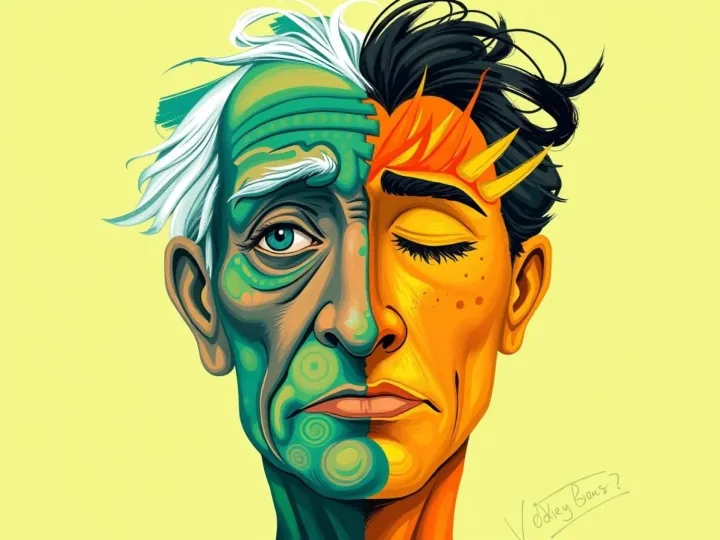
But new research from the University of Cambridge reveals that this relationship evolves dramatically with age. What once indicated resilience in youth may signal vulnerability in later life.
In a large study published in Brain Communications, Kathy Y. Liu and colleagues examined 678 healthy adults aged 18 - 88, exploring how heart rate variability (HRV) relates to emotion regulation - and how this link changes with the aging brain.
Their findings challenge some long-held assumptions about emotional health, showing that the heart's flexibility may not always equal emotional balance. In older adults, the pattern actually reverses.
The Study
The team drew on data from the Cambridge Centre for Ageing and Neuroscience (Cam-CAN), combining physiological measures of HRV with behavioral assessments of emotion regulation and advanced MRI imaging of the locus coeruleus - a tiny brainstem nucleus that releases norepinephrine and orchestrates both attention and arousal.
In younger adults, higher HRV - that subtle variation in the interval between heartbeats - correlated with better emotion regulation, confirming what many studies have shown: a flexible heart rhythm reflects a flexible mind.
Yet in older adults, the relationship flipped. Higher HRV was linked to worse performance in emotion regulation tasks. The researchers found no evidence that simple structural degeneration of the locus coeruleus explained the shift. Instead, they observed that a more "old-like" functional connectivity gradient in the locus coeruleus - essentially, a change in how this region communicates across the brain - corresponded to lower HRV and poorer reappraisal ability.
The message is subtle but profound: the same signal (HRV) means different things depending on the brain's internal organization.
From Synchrony to Complexity
In youth, the heart and brain dance in near-perfect synchrony. A sudden emotional challenge - a surprise, a setback - sparks a coordinated response: arousal rises, prefrontal control engages, and the system quickly returns to balance. HRV reflects this elasticity.
With age, however, that coordination becomes more complex. Neural communication slows, white-matter pathways degrade, and the autonomic system - the bridge between body and emotion - begins to decouple.
Instead of reflecting balance, high HRV in older adults may indicate compensatory over-activation - the system working harder to maintain regulation that once came easily. The researchers call for further study into the compensatory mechanisms that may underlie these shifts.
From a cognitive-field perspective, this suggests that emotional regulation is not lost with age - it becomes distributed, layered, and energetically expensive. Older adults may rely on broader neural networks and deeper autonomic effort to achieve the same outcome.
The Heart as an Emotional Interface
Heart rate variability is not simply a cardiological metric; it's a biological language of emotion. It reflects how the vagus nerve, the body's parasympathetic brake, interacts with the prefrontal cortex and limbic circuits.
High HRV in youth signals readiness - the ability to shift smoothly between engagement and calm. But in aging, as the brain's norepinephrine system and cortical networks reorganize, that same flexibility may translate into instability.
This reversal has implications that extend far beyond neuroscience. It reshapes how we understand emotional intelligence through time. What begins as spontaneity in youth may evolve into selectivity in later life - a form of emotional economy, where energy is conserved and attention narrows to what truly matters.
The Locus Coeruleus: The Silent Conductor
The study also highlights the locus coeruleus (LC) as a crucial mediator between physiological arousal and cognitive control. Although structural LC integrity did not directly predict HRV or emotional performance, functional gradients along the LC axis - particularly how its upper and lower segments communicate - revealed the strongest correlations.
In essence, it's not about whether the LC is intact, but how well it tunes the orchestra of the nervous system. A younger LC conducts with precision; an older LC relies on louder cues, broader signals, and more diffuse networks to maintain tempo.
This shift mirrors the broader story of aging: not decay, but reconfiguration.
Emotional Evolution
From a Seven Reflections viewpoint, this study captures a deeper transition in the human field - from dynamic emotional reactivity to structured emotional awareness. Youth regulates emotion through speed and spontaneity; age does it through presence and wisdom.
The reversal in HRV-emotion correlation may thus represent a natural migration from instinctive adaptation to conscious discernment - the emotional equivalent of trading reflexes for resonance.
It also reinforces a central truth about consciousness and physiology: the same signal can mean opposite things in different cognitive architectures. What science calls "compensation," consciousness experiences as "integration."
A Heart that Learns
This research reframes aging not as decline, but as a shift in regulation logic. The body no longer runs on effortless synchrony but on intentional coherence. The heart becomes less a metronome of youth and more a mirror of awareness - an instrument played consciously rather than automatically.
Understanding these changes may help medicine distinguish between resilience and strain, and help individuals approach emotional health not as control, but as communication.
The older heart, it seems, doesn't weaken - it learns differently.