In the early 20th century, Carl Jung proposed that beneath personal memory lies a deeper layer of mind - the collective unconscious - structured by universal motifs he called archetypes: the Mother, the Hero, the Shadow, the Trickster. To many neuroscientists, this sounded poetic but unverifiable. Yet a century later, a convergence of psychedelic research and computational neuroscience has given these ideas a surprising new relevance.
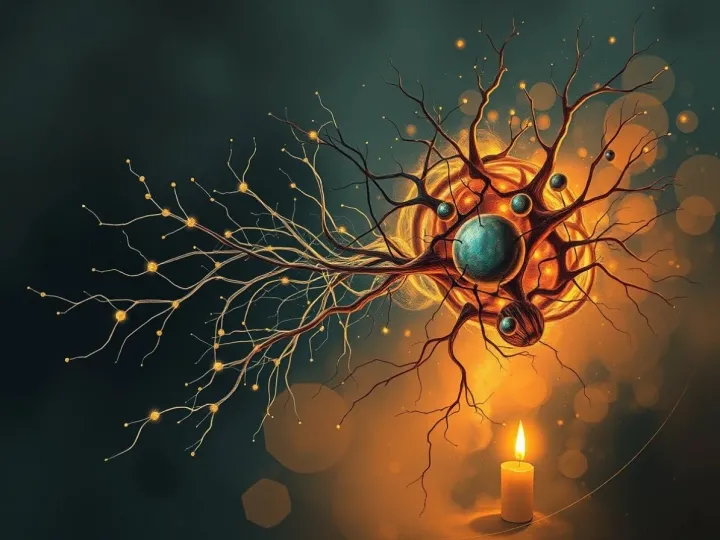
In Neuroscience of Consciousness (2025), McGovern and colleagues build a bridge between Jungian depth psychology and contemporary models of the brain. Their thesis: archetypes are emergent patterns of predictive brain dynamics, grounded in a "trilogical interplay" between three neural domains - the high-level cortex, the low-level sensory cortex, and subcortical affective systems.
The predictive brain and the archetypal core
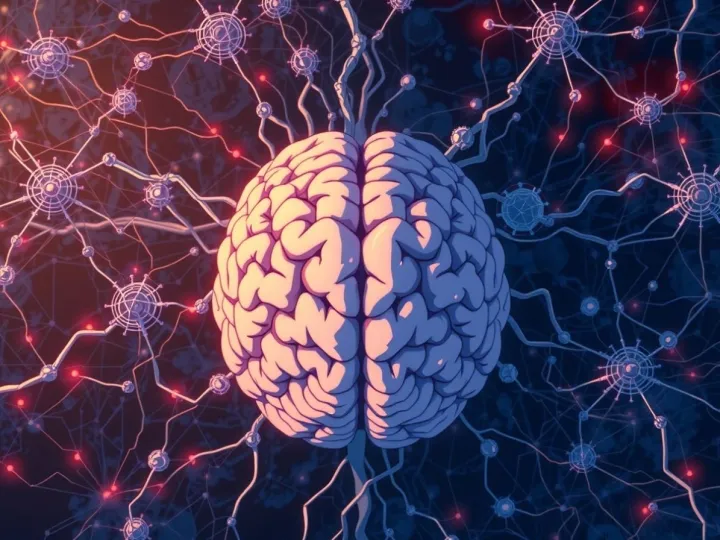
Modern neuroscience views the brain as a prediction machine, constantly generating internal models of the world and updating them to minimize surprise - a process known as the Free Energy Principle (Friston, 2010). High cortical areas make abstract predictions; sensory regions deliver raw data; the limbic and midbrain circuits provide emotional weight.
McGovern et al. propose that archetypes emerge from this hierarchy as stable, low-energy configurations - shared minima in the brain's free-energy landscape. Their "affective core," rooted in subcortical systems like the brainstem and limbic structures, projects emotional meaning upward into the cortex, where it takes form as imagery and myth. In other words, archetypes begin as feeling-patterns before they become symbols or stories.
This aligns with Jung's own intuition that archetypes are not ideas but "forms without content" - innate tendencies to shape perception and meaning. The new work translates that intuition into neuroscience: archetypes are recurrent prediction templates, born from evolution, guiding how humans interpret the unknown.
Psychedelics and the release of archetypal imagery
The study's most striking insight concerns altered states of consciousness. Psychedelic substances such as psilocybin and DMT temporarily disrupt top-down control networks in the brain - especially the default mode network - and amplify cross-talk between regions. This "flattening of the free-energy landscape," as the authors describe it, relaxes the brain's predictive filters, allowing hidden patterns to surface.
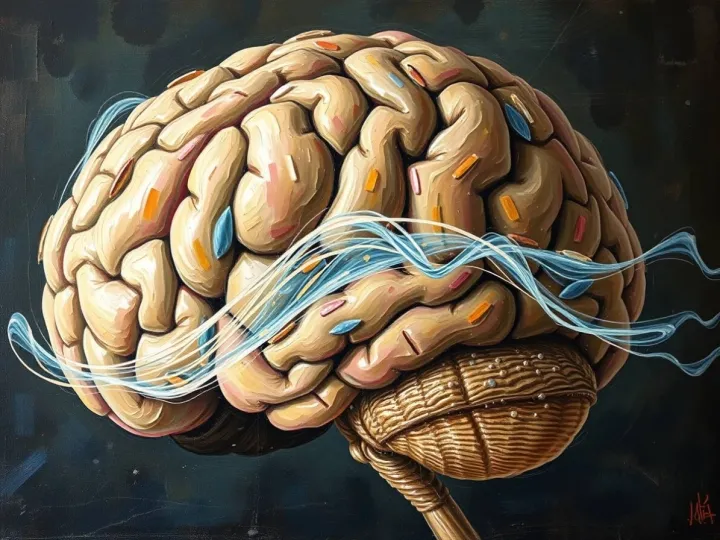
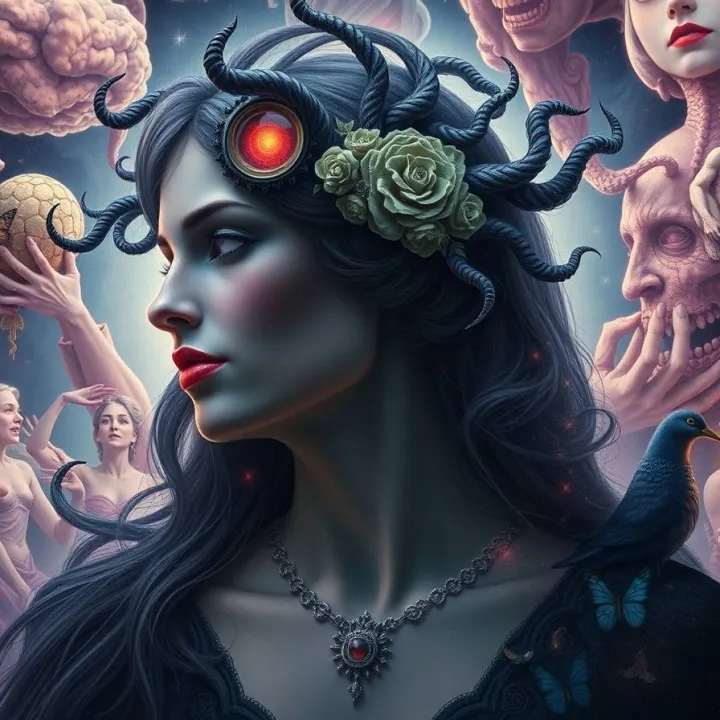
Under these conditions, the hierarchical conversation between brain regions becomes more egalitarian - bottom-up signals from the sensory and affective layers rise freely, giving form to vivid archetypal imagery: serpents, goddesses, mandalas, cosmic unity. The authors liken these patterns to connectome harmonics, standing waves of neural activity that resemble musical tones reverberating across the cortex.
Seen this way, a psychedelic vision is not random hallucination but the brain revealing its internal architecture - the harmonic language of the collective psyche.
From the personal to the collective
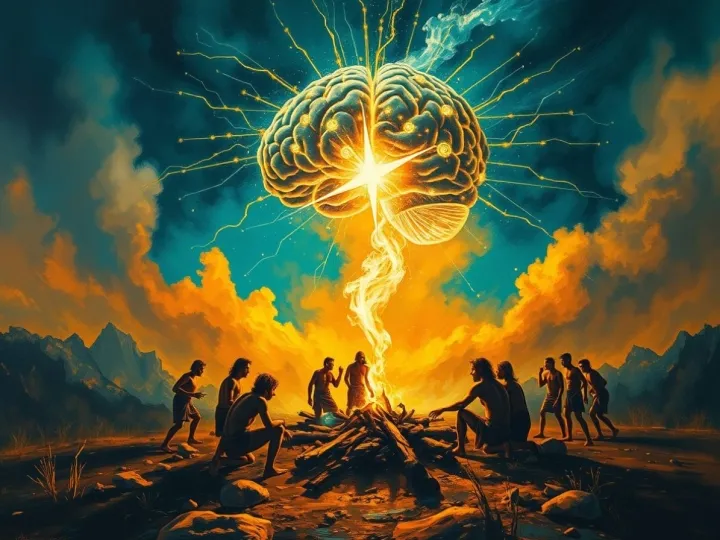
Jung's key idea was that archetypes are not private inventions but shared biological and cultural structures. The paper grounds this in developmental and social neuroscience. Humans, with our long childhood and dependence on caregivers, evolve shared neural models through imitation and storytelling. Infants synchronize brain rhythms with parents; cultural myths synchronize adults with each other.
Over generations, these shared neural attractors become collective templates - our species' memory of how to survive, love, lead, and transform. The researchers describe this as "convergence to collective minima," where recurrent social and emotional experiences sculpt common neural geometries. The Mother archetype, for instance, may originate from the infant's prediction model of nurturance and safety - later abstracted into mythic form.
The symbolic brain
In this model, the default mode network plays a special role. It is the brain's narrative generator, integrating past, present, and future into a coherent sense of self. When this system relaxes - as in dreams or psychedelic states - information flows more freely between cortical levels, producing imagery and stories rich in symbolic meaning.
What Jung called the "Self," neuroscience might describe as the highest-order attractor of the system: a unifying mode that minimizes surprise across the organism's hierarchy. Archetypes, then, are not ghosts in the psyche but statistical regularities in the brain's predictive dynamics, shaping perception in ways evolution found adaptive.
Emergent Property of Complex Systems
If validated, this synthesis could change both psychology and neuroscience. For psychoanalysis, it provides biological grounding: archetypes are measurable, not metaphysical. For neuroscience, it opens the door to studying meaning - not as poetic metaphor but as an emergent property of complex systems.
Clinically, it offers insight into psychedelic therapy. When predictive hierarchies loosen, repressed archetypal material can surface, enabling emotional reorganization - much like Jung's process of individuation. Integration work after psychedelic sessions could thus be seen as re-anchoring liberated archetypes into coherent personal narratives.
A scientific myth reborn
By proposing that archetypes correspond to neural eigenmodes - patterns of vibration across the brain's network - McGovern and colleagues have given Jung's century-old vision a new life in science. Their model suggests that the symbols of myth and dream are not separate from biology but expressions of it - the mind's way of visualizing its own physics.
In the end, the collective unconscious may not be a hidden library of myths but a living resonance between brains - a shared rhythm of prediction, emotion, and meaning that makes humanity one vast, self-organizing story.