What if your neighborhood could slow time inside your mind? A new study in Innovation in Aging proposes just that - introducing the concept of cognitive capital, a measure of how the social and cultural richness of your environment helps preserve memory and mental agility with age.
Drawing on nearly a decade of U.S. data, researchers Kenneth F. Ferraro and Bing Han found that older adults living in cognitively enriched neighborhoods - those with museums, libraries, parks, and fitness centers - maintained higher mental performance and showed later onset of cognitive decline.
The results suggest that where we live may be just as important for long-term brain health as what we eat or how much we exercise.
What Is Cognitive Capital?
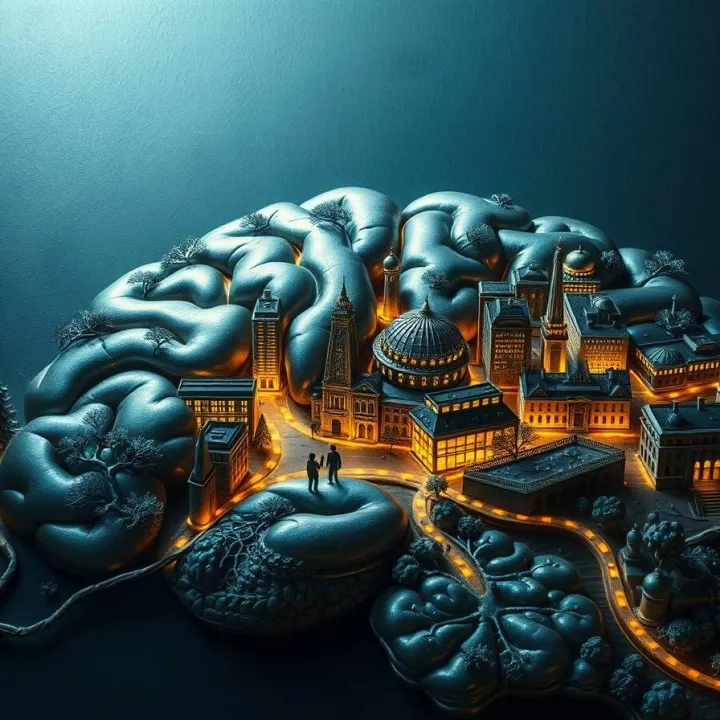
Ferraro and Han define cognitive capital as the collective mental and cultural resources available within a community. Unlike economic capital, which measures wealth, or social capital, which measures relationships, cognitive capital reflects the density of environments that invite learning, exploration, and mental engagement.
These include:
- Access to museums, theaters, and cultural centers
- Public spaces for interaction, such as libraries, parks, and cafés
- Opportunities for physical and intellectual activity, like gyms, walking trails, and educational programs
Essentially, cognitive capital measures the stimulation potential of a neighborhood - its ability to nourish curiosity, support attention, and keep the mind flexibly engaged.
The Study: Linking Neighborhood Data to Brain Health
Using data from the National Neighborhood Data Archive (NaNDA) and the Health and Retirement Study (HRS), the researchers followed Americans aged 60 to 82 between 2010 and 2018. They applied a latent variable model - a method that extracts hidden patterns across multiple indicators - to create a composite measure of neighborhood cognitive capital across eight dimensions, including proximity to cultural institutions, fitness centers, and educational facilities.
Cognitive function was assessed using a modified Telephone Interview for Cognitive Status (TICS) - a standardized tool measuring memory, reasoning, and orientation.
When they compared individuals living in high-capital versus low-capital neighborhoods, a clear pattern emerged:
Older adults surrounded by environments rich in cultural and intellectual opportunities not only started with higher cognitive scores, but also experienced slower declines over time.
Why the Environment Matters
The idea that stimulation preserves cognition is not new - but this study provides a structural, population-level framework to measure it. Rather than focusing on personal habits alone, it shows that collective context - the mental architecture of one's surroundings - actively shapes the trajectory of aging.
In neighborhoods with high cognitive capital, people are more likely to:
- Walk more, due to safe, engaging environments
- Socialize more, through cultural or community events
- Think more, as exposure to novelty challenges the brain's networks
These factors combine into a self-reinforcing cycle of mental maintenance: activity strengthens neural connections, curiosity encourages engagement, and engagement sustains awareness.
Aging, Awareness, and Place
The researchers' findings align with a growing consensus that cognitive decline is not purely biological - it's environmental, behavioral, and social. Brains thrive where there is novelty, coherence, and connection.
In the language of systems science, such neighborhoods provide feedback loops of meaning: the mind encounters variety, integrates it, and stays flexible. When these loops weaken - when the environment offers less stimulation or social contact - the mind's adaptive rhythm begins to slow.
This insight echoes deeper patterns in neuroscience and philosophy alike: consciousness is not contained; it's contextual. Our awareness is co-shaped by the fields we live in - whether that field is a family, a city block, or a park bench shared with strangers.
Designing Environments That Keep Us Awake
If cognitive capital predicts mental longevity, it becomes a powerful public-health tool. Urban planners, policymakers, and architects can begin to treat enrichment as prevention - designing spaces that sustain thinking, not just living.
Cities that integrate accessible green areas, lifelong learning centers, and community arts may be building more than infrastructure; they may be investing in collective awareness.
Ferraro and Han note that the framework of cognitive capital offers a parsimonious - yet powerful - way to study how place shapes thought and to design interventions that keep minds active into advanced age.
It also reframes the conversation around cognitive decline: the issue is not merely what happens inside the brain, but how the world around it supports or suppresses its curiosity.
The Takeaway
The study's message is quietly revolutionary:
Your environment is part of your mind.
Neighborhoods with higher cognitive capital don't just make life richer - they appear to extend the brain's youthfulness. Each museum, park, and conversation becomes an investment in mental resilience, proof that awareness flourishes not in isolation but in resonance with the world it inhabits.