For most of human history, art has relied on distance. The canvas, the page, the stage - all of them existed as surfaces to look at. We knew, even in the deepest emotion of a film or painting, that there was a frame around what we saw. It was a pact between illusion and awareness.
Virtual reality breaks that pact.
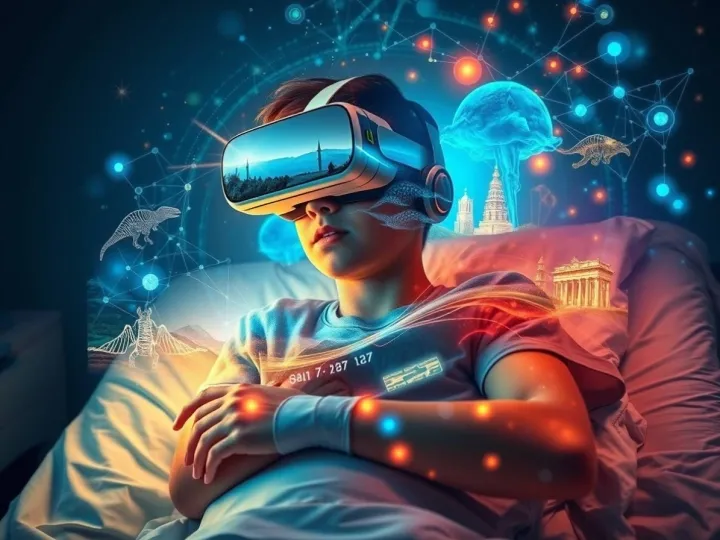
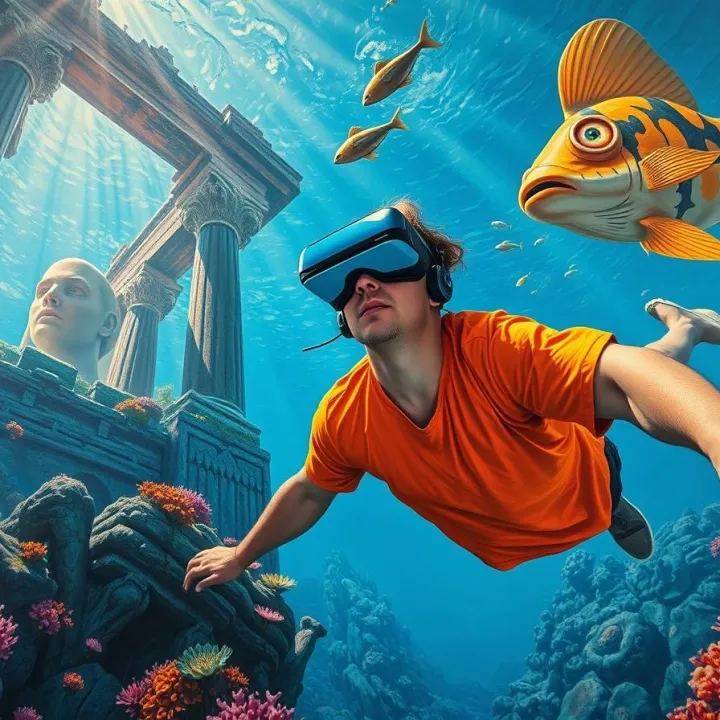
When you put on a headset, there is no frame, no canvas, no edge where fiction ends and the physical world begins. You no longer "see into" a picture - what philosophers of art call seeing-in. Instead, you are inside it.
Alex Fisher's recent paper in The British Journal of Aesthetics explores this shift in perception. Building on the ideas of Richard Wollheim and Kendall Walton, Fisher shows that while traditional images produce a twofold experience - we see both the surface and what it depicts - VR dissolves that duality. There is no surface to look at, no brushstroke to remind us of mediation. The mind perceives presence where none exists.
But the irony, Fisher notes, is that this technological perfection rarely works. The glitches - pixel flickers, delayed frames, digital tears - remind us of the machinery behind the illusion. And when this happens, a new kind of twofoldness emerges. We are simultaneously immersed and aware. The illusion and its breakdown coexist in consciousness, creating a layered kind of seeing that is half-belief, half-mindfulness.
Between Seeing and Believing
This dual awareness has deep psychological implications. Ordinary perception evolved to handle the physical world - to trust the eye's testimony. But VR hijacks this mechanism, asking the brain to respond emotionally to environments it knows aren't there. The body sweats at virtual heights. The heart races at digital danger. The nervous system participates in fiction.
Yet the small imperfections - the faint grid of pixels, the lag of motion, the shimmer of light - restore a fragile thread of awareness: this isn't real. This reminder, Fisher suggests, is not a flaw but a safeguard. A deliberate twofoldness - where users are gently aware of the artificiality - might protect against the psychological risks of total immersion.
It's a philosophical paradox: to make virtual experience humane, we must preserve a trace of unreality.
The Mirror Turns Inward
Virtual reality also reveals something profound about how consciousness constructs the world. If our sense of "presence" can be manufactured, then perception itself is a kind of simulation - a high-fidelity rendering of sensory data filtered through memory, attention, and expectation.
VR makes that visible. It turns the act of seeing into the object of sight. We become aware of awareness - an infinite regress that feels spiritual, but is also neurological.
In this way, VR is not just an entertainment technology but a cognitive mirror. It shows that every perception we have - whether of a digital forest or a real one - is mediated by the brain's virtual engine, the same system that dreams, hallucinates, and remembers.
The New Twofoldness
When philosophers like Wollheim spoke of twofoldness, they meant the balance between surface and depth. But in the age of VR, that balance has shifted inward. The new twofoldness is between immersion and insight - between believing the scene and recognizing its architecture.
That moment when the pixels flicker or the headset lags? That's not the illusion breaking. It's the self awakening.