When calcium deposits appear in the brain, they often look like stars - small white constellations on a CT scan, perfectly symmetrical, deceptively peaceful. But each luminous dot marks a boundary crossed: a neuron that no longer fires, a glial cell that chose defense over dialogue.
The new research, led by Janine Schwahn and colleagues, takes a deep, layered look into this phenomenon known as primary brain calcification - a genetic or idiopathic condition where the brain's delicate circuitry mineralizes from within. Using advanced clinical, genetic, and serum biomarker profiling across more than a hundred participants, the team sought to decode not only what calcifies, but why.
Their findings suggest that calcification is not simply a passive deposit of calcium - it is a biological event, involving glial activation, neuronal stress, and possibly a failure of calcium regulation itself.
A Map Etched in Stone
Through imaging and genetic analysis, researchers found that even in symptom-free individuals, calcifications begin early - small clusters forming in the globus pallidus, the brain's center for movement and motivation. Those whose calcifications spread beyond this region began showing neurological and cognitive symptoms: tremors, rigidity, mood disturbances, confusion.
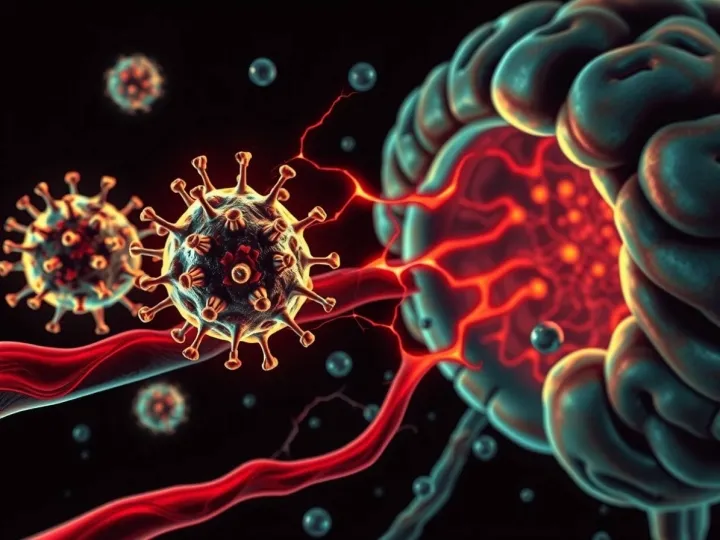
What the scans revealed visually, blood biomarkers confirmed chemically. Levels of glial fibrillary acidic protein (GFAP) - a sign of astrocyte activation - and neurofilament light chain (NfL) - a marker of neuronal injury - were both significantly elevated. These markers didn't just float in isolation; they correlated with the extent of calcification and the severity of clinical impairment.
In simpler terms: the more the brain turned to stone, the louder its glial cells cried out in the bloodstream.
The Mind's Internal Masonry
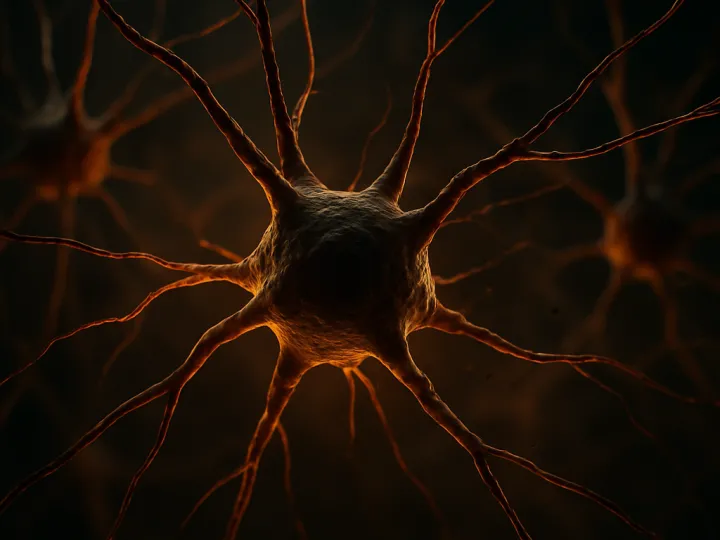
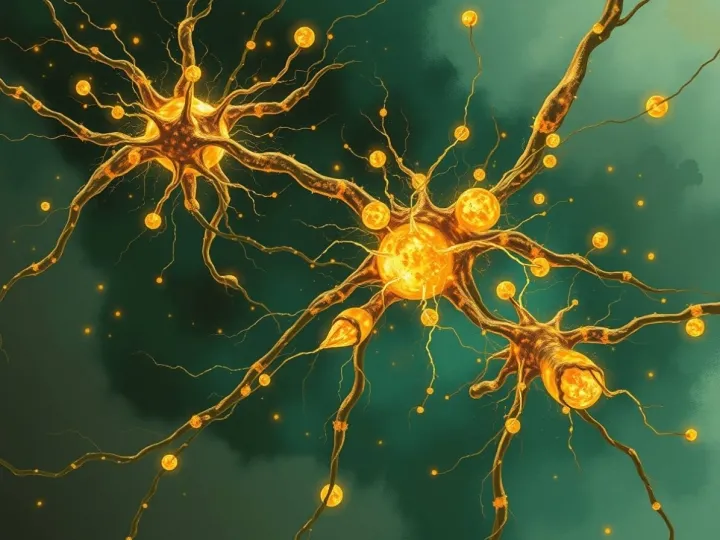
Glia - often dismissed as the "supporting actors" of the nervous system - seem to play a decisive role here. They are the mind's masons, the ones who build barriers when neurons falter. When inflammation or oxidative stress persists, glial cells can enter a chronic reactive state, depositing calcium as a kind of biological scar. Each deposit is a message: we could not repair, so we preserved.
This process echoes memory itself - the way experiences are etched into neural pathways through repetition, crystallized into lasting patterns. But here, the crystallization becomes literal. The brain begins to remember its injuries in mineral form.
Even the biomarkers echo this duality: neurofilament light, a structural protein of neurons, rises as axons fray - like the dust of a collapsing bridge. GFAP, from astrocytes, increases when the scaffolding grows rigid. Together they describe a mind becoming more solid, less flexible - a slow geological metaphor for aging and forgetting.
The Silent Architects of Disease
The study also discovered a biochemical divergence between genetic and non-genetic cases. Individuals without identifiable mutations had elevated parathyroid hormone levels, hinting at subtle disruptions in calcium metabolism - perhaps the body's attempt to compensate for hidden instability in its mineral balance. In other words, the body might be feeding the brain the materials for its own enclosure.
This reframes calcification not as an accident, but as an adaptation gone too far - a protective reflex that fossilizes thought. It's the same paradox found throughout biology: the systems that guard life can, over time, entomb it.
Between Stone and Thought
There's something haunting about seeing the mind's architecture turn physical - watching consciousness leave a geological trace. The researchers propose imaging cutoffs that may help clinicians predict when calcification becomes symptomatic, and serum biomarkers that could guide future therapies.
Yet beyond the data, the study invites a deeper reflection: Perhaps every brain, even the healthy one, carries its own invisible calcifications - patterns of rigidity, memories turned immovable, habits set like stone.
Neurons fire, glia clean, calcium seals. It is the rhythm of maintenance and memory, the price of endurance.
In this light, primary brain calcification becomes a metaphor for the way we preserve what we cannot release - thoughts that harden into belief, fears that fossilize into identity. The mind, like the brain, must stay fluid to stay alive.
The Future of Seeing Within
What makes this research so vital is not just its medical precision but its philosophical mirror. By mapping biomarkers like GFAP and NfL, science is beginning to see the biochemistry of stillness - how vitality transforms into structure. And structure, over time, resists change.
For clinicians, these findings mark progress toward early diagnosis and eventual intervention. For the rest of us, they whisper a quieter truth: Every act of preservation carries a cost.
The question is whether we calcify from protection - or evolve through release.