The 24-Hour Mind
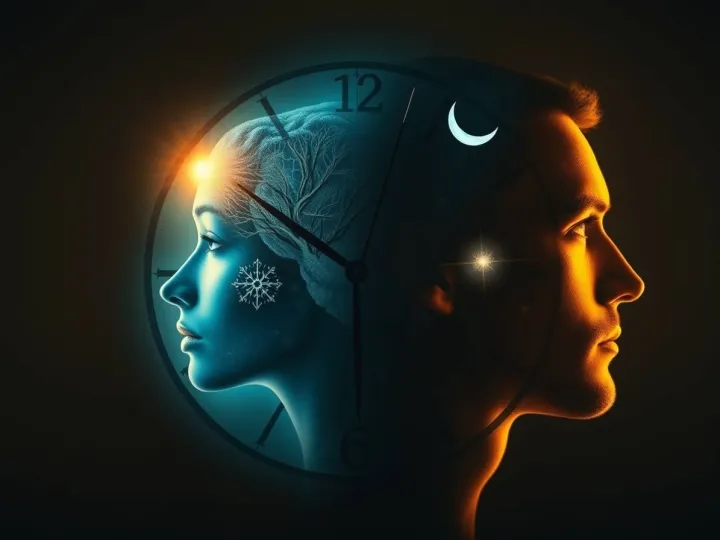
From the first neurons firing at dawn to the slowing of thought before sleep, circadian rhythms influence every cognitive process. The word circadian literally means "about a day," and these cycles are driven by molecular clocks within nearly every cell of the body. At the center of this network lies the suprachiasmatic nucleus (SCN) - a small region of the hypothalamus that receives light signals from the eyes and distributes timing cues throughout the brain.
The SCN functions as the conductor of a vast neural orchestra, aligning peripheral clocks in the cortex, hippocampus, and cerebellum. Together, these rhythmic oscillators anticipate environmental changes rather than merely react to them - preparing the body for waking, working, and resting before the external world demands it.
Cajochen and Schmidt describe this temporal intelligence as a key adaptive advantage: by aligning cognition with the predictable cycles of light and darkness, the circadian system optimizes both alertness and energy use. The brain performs best when its internal clocks and the world's external rhythm are in sync.
When Time and Attention Align
Circadian rhythms influence not just when we sleep, but how we think. Attention, working memory, and executive function all fluctuate with the time of day. Reaction times peak in the late morning, decline in the midafternoon, and rise again in the early evening. Creativity, meanwhile, tends to bloom when cognitive control relaxes - often during transitional phases such as early morning or late night.
Neuroimaging studies reveal that attention-related brain regions, including the thalamus and prefrontal cortex, display rhythmic changes in activity across 24 hours. These shifts are linked to variations in arousal systems, particularly those involving dopamine, noradrenaline, and acetylcholine. In essence, the circadian clock gates the brain's readiness to process information, setting windows of optimal performance.
Importantly, the authors note that the strength of circadian influence depends on sleep pressure - the buildup of the chemical drive to sleep. When we stay awake longer than our biological schedule allows, circadian and homeostatic systems compete, degrading attention and emotional regulation. The more sleep debt we accumulate, the weaker our cognitive rhythm becomes.
The Two Forces of Sleep and Wake
Human cognition is governed by two powerful but opposing systems:
- Circadian rhythm - a self-sustaining internal clock aligning physiology with the day-night cycle.
- Sleep homeostasis - a pressure that increases with time awake and dissipates with sleep.
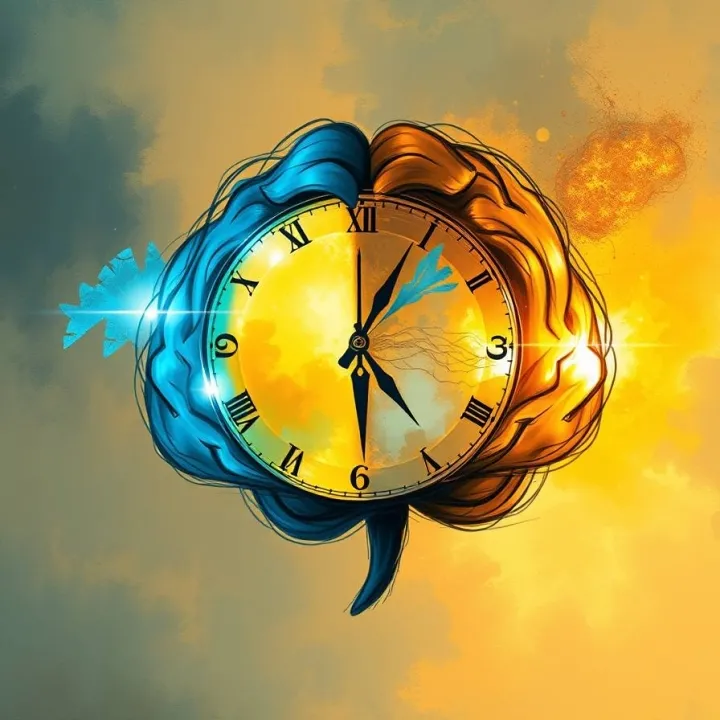
These systems constantly interact. The circadian clock determines when we should be awake or asleep, while homeostasis determines how much sleep we need. When they are aligned, cognition flows smoothly; when they diverge - as in jet lag, shift work, or all-night study sessions - mental efficiency plummets.
Cajochen and Schmidt emphasize that attention and executive functions rely on this coordination. During circadian misalignment, even simple decision-making becomes error-prone. Emotional reactivity heightens, impulsivity rises, and the brain's prefrontal cortex - its center for rational thought - shows reduced activation.
The Circadian Signature in the Brain
Every brain region keeps its own time. The cortex, hippocampus, and amygdala each express clock genes that cycle every 24 hours, regulating neurotransmitter release and synaptic plasticity. These oscillations shape memory consolidation, learning rate, and mood stability.
For instance, hippocampal activity peaks during the day, supporting faster learning, while the amygdala's reactivity to emotional stimuli increases at night - a possible reason why anxiety and rumination worsen after dark. The ascending arousal system, including the locus coeruleus and basal forebrain, also oscillates in coordination with circadian phase, modulating vigilance and attention.
This intricate timing is reflected in EEG and fMRI data, which show rhythmic fluctuations in cortical responsiveness. The same external stimulus can evoke stronger or weaker neural activation depending on the time of day - demonstrating that perception itself is a temporal phenomenon.
When Rhythms Break: The Cognitive Cost of Circadian Disruption
Modern life often demands that we live out of sync with our biology. Artificial light, screen exposure, irregular meals, and night shifts interfere with the SCN's entrainment to natural light. This circadian misalignment leads not only to sleep loss but to a cascade of neural imbalances:
- Impaired attention and decision-making
- Slower learning and memory consolidation
- Increased mood volatility and anxiety
- Elevated risk of metabolic and neurodegenerative disorders
Cajochen and Schmidt highlight that chronic circadian disruption contributes to depression, bipolar disorder, Alzheimer's disease, and even epilepsy. In each, altered clock gene expression and abnormal light entrainment appear as consistent features. These findings suggest that stabilizing circadian rhythms - through light therapy, scheduled activity, and consistent sleep - could become a cornerstone of mental health treatment.
Restoring Harmony: Living in Biological Time
Aligning our lives with the body's inner clock doesn't require radical change - only rhythm.
- Morning light exposure strengthens circadian alignment and improves alertness.
- Regular sleep schedules reinforce the timing of cognitive and emotional cycles.
- Evening dimness and digital detox allow melatonin to rise, preparing the brain for restorative sleep.
- Consistent meal times and movement anchor metabolism to daily light-dark cycles.
These small synchronizations echo the larger truth uncovered by circadian neuroscience: the brain's stability depends on its rhythmicity.
Time as the Mind's Architecture
The circadian system is not a background process - it is the temporal architecture of consciousness. Every surge of attention, every lapse of memory, every shift in mood follows the turning of the brain's inner clock. When those clocks align with the rhythms of the Earth, the mind feels coherent, focused, and alive.
Cajochen and Schmidt's review reminds us that to think clearly is to live in sync. The future of cognitive health may not lie in accelerating the brain, but in returning it to its natural cadence - a 24-hour symphony where time and thought move as one.