Explore current research and scientific developments curated by Seven Reflections. This section serves as our future home for official press releases - bridging the gap between discovery, structure, and meaning across science and society.
Virtual reality is no longer a novelty - it's a perceptual experiment reshaping how we experience being itself. Unlike paintings or films, VR doesn't ask us to look at a world, but to stand inside one. It blurs the boundary between image and environment, forcing the brain to negotiate between belief and awareness. What we see becomes an act of participation, not observation - a modern echo of philosophy's oldest question: when perception feels real, does it matter if it isn't?
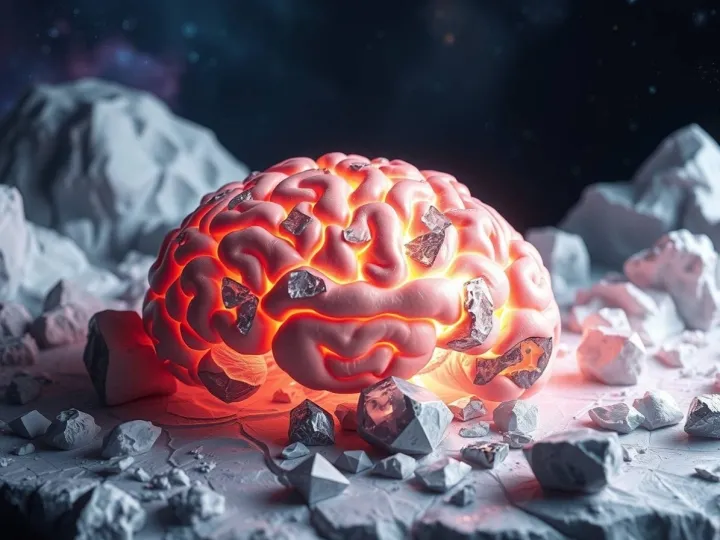
In rare individuals, the brain builds its own fossils. Calcium crystals bloom across the basal ganglia and cortex, leaving a quiet constellation of stone within thought itself. Once called "Fahr's disease," primary brain calcification is more than a neurological curiosity - it is the story of the brain's internal geology, a slow translation of energy into matter. A new study from the German Fahr-NET register, published in Brain Communications, has uncovered the biological fingerprints of this transformation, showing that beneath every calcified region lies the signature of glial activation, neuronal wear, and a cellular decision to harden what cannot heal.
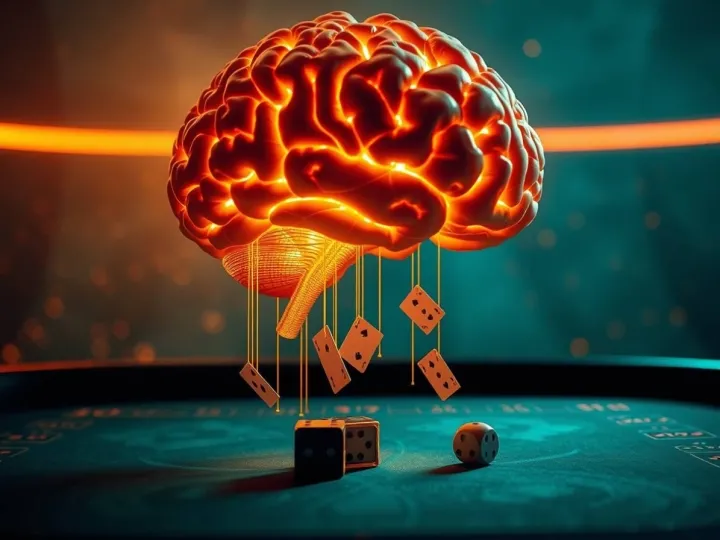
Every gamble begins in the same place - a pulse of anticipation that briefly suspends logic. Researchers in Japan have now traced that moment to a specific cluster of neurons: the orexin system, deep in the hypothalamus. When these neurons activate, the brain shifts its strategy - leaning toward risk, hunger, and reward. In new experiments published in PNAS Nexus, scientists found that stimulating orexin neurons in rats made them choose riskier options, while blocking orexin made them cautious. This discovery doesn't just explain gambling - it illuminates the biology of desire itself.
In the slave markets of early modern Alexandria, Valencia, and Lisbon, physicians once stood beside traders, examining the bodies of enslaved men and women to determine their price. Their touch was methodical, their gaze clinical. What began as the art of healing became a choreography of commerce - probing eyes, skin, lungs, and voice in search of "defects." Drawing from new historical research, The Physician and the Chain exposes how the language of medical expertise was shaped in slave markets, and how the early science of the body learned to speak the dialect of ownership.
In Northern Thailand, schizophrenia speaks through spirits. The voices are not demons but echoes of wild nature - phi that bite the mind and drain its strength. A new study reveals how mindfulness, understood as gathering the scattered self, offers not escape but re-integration. In this landscape, madness is not exile - it is the call of the forest within.
Hallucinations aren't always born from madness - sometimes, they emerge from exhaustion. New research traces the biological and psychological pathways from insomnia to perceptual distortion, revealing how sleeplessness weakens mental resilience, disrupts brain connectivity, and heightens emotional stress. At the edge of sleep, the mind begins to blur its own borders.
The line between imagination and perception may be thinner than we think. A groundbreaking review in Schizophrenia Bulletin compares the visual hallucinations of psychedelic experience with those in Parkinson's and Lewy body dementia, uncovering a shared biological code. Both involve a fragile dance between sensory silence and cortical overactivity - a brain filling in the world when perception fades. At the intersection of serotonin, vision, and meaning, we begin to glimpse consciousness not as a passive recording, but as a creative act.
What happens when a treatment that saves your mind also quiets your soul? In his first-person paper in Schizophrenia Bulletin Open, Jensen Gert describes the hidden cost of antipsychotic sedation - a state where emotions fall silent and thought loses its depth. His account reframes "non-compliance" as something more human: a conscious decision to preserve emotional life in the face of chemical stillness. It invites psychiatry to listen not only to symptoms, but to the lived mind beneath them.
Elephants live as if time itself has slowed to match their memory. They mourn their dead, lead their families across generations, and rarely fall to the illnesses that ravage shorter-lived mammals. Now, scientists are discovering that elephants' biological resilience mirrors their emotional depth. With twenty copies of the TP53 "guardian" gene - far more than any other mammal - they repair cellular damage before it accumulates. But their real secret may lie in how they live: within bonds of memory, care, and shared knowledge. Together, these clues suggest that aging may be less about decay than about the architecture of connection.