Explore current research and scientific developments curated by Seven Reflections. This section serves as our future home for official press releases - bridging the gap between discovery, structure, and meaning across science and society.
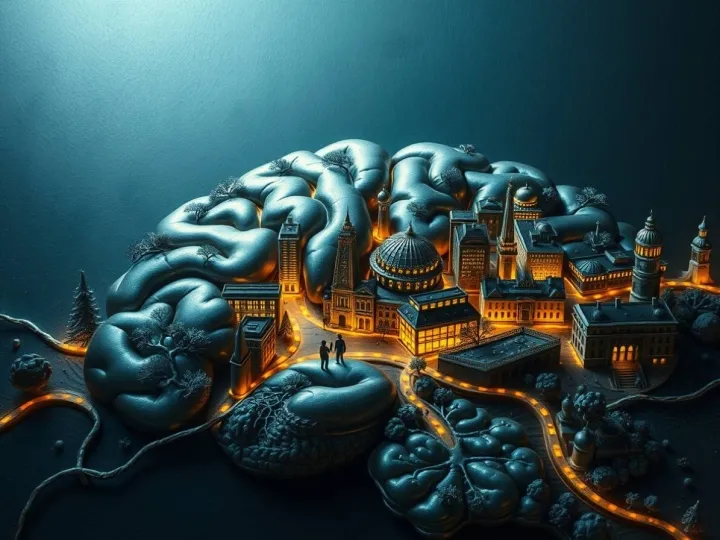
Your surroundings don't just hold your life - they help shape your mind. A new Innovation in Aging study introduces the idea of cognitive capital: the mental richness of a neighborhood measured by its cultural, social, and physical opportunities. Researchers found that older adults living in intellectually stimulating areas - those filled with libraries, museums, and spaces for movement - maintained higher cognitive performance and experienced slower decline. Where there is curiosity, connection, and conversation, the mind stays alive.
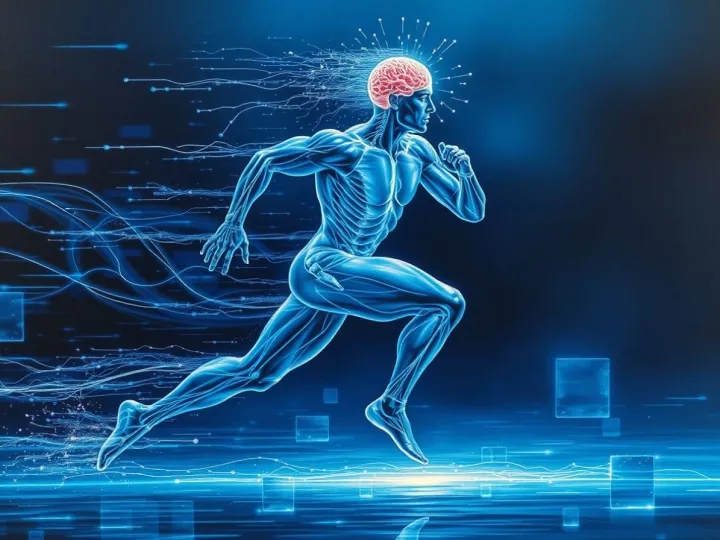
When the body pushes its limits, the brain listens. A 12-week study from Umeå University and the Karolinska Institute found that older adults who performed supramaximal high-intensity training showed measurable gains in both leg strength and prefrontal-cortex activation - the part of the brain that governs working memory and focus. The result: faster recall, stronger mental control, and a glimpse into how muscle and mind synchronize through effort.
Your brain remembers every lost hour. A groundbreaking 21-day study from Stockholm University and the Karolinska Institute reveals that even subtle, everyday fluctuations in how long or how well you sleep can slow cognitive performance the next day. The effect was found across all ages - proving that it's not just sleep quantity that matters, but the stability of your inner rhythm. This research highlights a deeper truth about the human system: when coherence fades, clarity follows.
Not all aging is decline - some of it is reorganization. A new study from Japan's Brain Bank for Aging Research reveals how tiny, timeworn structures in the brain can influence memory, movement, and awareness. These changes don't simply erase; they rewrite - showing that the brain's aging process is a delicate balance between preservation, adaptation, and renewal.
We don't just listen to music - we enter it. A new Social Cognitive and Affective Neuroscience study reveals that the bond between performer and listener can literally align their brains. When we feel included or emotionally close to a musician, our neural rhythms synchronize, and our sense of joy amplifies. It's proof that resonance isn't only acoustic - it's social, emotional, and profoundly human.
What if the way we live shapes how fast we think? A new Brain Communications study reveals that obesity doesn't just affect the body - it accelerates the aging of the brain. Using advanced MRI and machine learning, scientists found that the brains of obese adults appear years older than their peers. The findings redefine obesity as more than a physical state - it's a shift in internal communication between energy, emotion, and awareness.
What if emotional balance isn't lost with age - but rewritten? A new Brain Communications study shows that heart rate variability, once a sign of resilience in youth, may reflect compensation and deeper effort in older adults. As the heart and brain adapt to time, emotion itself changes language - moving from reflex to awareness, from reaction to resonance.
When a patient's heart fell into electrical chaos, doctors turned not to a drug, but to the mind itself. In an extraordinary case, cardiologists used hypnosis to reproduce the effects of a nerve block - stopping a deadly electrical storm and stabilizing the rhythm through guided imagery. The event challenges the boundary between medicine and consciousness, hinting that the language of the body may, at its core, be the language of awareness.
What if addiction isn't just psychological, but metabolic - a feedback loop between hunger, energy, and awareness? New research in the Journal of the Endocrine Society shows that GLP-1, the same hormone behind the global weight-loss revolution, may also reshape how the brain processes craving and reward. As scientists uncover the hormone's role in modulating dopamine and stress pathways, a new picture of addiction is emerging: one where biology, behavior, and consciousness share the same circuitry.