In an age when scientists can reprogram cells and extend mouse lifespans by decades in relative terms, one question remains unsolved: Why do some beings age slowly, gracefully, and with intact memory - while others decline swiftly, even under similar conditions?
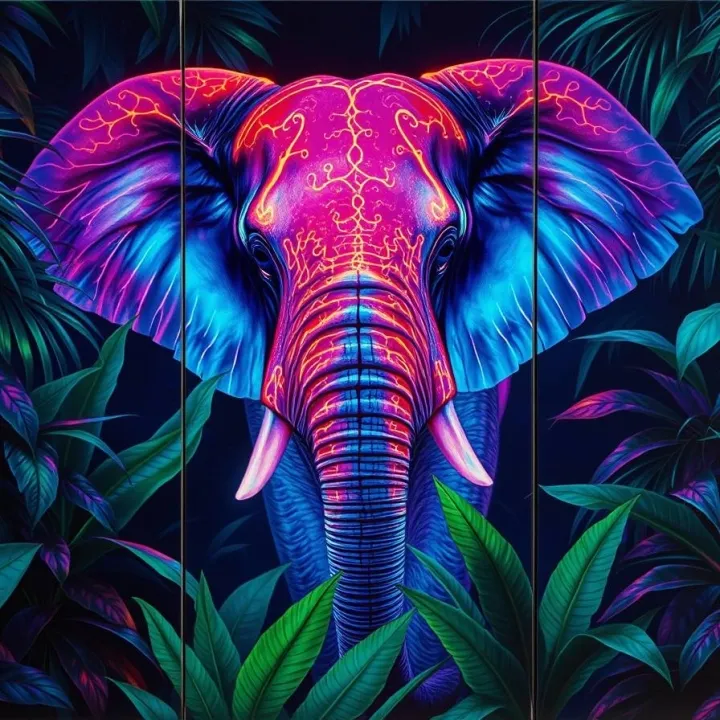
To approach that mystery, researcher Daniella Chusyd of Indiana University suggests looking not to rodents or primates, but to the planet's gentle giants. Her new study, presented at the Journal of Animal Science conference (2025), reframes the elephant not just as a symbol of memory and wisdom, but as a comparative model for aging - one that may help decode how genetics, social bonds, and trauma shape the pace of life itself.
A Paradox of Longevity
Elephants can live for more than 70 years, rivaling humans in lifespan. They exhibit complex cognition, intricate family structures, and emotional intelligence. Yet, unlike humans, they rarely develop cancer or neurodegenerative diseases. The secret may lie in their genome.
Elephants carry roughly 20 copies of the tumor-suppressor gene TP53, whereas humans have only two. TP53 produces the protein p53, a cellular guardian that halts division when DNA is damaged, initiating repair - or, if the damage is too severe, self-destruction. This process maintains genomic integrity and prevents malignant growth.
But p53's influence extends beyond cancer prevention. It regulates cellular senescence, mitochondrial function, and metabolic pathways such as IGF-1 and mTOR - systems deeply tied to aging, cognition, and lifespan. In essence, elephants have engineered nature's version of an internal longevity firewall.
Each copy of TP53 may act as a backup sensor, increasing the fidelity of the organism's "damage detection network." This could explain why elephants, despite their enormous size and long lives (both of which should statistically increase cancer risk), show remarkable biological resilience - a puzzle known as Peto's Paradox.
The Brain That Remembers
For elephants, survival is not only a biological feat but a cognitive one. Female-led herds are structured around matriarchs - elders who remember migration routes, drought cycles, and social alliances spanning generations. Their leadership is not dominance but memory; their wisdom, the architecture of survival.
Chusyd's team has now established the first national elephant brain database, examining how these large-brained mammals sustain cognitive health across decades. Early findings are astonishing: a 52-year-old female Asian elephant showed no signs of neurodegeneration, as measured by neurofilament light proteins - biomarkers that, in humans, indicate neuronal decay. This could mean elephants age cognitively without the typical neurological deterioration seen in other mammals.
Such preservation may be linked to their stable social structures. Social engagement, emotional bonds, and lifelong purpose - all known to slow cognitive decline in humans - are intrinsic to elephant society. Aging, in this light, becomes not a mechanical failure but a relational process, where connection sustains function.
Trauma and the Biology of Memory
Not all elephants age equally. In regions affected by poaching and habitat fragmentation, orphaned elephants grow up without maternal care or social instruction. Chusyd's group compares these orphaned vs. non-orphaned elephants to assess how early trauma shapes physiology. Preliminary data suggest orphans display altered hormonal profiles - possibly signs of accelerated biological aging.
The implications reach far beyond wildlife. If elephants, with their vast memories and communal intelligence, bear biological scars from early loss, so too might humans. Trauma, both social and metabolic, may alter the rhythm of aging through stress-related hormones and epigenetic marks - tiny molecular edits to the script of life.
Toward a Comparative Science of Aging
For over a century, gerontology has focused on short-lived laboratory animals: mice, worms, and fruit flies. They offer rapid results but simplified realities. Elephants, on the other hand, inhabit the ecological and emotional scale of aging closer to our own. Their long gestation, slow maturation, and dependence on memory parallel the arc of human life.
By studying elephants, researchers can bridge molecular and behavioral sciences - uniting genetics, endocrinology, and cognition under one lens. TP53 copy variation, for instance, may interact with hormonal regulation and social stability to determine the pace of aging - a tempo tuned as much by relationships as by DNA.
Chusyd's team is even developing cognitive assessments for wild elephants, testing how genetic traits align with problem-solving, social cooperation, and adaptability in aging individuals. The ultimate question is as poetic as it is scientific: Can wisdom itself be measured biologically?
The Lesson in the Mirror
The elephant reminds us that longevity is not about resisting time but harmonizing with it. Their genes repair what's broken, their families retain what's learned, and their society preserves what's meaningful. Aging, then, is not a decline but a collective memory system - biological, psychological, and cultural - maintained through care.
In watching elephants age, we see an echo of what humans might recover: a way of growing old that values connection over competition, restoration over acceleration. Perhaps the key to extending life is not to fight mortality, but to understand - as the elephants do - that memory itself is a form of survival.