Explore company announcements and research shaping the modern workplace - covering leadership strategies, organizational performance, HR practices, and the science of productivity and wellbeing.
A new open-access study in The Journal of Law, Economics, and Organization offers a formal model of how organizational culture emerges and evolves through social control. Economist Mark Gradstein examines how management influences employees' values and norms - through rewards, penalties, and shared commitment - to achieve coordination and cohesion. The analysis shows that loyalty and social pressure can substitute for financial incentives in shaping behavior and that tighter alignment of cultural norms correlates with improved firm performance.
A study in Journal of Cybersecurity applies the Health Belief Model to understand how university students protect themselves from email phishing. While technical defenses improve, phishing attacks persist - driven not by code but by cognition. Researchers found that self-efficacy, perceived severity, and cues to action were the strongest predictors of protective behavior. Students who believed in their ability to act, and who recognized the seriousness of threats, showed greater cyber-resilience - suggesting that awareness and belief are as crucial as technology.
In an age where traditional religion fades and self-definition becomes a digital ritual, brands have quietly stepped into the role once held by gods. From Apple's minimalist temples to Patagonia's moral activism, consumers are not just buying - they're believing. The new Journal of Consumer Research study "Brand Faith" uncovers how spiritual relationships form between people and brands, revealing that faith itself has migrated from the sacred to the secular, transforming the way we think, feel, and belong.
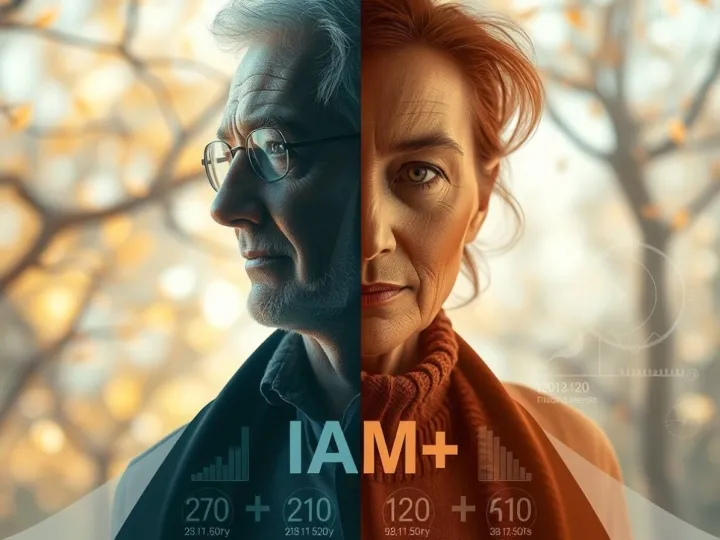
Aging doesn't begin at retirement - it begins in midlife. A new Index of Aging in Midlife and Beyond (IAM+) reveals how early health patterns predict engagement, resilience, and even mortality decades later.
Does sitting at your desk all day really damage your mental health? A new review says the answer is far less clear - and it might even depend on whether your work sparks focus or dulls it.
The Work Productivity and Activity Impairment (WPAI) questionnaire has become one of the most widely used tools for understanding how health affects our ability to work and live fully. Developed for clinical trials, it has since been adapted to study everything from chronic diseases to everyday symptoms, across industries and countries. By transforming experiences of absenteeism, presenteeism, and daily activity loss into measurable percentages, the WPAI offers a structured way to capture the hidden costs of illness on productivity and life.
Change is no longer the exception - it's the daily reality of work. The APA's 2025 Work in America™ Survey reveals how AI adoption, shifting work arrangements, and mental health pressures are reshaping the employee experience. Some workers are thriving on productivity gains, while others struggle with uncertainty, stress, and a widening gap between leadership and the front lines.
In Europe's trademark system, a reputational rule meant to shield famous brands has morphed into a catch-all. A new study argues the EUIPO is blocking marks not because consumers are confused, but because of what the goods are. The losers are smaller firms. The fix, the author says, is simple: stop judging by product aura and demand evidence.
Balancing opposites may be one of the most powerful skills a leader can bring to the workplace. A new study in the Journal of Business Research finds that "paradoxical leadership" - managing with both firmness and flexibility, control and empowerment - fuels employee creativity by expanding the way people think and adapt.