We've all felt the world warp slightly after a sleepless night - colors duller, thoughts more brittle, emotions closer to the surface. But for some, chronic sleep dysfunction doesn't just blur the edges of reality; it tears them open.
A major review in Schizophrenia Bulletin by Bryony Sheaves and colleagues offers one of the most comprehensive maps yet of how sleep loss, stress, and neurobiology intertwine to produce hallucinations. Drawing on four explanatory levels - phenomenology, psychology, neural networks, and neurophysiology - the authors suggest that the line between sleeplessness and psychosis is not only measurable, but mechanistic.
The Sleepless Mind as a Catalyst for Perceptual Instability
The findings are both intuitive and alarming: sleep deprivation can cause hallucinations, even in healthy individuals. Volunteers deprived of sleep for several nights begin to hear voices, see moving shadows, or feel a vague presence nearby. Conversely, treating insomnia in people with psychotic disorders often reduces the frequency and emotional intensity of hallucinations.
The strongest causal pathway, researchers found, flows one way - from insomnia to hallucinations, not the reverse. While hallucinations can disrupt sleep, it is chronic sleep dysfunction that sets the stage for altered perception. The study reframes sleeplessness not as a symptom, but as a trigger - one that changes how the brain filters, interprets, and emotionally weights sensory input.
Lived Experience: "When I Haven't Slept, the Voices Get Louder"
Among the most compelling evidence comes from first-person accounts. People who hear voices describe sleepless nights as amplifiers of chaos. One participant said, "When I haven't slept, I struggle to make them stop… I don't have the energy, so it's all bombarding me at once."
Sleep deprivation erodes mental resilience - the capacity to reason, inhibit irrelevant thoughts, and distinguish internal dialogue from external sound. Another participant noted, "When I'm tired, I can't logically think about whether it's my voices or not."
From these testimonies, three psychological mediators emerge:
- Stress and negative affect - lack of sleep heightens anxiety and irritability, coloring hallucinated content with darker emotional tones.
- Mental fatigue - the "worn down" state that makes individuals more likely to accept or engage with their hallucinations.
- Impaired source monitoring - confusion between inner speech and external sound, making inner thoughts feel alien.
These lived narratives mirror quantitative data, grounding biology in human experience - a hallmark of integrative science.
Inside the Brain: When Networks Fall Out of Sync
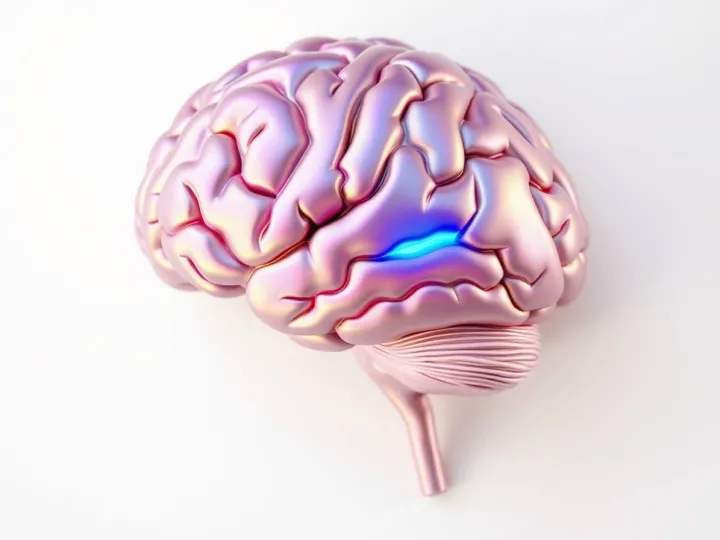
The review identifies functional dysconnectivity as the neural signature linking sleeplessness and hallucinations. Normally, the prefrontal cortex regulates sensory areas and the amygdala, filtering emotional relevance and suppressing spontaneous noise in the sensory cortices. Sleep loss disrupts this balance.
Neuroimaging shows that sleep-deprived brains lose frontal control while exhibiting hyperconnectivity in sensory and limbic regions. This allows internally generated activity - a whisper of memory, a flicker of emotion - to escape inhibition and appear as real perception. In essence, the brain begins to dream while awake.
Reduced thalamic function compounds the effect. The thalamus acts as a gatekeeper between sensory input and cortical processing, and sleep deprivation weakens this gate. Spindle deficits - oscillations that help maintain sensory stability during sleep - are linked to hallucinations in schizophrenia. Together, these findings describe a brain struggling to distinguish the external from the internal, the waking from the dreaming.
Stress, Inflammation, and the Neurochemistry of Vulnerability
At the physiological level, stress is the primary mediator. Sleep loss activates the body's stress systems - elevating cortisol, heart rate, and sympathetic arousal - while simultaneously eroding the brain's ability to regulate these responses. Chronic overactivation of the hypothalamic - pituitary - adrenal (HPA) axis creates a vicious cycle: hypervigilance disrupts sleep further, feeding the very hallucinations it helps produce.
The immune system also joins this cascade. Sleep deprivation raises inflammatory markers such as IL-6 and C-reactive protein, both of which have been linked to changes in brain connectivity and the emergence of psychotic experiences. Inflammation can alter the pruning of synapses, disrupting the communication between prefrontal control regions and sensory cortices - the same architecture implicated in hallucinations.
Dopamine, the molecule most famously associated with psychosis, completes the picture. Extended wakefulness increases dopamine transmission and receptor sensitivity, effectively mimicking the neurochemical imbalance seen in psychotic disorders.
Towards an Integrative Model of Consciousness and Sleep
The path from insomnia to hallucination, the authors conclude, is multilevel and reciprocal. Sleep dysfunction initiates stress and inflammation, which destabilize neural networks; in turn, these networks fail to maintain perceptual coherence. But there is a hopeful side: sleep is modifiable.
Treating sleep dysfunction could therefore serve as a low-risk, non-pharmacological entry point for psychosis prevention - targeting not only rest, but the deep biological repair processes that guard against perceptual breakdown.
For Seven Reflections, this research resonates far beyond psychiatry. It suggests that sleep is not merely a physiological necessity, but a boundary of consciousness itself - a nightly recalibration of self and world. When that rhythm fractures, imagination begins to overflow its container.
Sleep, then, is not the opposite of waking; it is what keeps waking coherent. Without it, even the most rational mind may start to dream with eyes open.