Music does more than move us - it connects us. Every concert, every melody, every heartbeat shared in rhythm is an invisible bridge between performer and listener. Yet until recently, science had not fully measured this connection.
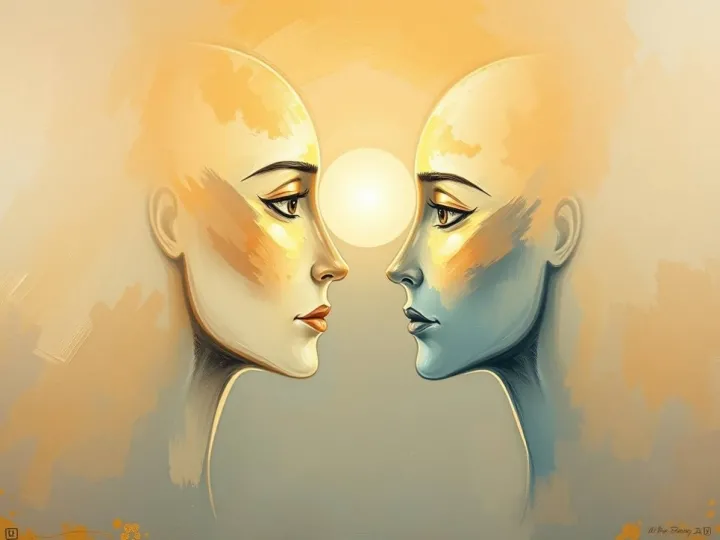
A groundbreaking new study from East China Normal University reveals that our appreciation of music is not driven by sound alone - it's shaped by social belonging. The research shows that when listeners identify with performers as part of the same "group," their brains literally synchronize. This neural synchrony deepens emotional resonance and increases how much they enjoy the music - even when the performance is objectively identical.
In other words: who plays the music matters as much as how it sounds.
The Study: Listening Together, Thinking Together
In this elegantly designed experiment, Yingying Hou and colleagues explored how group identity influences the relationship between performer and listener. Using a classic social manipulation known as the Cyberball game, participants were either included or excluded from a virtual team before listening to a violinist's recordings.
Some participants felt socially accepted - "part of the group" - while others were subtly isolated. Later, all of them listened to the same twelve violin pieces, unaware that every note came from the same musician.
What changed wasn't the music. It was their perception of connection.
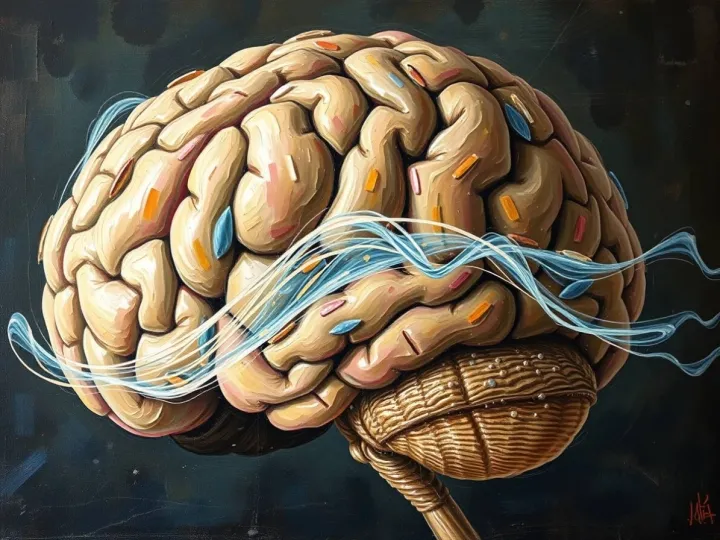
Listeners who felt included and identified more strongly with their supposed "group performers" reported greater enjoyment. Using dual-brain imaging (fNIRS), researchers discovered that this subjective bond had a measurable neural signature: increased inter-brain synchronization (IBS) in the temporal cortex - a region tied to emotion, empathy, and shared understanding.
Neural Synchrony: The Hidden Rhythm of Connection
The finding extends a growing field known as hyperscanning, where researchers record brain activity from multiple people at once. It turns out that when two individuals connect - through speech, cooperation, or in this case, music - their brains begin to mirror each other's activity patterns in time.
In this study, the listener's brain activity even preceded the performer's, suggesting an anticipatory process - as if the listener were predicting the emotional movement of the performance before it unfolded.
This anticipatory synchrony was strongest when participants felt socially included, confirming that emotional engagement and group belonging modulate neural timing itself.
The more the brain aligned with the performer's, the more the listener liked the music. It wasn't the melody that bonded them - it was recognition.
Music as Social Identity
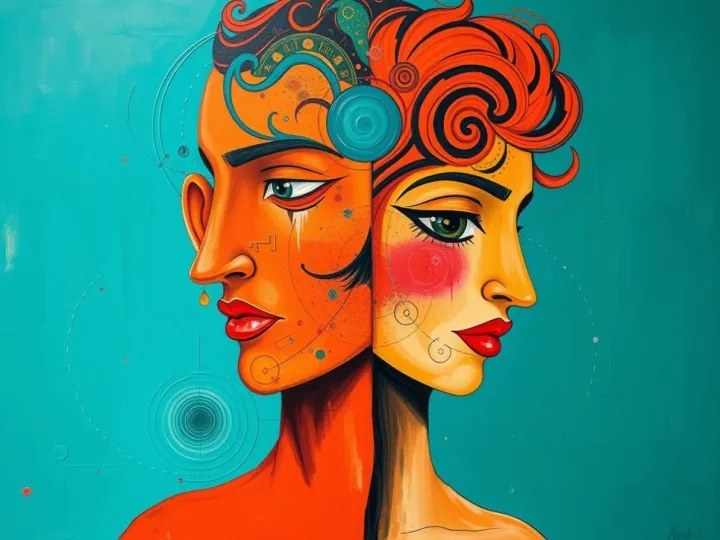
The implications go far beyond music. This research bridges social identity theory and neuroscience, showing that aesthetic appreciation is not purely personal but relational.
We love music not only because it pleases the ear, but because it affirms belonging. When the performer feels like "one of us," our brain's mirror systems engage more deeply, and pleasure intensifies.
This helps explain why people are drawn to artists who represent shared values or backgrounds - from national anthems to subculture anthems, from Taylor Swift's community of fans to traditional chants at tribal ceremonies. Each creates a feedback loop of identity and resonance.
Music, in this sense, is both sound and signal - a way consciousness synchronizes across individuals.
The Field of Connection
From a cognitive systems perspective, this study beautifully illustrates the principle of field resonance: alignment between two awareness systems amplifies energy, coherence, and meaning.
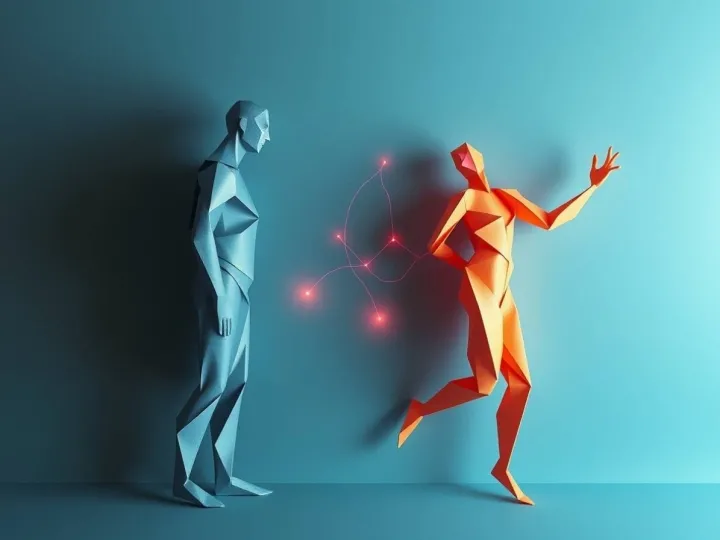
When performer and listener synchronize, a temporary shared field emerges - a cognitive "bridge" where perception, rhythm, and emotion flow in both directions. The brain's synchronization isn't just a metaphor for empathy; it's a measurable exchange of patterned energy.
Even more fascinating: the effect required mutual recognition. Exclusion - even subtle - disrupted synchronization. The field weakened. Music still played, but the bridge between minds dimmed.
Consciousness as Communication
What the researchers call "inter-brain synchronization" may be the physiological face of what we intuitively know as connection. It shows that consciousness isn't trapped inside individuals; it extends, overlaps, and entrains with others through shared attention and emotion.
When a performer reaches into a crowd, and the audience breathes together in time - that's not poetry. It's physics.
The Future of Listening
These findings invite us to rethink music as not only an art form, but a social and energetic technology. Every concert, every streaming playlist, every collective moment of song becomes a test of how deeply we can attune to each other's minds.
Inclusion builds coherence; exclusion fractures it. The science of music now speaks to something ancient - the truth that love, identity, and rhythm are not separate domains, but one continuous wave.
The next evolution in neuroscience may not be about decoding the individual brain at all - but understanding how minds merge.