In cardiology, "electrical storm" is one of the most feared emergencies - a state in which the heart falls into relentless electrical chaos, firing life-threatening arrhythmias again and again. It's a condition that can turn the most advanced technology and pharmacology into helpless spectators.
But what happens when the heart obeys not a drug, not a device, but a word?
In a remarkable new case published in the European Heart Journal Case Reports, cardiologists Marco Scaglione and colleagues describe something that sounds almost mythical: a hypnotic communication that reproduced the effects of a stellate ganglion block (SGB) - a medical nerve block used to calm the heart's overactive sympathetic nerves during an electrical storm.
The 73-year-old patient, suffering from severe dilated cardiomyopathy and recurrent ventricular tachycardia, had already exhausted standard options. He was on maximum doses of amiodarone, lidocaine, and beta-blockers. A left stellate ganglion block had successfully stabilized him - until infection forced the removal of the catheter. When arrhythmias returned, surgical denervation was scheduled, but the patient needed immediate relief to survive the waiting period.
So the doctors did something extraordinary. They asked him to imagine the block - and his heart responded.
The Procedure That Wasn't
The hypnotic intervention was performed by an experienced physician trained in medical hypnosis. The process was deliberate and precise:
- Focus and dissociation - guiding the patient to narrow his attention and detach from external surroundings.
- Validation - confirming the hypnotic state through mild physical stimuli.
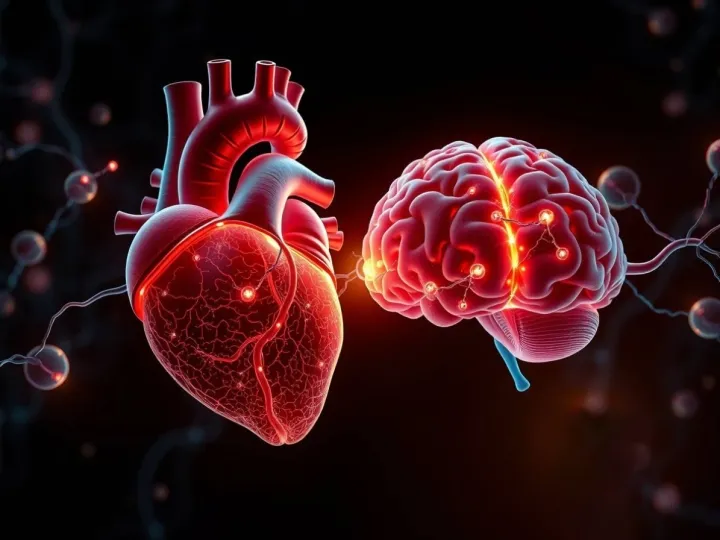
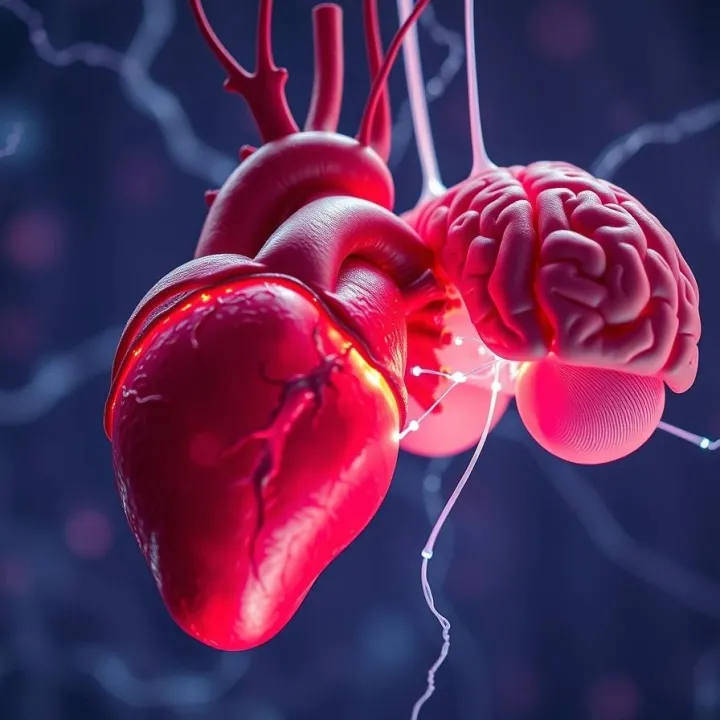
- Suggestion - visualizing a control center in the brain, connected by a wire to the heart, with a "switch" at the neck - the site of the stellate ganglion block.
- Activation - the patient was instructed to turn off the sympathetic connection, recreating the effect of the real nerve block.
- Reinforcement - repeating the suggestion and teaching self-hypnosis for maintenance until surgery.
Within five minutes, the heart's chaotic rhythm quieted. Continuous ECG monitoring confirmed what seemed impossible: the ventricular arrhythmias disappeared - not just momentarily, but for three days, until surgical gangliectomy was performed.
How Can This Be Possible?
The authors propose that hypnotic communication did more than simply relax the patient. The specific suggestion - of shutting off the neural "switch" - appeared to modulate the same autonomic pathways targeted by the physical nerve block.
From a neurophysiological standpoint, hypnosis can access autonomic control loops that are usually subconscious - influencing heart rate, blood pressure, and stress responses through top-down modulation of the vagus and sympathetic systems. Neuroimaging studies confirm that hypnotic states engage areas such as the anterior cingulate cortex, insula, and prefrontal cortex - the same regions implicated in emotional regulation and cardiac control.
In essence, the patient's mind simulated a medical procedure - and the body followed the command.
This suggests that the boundary between "mental" and "physical" medicine may be far thinner than we think. The authors note that hypnosis is safe, drug-free, and can be taught in minutes - a skill that could one day become standard in cardiac emergency care.
Beyond the Case: The Field Implications
Electrical storm represents the body's most extreme sympathetic overdrive - the nervous system locked in a loop of panic. Traditional treatments target the circuitry with drugs or local anesthetics, but this case shows that consciousness itself can reach that circuitry directly.
For Seven Reflections, the significance goes deeper than clinical novelty. This experiment demonstrates something far deeper than clinical novelty - a direct illustration of how structured states of consciousness can influence physiological systems. The hypnotic suggestion acted as a precise mental command that reorganized the body's electrical coherence.
Through intention and imagery, the physician effectively introduced a cognitive pattern into the patient's regulatory field - a mental simulation that modulated the flow of autonomic signals between brain and heart. The result was not metaphorical but measurable: the arrhythmia stopped.
It shows that awareness, when structured and focused, can operate as a stabilizing field, capable of restoring order within complex biological systems.
This is not mysticism. It's direct field modulation through structured cognition - a clinical demonstration of mind acting as medicine.
What Comes Next
The authors are careful not to overstate the result. This is a single case, not a randomized trial. Hypnosis requires a cooperative, cognitively intact patient, and trained personnel are still rare in cardiology units. But as interest in autonomic modulation therapies grows - from vagal nerve stimulation to mindfulness-based cardiac rehabilitation - this case may become a milestone.
If future studies confirm that hypnotic communication can substitute or support nerve blocks, it could redefine acute care medicine. Imagine emergency rooms where doctors use both anesthetic syringes and hypnotic scripts as equal instruments of stabilization.
A Quiet Revolution
What began as an act of desperation may open a new scientific frontier - not in technology, but in trust. The heart, it seems, can listen when spoken to in the right language.
Perhaps the deeper lesson is this: the mind's influence is not a miracle; it is part of the body's original design. The ability to command one's own physiology through structure, imagery, and will is not supernatural - it's a forgotten human function.
In the end, the patient's heart obeyed neither chemistry nor electricity, but awareness itself.