Explore current research and scientific developments curated by Seven Reflections. This section serves as our future home for official press releases - bridging the gap between discovery, structure, and meaning across science and society.
A new open-access study in the Journal of the Endocrine Society reveals that the body's response to light - how it suppresses melatonin and regulates alertness - depends not just on brightness but on biology and season. Women showed greater melatonin suppression but less alertness in response to moderate light than men, while both sexes were more light-sensitive in winter than in summer. The findings suggest that personalized lighting strategies could improve sleep, mood, and circadian health year-round.
A new review in Brain Communications explores how rare and overlooked causes of coma and prolonged disorders of consciousness - ranging from genetic and autoimmune diseases to parasitic infections - impact the same neural circuits implicated in more common injuries. Despite differing origins, these conditions converge on a shared network involving the thalamus, brainstem, basal ganglia, and cortical pathways, providing powerful validation for emerging models of consciousness such as the mesocircuit hypothesis.
A case published in JCEM Case Reports highlights an unusual but critical side effect of the dopamine agonist cabergoline: pathological gambling leading to recurrent adrenal crises. The report describes a 34-year-old woman with acromegaly who developed impulse control disorder behaviors while on long-term cabergoline therapy. After discontinuing the drug, her compulsive gambling and anxiety resolved within two weeks - and her life-threatening adrenal crises subsided dramatically.
A new meta-analysis published in Nutrition Reviews has found that the Mediterranean diet significantly lowers key inflammation markers in adults, strengthening its reputation as one of the most effective dietary patterns for preventing chronic disease. By analyzing data from 33 randomized controlled trials involving over 3,400 participants, researchers revealed measurable reductions in high-sensitivity C-reactive protein (hs-CRP), interleukin-6 (IL-6), and interleukin-17 (IL-17) - biomarkers linked to heart disease, diabetes, and neurodegeneration.
A new open-access article in The Journal of Law and the Biosciences examines how the US Food and Drug Administration (FDA) and the European Medicines Agency (EMA) are regulating artificial intelligence in drug development. Written by Gabriela Lenarczyk, Timo Minssen, Nicholson Price, and Arti Rai, the study compares the FDA's flexible, dialogue-based oversight with the EMA's structured, risk-tiered model under the EU's new AI Act. The analysis highlights growing divergence across the Atlantic and its implications for innovation, safety, and global harmonization.
A new open-access study in The Journal of Law, Economics, and Organization offers a formal model of how organizational culture emerges and evolves through social control. Economist Mark Gradstein examines how management influences employees' values and norms - through rewards, penalties, and shared commitment - to achieve coordination and cohesion. The analysis shows that loyalty and social pressure can substitute for financial incentives in shaping behavior and that tighter alignment of cultural norms correlates with improved firm performance.
A 2025 systematic review and meta-analysis published in Clinical Psychological Science has found that people who are more sensitive to their environments also tend to experience higher levels of anxiety and depression. Reviewing 33 studies with more than 12,000 participants, researchers confirmed a moderate and consistent link between trait sensitivity and common mental-health problems. The findings highlight environmental sensitivity as an overlooked personality factor that may both increase vulnerability to stress and enhance responsiveness to positive, supportive experiences. The paper is open access.
A large preregistered study published in Clinical Psychological Science examined whether psychological distress causes or results from belief in conspiracy theories. Researchers followed nearly 1,000 adults from the United Kingdom, Australia, and New Zealand across seven months, measuring stress, depression, anxiety, and belief in various conspiracy narratives. Contrary to long-standing assumptions, the study found almost no evidence that distress predicts conspiracy beliefs - or that such beliefs increase distress. The paper is open access.
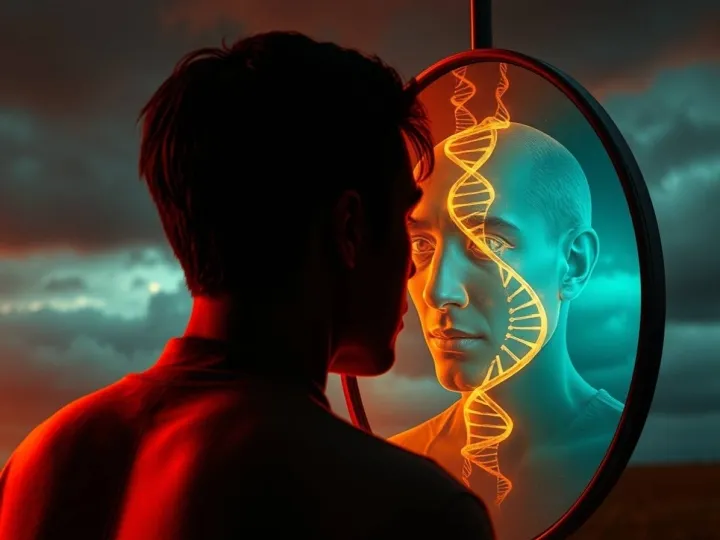
The rise of at-home DNA testing has transformed more than genetics - it has reshaped identity itself. A new study in Human Reproduction explores what happens when donor-conceived adults learn about their origins, showing that those who discover the truth later in life or by accident report lower satisfaction and more emotional distress. The findings highlight a timeless lesson for modern reproduction: truth, when shared early and intentionally, helps sustain emotional coherence across generations.