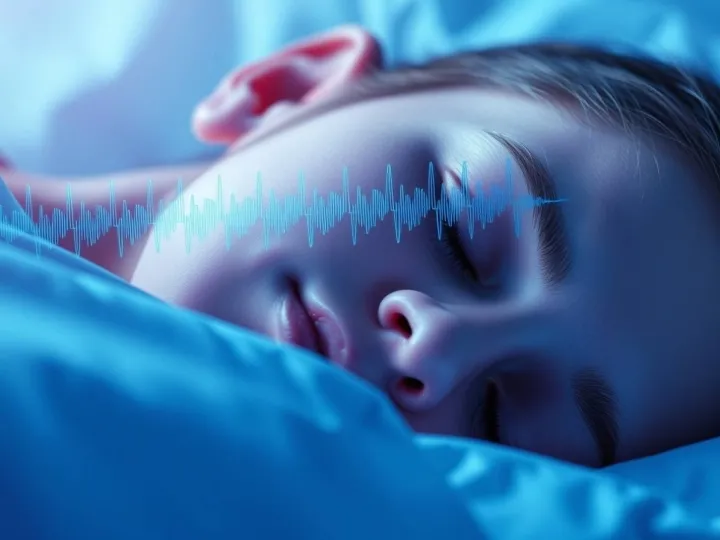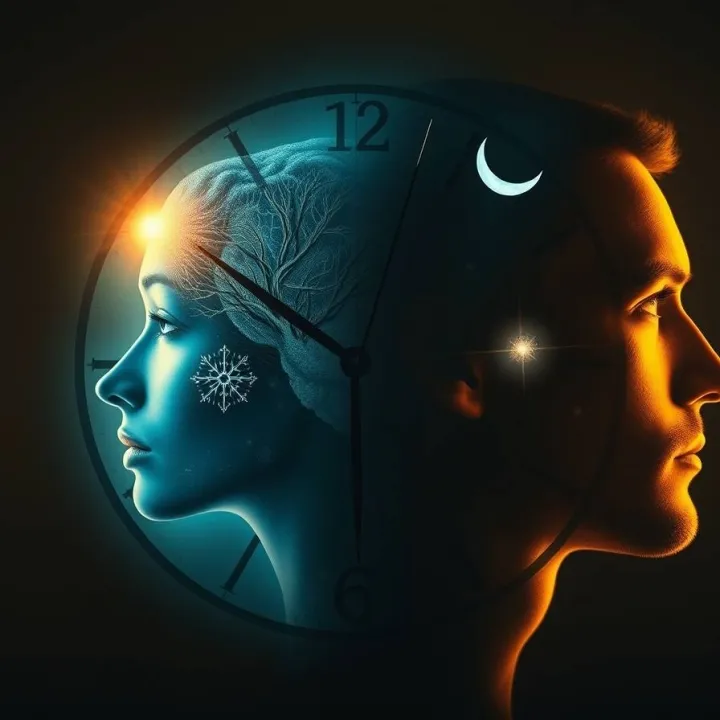
Light is more than something we see - it's something our bodies feel. Each day, the brain's internal clock, located deep in the hypothalamus, relies on light to stay synchronized with the 24-hour rhythm of the planet. When light hits our eyes, even through closed eyelids, it signals the brain to regulate hormones that control sleep, mood, and alertness.
One of the most important of these hormones is melatonin, produced by the pineal gland at night. Melatonin acts like a biological "darkness signal." It tells the body it's time to wind down, lowers core temperature, and prepares the mind for sleep. When light enters the eyes at night - especially the cool, bluish light emitted by phone or TV screens - it suppresses melatonin production. That's why checking your phone in bed can keep you awake longer or make sleep feel less restorative.
Researchers at the Centre for Chronobiology in Basel, Switzerland, led by Fatemeh Fazlali and colleagues, wanted to understand how this light sensitivity changes between men and women and between seasons. Their study followed 48 healthy adults aged 18 - 35 who spent two carefully controlled nights in the lab - one exposed to dim light (about 8 lux, similar to candlelight) and another to moderate light (around 100 lux, similar to a tablet screen at arm's length).
Saliva samples were collected every 30 minutes to measure melatonin levels, while participants rated how sleepy or alert they felt throughout the evening. By comparing these data across winter and summer months, the researchers could see how internal rhythms adapt to the shifting light of the seasons.
What they found was fascinating.
Women showed greater melatonin suppression than men under the same light conditions - about 5% stronger on average - meaning their internal night was more easily interrupted by light. Yet paradoxically, women didn't feel as alert as men during exposure, suggesting their bodies were responding biologically but not perceptually.
Both men and women were more sensitive to light in winter, showing 18% greater melatonin suppression and a 7% higher alertness response compared to summer. It seems our bodies become more reactive to light when the days are shorter and darker, perhaps as an evolutionary mechanism to compensate for reduced daylight.
The researchers also noticed that a person's light history - how much sunlight they got earlier in the day - affected their internal rhythm. Participants who had spent more time in daylight experienced earlier onset of melatonin later that night, meaning their body clock "shifted forward." This is one reason why daily outdoor exposure helps keep sleep schedules stable.
In women, menstrual cycle phases added another layer. Those in the luteal phase (after ovulation) tended to produce melatonin earlier than those in the follicular phase. While hormones like progesterone don't directly suppress melatonin, they can subtly influence the timing of our circadian rhythms.
Taken together, these results reveal that sex, season, and lifestyle all interact to shape how light influences our sleep and wakefulness.
For everyday life, the implications are clear: Even moderate evening light - like the glow from a smartphone or television - can delay or suppress melatonin, making it harder to fall asleep or reducing the quality of rest. Over time, disrupted melatonin cycles have been linked to mood changes, weight gain, weakened immunity, and even higher risks of metabolic disorders.
The fact that women and winter months increase sensitivity means that, for some people, common lighting habits may have stronger effects than they realize. Watching late-night TV, scrolling under bright LEDs, or working in well-lit offices after sunset all nudge the body away from its natural rhythm.
As study author Christian Cajochen's group has shown in related work, light is a drug-like stimulus - powerful, invisible, and highly individual in its impact. That means the ideal lighting strategy isn't one-size-fits-all. Personalized "light hygiene" may one day become as important as nutrition or exercise for maintaining health.
Simple practices can already make a big difference:
- Dim your screens or use night mode after dusk.
- Spend time outdoors during the day, especially in the morning.
- Keep bedroom lighting soft, warm, and minimal before sleep.
- During winter, increase morning light exposure to counter the long dark evenings.
From a Dimensional Systems Architecture (DSA) perspective, this study illustrates how external rhythms - like light and season - interact with internal biological fields to maintain system coherence. In this model, melatonin isn't just a hormone; it's a phase regulator, helping synchronize the body's many subsystems into one harmonic rhythm. When external light patterns stay aligned with internal needs, the system remains coherent - our thoughts, mood, and energy stay balanced. When artificial light overrides natural cues, coherence drops. The mind may stay active, but the body loses its rhythm.
This explains why a glowing screen at midnight feels deceptively harmless while quietly draining focus, mood, and stability over time. Light becomes an invisible architect of consciousness itself - sometimes guiding, sometimes misleading.
This study reminds us that our biology still listens to the sky. Our ancestors lived by the sun and slept by firelight; today, our nights are filled with devices bright enough to fool the brain into thinking it's noon. As the seasons shift, we feel this mismatch more acutely. Learning to see light not just as illumination, but as nourishment or disruption for the inner clock, may be one of the most powerful ways to protect our well-being in the modern world.