Explore current research and scientific developments curated by Seven Reflections. This section serves as our future home for official press releases - bridging the gap between discovery, structure, and meaning across science and society.
In Ottomans and the Supernatural: Nature and the Limits of Knowledge in the Early Modern Ottoman Empire (Oxford University Press, 2025), historian Marinos Sariyannis traces how Ottoman scholars, mystics, and physicians navigated the porous border between divine intervention and natural law. Before Western rationalism reshaped global thought, Ottoman intellectual life offered a remarkably fluid model of knowing - one where revelation, observation, and imagination coexisted within a single cognitive field. His work exposes how the eventual "disenchantment" of the world transformed both science and consciousness.
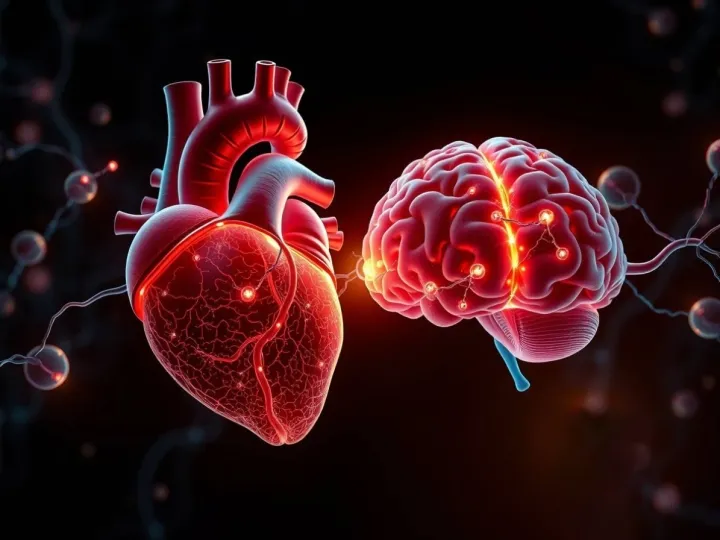
A recent perspective in the journal The Journal of Sexual Medicine by Gal Saffati MD and Mohit Khera MD MPH MBA argues that beyond the role of reproduction, consensual sexual activity - comprising intercourse, arousal and orgasmic capacity - may serve as a meaningful indicator and contributor to overall health. The authors review data linking sexual experience and satisfaction with cardiovascular, psychological and relationship outcomes, and propose that the sexual dimension merits integration into health-check frameworks.
A new Open Access study in the Journal of Applied Microbiology suggests that probiotic bacteria can influence the biochemical signals related to cognition and emotion - even without any human cells present. Using an advanced in vitro model simulating the human colon, researchers observed subtle yet meaningful increases in the microbial synthesis of gamma-aminobutyric acid (GABA) and valerate, both key molecules in the gut - brain axis. The results reveal that microbial communities alone can participate in neurochemical dialogue, offering a glimpse into how life sustains communication far beyond the nervous system itself.
In a striking new study published in Social Cognitive and Affective Neuroscience, researchers found that people with Alzheimer's disease feel physically closer and emotionally warmer toward others - even when the actual distance remains unchanged. The phenomenon was linked to atrophy in brain regions associated with reward and emotional processing, including the right ventral striatum and orbitofrontal cortex. Far from merely diminishing social experience, Alzheimer's appears to reconfigure it - revealing how the loss of one system can amplify another, transforming the boundaries of human connection.
In the attention economy, abundance can become its own poison. A new Open Access viewpoint in Translational Food Sciences by Niall W. G. Young draws a striking parallel between dietary excess and informational overload. Just as ultra-processed foods saturate the body with low-value calories, viral misinformation floods the mind with empty cognition - rewarding, addictive, and nutritionally hollow. The result, he argues, is "intellectual obesity": a condition where mental digestion falters, depth gives way to immediacy, and societies lose their capacity for reasoned, coherent thought.
A study published in Brain reveals that a mother's diet during lactation can leave long-lasting imprints on her offspring's brain health. Using a mouse model of Alzheimer's-like tauopathy, researchers found that maternal high-fat intake accelerated neurodegenerative changes and memory decline in offspring, with males showing earlier and more severe effects. The findings highlight a critical developmental window when nutrition can influence the molecular trajectory of brain aging and suggest early-life interventions may alter the course of neurodegenerative disease.
A study in Journal of Cybersecurity applies the Health Belief Model to understand how university students protect themselves from email phishing. While technical defenses improve, phishing attacks persist - driven not by code but by cognition. Researchers found that self-efficacy, perceived severity, and cues to action were the strongest predictors of protective behavior. Students who believed in their ability to act, and who recognized the seriousness of threats, showed greater cyber-resilience - suggesting that awareness and belief are as crucial as technology.
A new open-access study in Journal of Computer-Mediated Communication explores how social media users across the United States and Singapore navigate privacy in an age dominated by AI-driven algorithms. Researchers identified four distinct privacy management profiles - ranging from highly proactive "Privacy-Benefit Maximizers" to disengaged "Privacy Apathy" users - each shaped by confidence, motivation, and cultural context. The findings reveal that privacy behavior is neither uniform nor purely reactive but part of a complex balance between control, convenience, and trust in algorithmic systems.
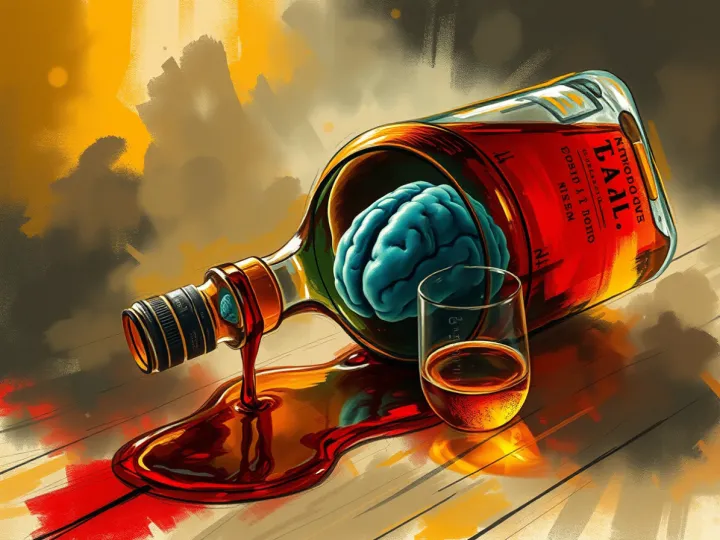
A new open-access study in Brain Communications reveals how persistent stress and long-term alcohol consumption combine to reshape the brain's structure and functional networks. Using a longitudinal rat model, researchers from the National Autonomous University of Mexico tracked behavioral changes and MRI-based alterations across development. They found that while stress did not increase alcohol intake, the two factors produced additive and sex-dependent disruptions in brain volume and connectivity - evidence that chronic exposure progressively erodes the brain's integrative balance.