Collins grew up in the household of a successful landscape painter, William Collins, and was named partly after his godfather, the Scottish painter David Wilkie. He attended private schools in London and traveled with his family through Italy and France, absorbing art and architecture that would later color his fiction. Pressed toward a steady profession, he studied law at Lincoln's Inn and was called to the bar in 1851, though he never practiced. Writing, not the courtroom, became his calling.
His literary break came through Charles Dickens, whom he met in 1851. The two became friends, and Collins contributed stories and essays to Dickens's journals Household Words and All the Year Round. They also collaborated on the play The Frozen Deep, staged in 1857. Early novels such as Basil (1852) and Hide and Seek (1854) showed Collins's interest in domestic secrets and moral complexity, but his reputation was made by The Woman in White, serialized in 1859 - 60, a gripping tale of identity, inheritance, and madness that became a sensation on both sides of the Atlantic.
Collins followed with No Name (1862) and Armadale (1866), then published The Moonstone in 1868. That novel, built around a stolen Indian diamond and told through a series of witnesses, is often cited as an early and influential example of the detective novel. His use of multiple narrators and documentary-style evidence gave his mysteries a realistic texture that later writers built upon.
In his private life Collins never married. He maintained long relationships with Caroline Graves and, later, with Martha Rudd, with whom he had children, an arrangement that was unusual and often discreetly managed. Chronic gout led him to use laudanum, and his health declined in later years even as he kept writing. He died in London in 1889, leaving a body of work that bridges Victorian sensation fiction and the modern mystery.
Wilkie Collins was born on January 8, 1824. In Cardology (Destiny Cards), January 8, 1824 corresponds to the Six of Spades, making the Six of Spades his Birth Card.
In numerology, the name adds another layer to the birth-date profile. The letters of a person’s name are used to explore inner motivation, personality, expression, and the qualities they bring into relationships and everyday life. Explore how his original name William Wilkie Collins influences his life and personality.
Wilkie Collins Quotes
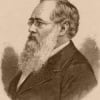
Famous Capricorn People
Discover famous Capricorn people, from actors and musicians to writers, athletes, and historical figures. Explore their birthdays and biographies, and see who shares the Capricorn zodiac sign.








View All Famous Capricorn People →
Famous People born on January 8



View All Famous People Born on January 8 →
Six of Spades Famous People

View All Famous Six of Spades People →