The fifteenth child of Josiah Franklin, a soap and candle maker, and Abiah Folger, Franklin grew up in a large Puritan family with little money for formal schooling. He attended grammar school for only a short time before going to work for his father, then was apprenticed at twelve to his older brother James, a printer. When James launched the New-England Courant, young Benjamin contributed essays under the name Silence Dogood. The apprenticeship ended badly; Franklin left for Philadelphia in 1723, then sailed to London in 1724, where he worked in printing shops and gained a broader view of the world. He returned in 1726 and soon established himself as a printer.
In 1729 Franklin bought the Pennsylvania Gazette, and his Poor Richard's Almanack, published from 1732 to 1758, made him wealthy and widely read. In 1730 he formed a common-law marriage with Deborah Read, and the couple raised a family in Philadelphia while his printing business expanded. He helped organize the Junto, a club for civic improvement, and founded the Library Company of Philadelphia in 1731. He also campaigned for a school that became the University of Pennsylvania, helped establish the American Philosophical Society, and served as postmaster of Philadelphia and later as joint postmaster general of the colonies. His inventions included the Franklin stove and bifocal glasses.
Franklin's electrical experiments brought him international fame. He argued that lightning was a form of electricity and promoted the lightning rod, which protected buildings from damage. His 1751 publication Experiments and Observations on Electricity spread his ideas across Europe, and he received the Royal Society's Copley Medal. The famous kite experiment of 1752 is widely repeated, though the precise circumstances are not fully documented. He also coined or popularized terms such as battery, conductor, and positive and negative charge.
Public affairs increasingly occupied him. In 1754 he proposed a Plan of Union at the Albany Congress, an early attempt to coordinate the colonies, and he later served in the Pennsylvania Assembly and as the colony's agent in London. There he opposed the Stamp Act and other measures that tightened British control, and his hostile questioning before the Privy Council in 1774 turned him into a public symbol of colonial resistance. He returned to America in 1775, served in the Second Continental Congress, helped draft the Declaration of Independence, and became postmaster general.
Sent to France in 1776, Franklin helped secure the Treaty of Alliance in 1778 and, with John Adams and John Jay, negotiated the Treaty of Paris in 1783, which recognized American independence. As minister to France, his scientific reputation and unassuming manner made him popular in French society. Back home in 1785, he served as president of Pennsylvania and took part in the Constitutional Convention of 1787. Although he had owned slaves earlier in life, he became president of the Pennsylvania Abolition Society and signed a petition urging Congress to end slavery. He died in 1790.
Benjamin Franklin was born on January 17, 1706 in Boston, Massachusetts, United States. In Cardology (Destiny Cards), January 17, 1706 corresponds to the Ten of Diamonds, making the Ten of Diamonds his Birth Card.
In numerology, the name adds another layer to the birth-date profile. The letters of a person’s name are used to explore inner motivation, personality, expression, and the qualities they bring into relationships and everyday life. Explore how his original name Benjamin Franklin influences his life and personality.
Benjamin Franklin Quotes
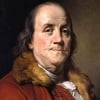
“Never ruin an apology with an excuse.” - Benjamin Franklin
Famous Capricorn People
Discover famous Capricorn people, from actors and musicians to writers, athletes, and historical figures. Explore their birthdays and biographies, and see who shares the Capricorn zodiac sign.



View All Famous Capricorn People →

Ten of Diamonds Famous People

View All Famous Ten of Diamonds People →