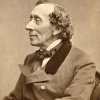
Stephen Hawking grew up in a family that treated books, travel, and scientific questions as ordinary parts of life. His father, Frank, was a medical researcher who studied tropical diseases, and his mother, Isobel, had studied at Oxford. The family settled in St Albans, where Hawking attended St Albans School. He showed a strong interest in mathematics and physics and entered University College, Oxford, to study physics.
Hawking moved to Cambridge for graduate work in cosmology. He had hoped to work with Fred Hoyle, but he was assigned to Dennis Sciama, a physicist whose students were exploring the early universe. Soon after he arrived, Hawking was diagnosed with amyotrophic lateral sclerosis (ALS), the condition known in the United States as Lou Gehrig's disease. Doctors expected rapid decline, but the illness progressed slowly enough for him to finish his doctorate and begin research.
With Roger Penrose, Hawking helped establish that Einstein's general theory of relativity leads to singularities, points where the known laws of physics break down, and that the universe itself likely began in one. In the early 1970s he applied quantum ideas to black holes and found that they should emit radiation, now called Hawking radiation. The result implied that black holes could lose mass and eventually evaporate, tying together gravity, quantum mechanics, and thermodynamics. It made him a central figure in modern cosmology.
Hawking became Lucasian Professor of Mathematics at Cambridge in 1979, a chair once held by Isaac Newton. His 1988 book A Brief History of Time explained cosmology to general readers and became an international bestseller. As ALS took away his movement and speech, he used a wheelchair and a voice synthesizer and kept up research, lectures, and travel. He also worked with James Hartle on the no-boundary proposal, which described the early universe without a sharp beginning, and he pressed the black hole information paradox. Later books included The Universe in a Nutshell and, with Leonard Mlodinow, The Grand Design.
Hawking married Jane Wilde in 1965, and they had three children: Robert, Lucy, and Timothy. The couple divorced in 1995. He married Elaine Mason that year, and they divorced in 2006. Hawking received the CBE in 1982, became a Companion of Honour in 1989, and was awarded the U.S. Presidential Medal of Freedom in 2009. After his death, his ashes were interred at Westminster Abbey.
Stephen Hawking was born on January 8, 1942 in Oxford, England, United Kingdom. In Cardology (Destiny Cards), January 8, 1942 corresponds to the Six of Spades, making the Six of Spades his Birth Card.
In numerology, the name adds another layer to the birth-date profile. The letters of a person’s name are used to explore inner motivation, personality, expression, and the qualities they bring into relationships and everyday life. Explore how his original name Stephen William Hawking influences his life and personality.
Stephen Hawking Quotes

“The greatest enemy of knowledge is not ignorance, it is the illusion of knowledge.” - Stephen Hawking
Famous Capricorn People
Discover famous Capricorn people, from actors and musicians to writers, athletes, and historical figures. Explore their birthdays and biographies, and see who shares the Capricorn zodiac sign.