Explore current research and scientific developments curated by Seven Reflections. This section serves as our future home for official press releases - bridging the gap between discovery, structure, and meaning across science and society.
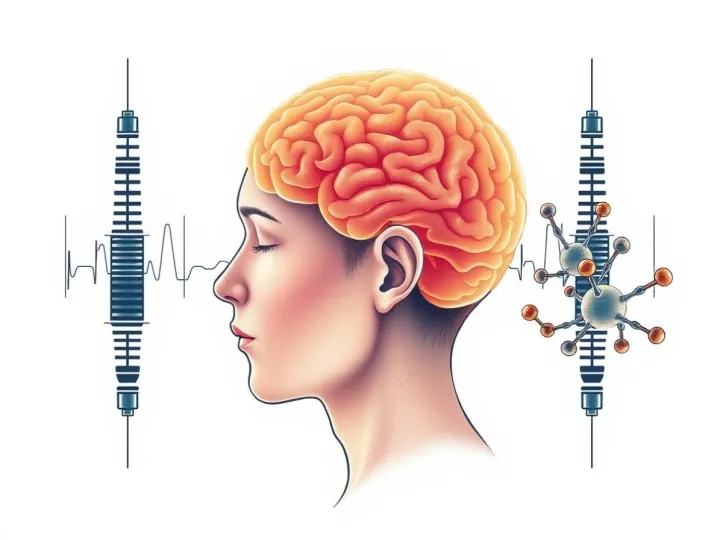
A new study in the Journal of Neuroscience reports that the human brain begins encoding the physicochemical features of odor molecules within the first hundred milliseconds after inhalation. By recording EEG activity while participants smelled a diverse range of odors, researchers found that early theta-band responses reflect low-level molecular structure and predict individual differences in odor discrimination ability. The findings offer a clearer view of how early sensory coding shapes olfactory behavior, separating rapid structural decoding from later representations of odor pleasantness.
Students are often told that strong metacognitive skills - planning, monitoring, and evaluating their learning - lead to better grades. But a new study shows a surprising disconnect: self-reported metacognition doesn't reliably predict academic performance. Instead, students' beliefs about how they compare to their peers align far more closely with their actual results. The findings challenge long-held assumptions about how learning really works and reveal the powerful role of academic self-perception in shaping success.
A new open-access resource called the Spatial GWAS Atlas offers the first large-scale look at how genetic traits appear in precise locations within real tissues. Published in Nucleic Acids Research, the project integrates thousands of genome-wide association studies with spatial transcriptomics, allowing scientists to see not only which genes influence a trait, but where in the body those effects emerge. The atlas spans multiple tissues, species, and platforms, giving researchers a powerful way to study complex diseases in their native biological context.
A new study in the Journal of Neuroscience reveals that the human brain does not simply add up the value of multiple items when making consumer decisions. Instead, it actively "rescales" how much a bundle is worth, generating a lower value than the sum of its parts. Using a three-day deep-fMRI protocol, researchers found that the same regions of the prefrontal cortex compute value for both single items and bundles, but the neural signal is attenuated when multiple items appear together. The findings help explain everyday purchasing choices and the psychology behind bundled offers.
A preliminary imaging study in Drug and Alcohol Dependence Reports suggests that people who smoke cannabis together with tobacco may experience measurable disruptions to the brain's endocannabinoid system - a network involved in stress regulation, mood, and emotional balance. Using positron emission tomography, researchers found elevated levels of FAAH, an enzyme that breaks down the calming endocannabinoid anandamide, in those who co-used tobacco compared with cannabis-only users. The discovery highlights a potential neurobiological reason why co-use is often linked to worse clinical outcomes.
A new study published in Nature Communications examines one of the biggest open questions in physics: how does dark matter move through the universe? Because dark matter cannot be seen directly, scientists typically assume it follows gravity just like ordinary matter. Using measurements of galaxy motions and gravitational lensing across large distances, researchers tested this assumption and searched for signs of an additional "fifth force." Their findings show no detectable deviation from gravity, narrowing the range of possible dark matter behaviors.
A new analysis published in Neurology (Open Access) reports a steady rise in self-reported cognitive disability among U.S. adults over the past decade, with the sharpest increases occurring in people aged 18 - 39. Using Behavioral Risk Factor Surveillance System data from 2013 to 2023 - excluding those with diagnosed depression - the study finds that cognitive challenges related to concentration, memory, and decision-making are becoming a growing public health concern. The findings highlight widening disparities across age, race, income, health status, and geography.
A new paper published in English: Journal of the English Association (Open Access) examines how Katherine Mansfield created some of the most emotionally vivid characters in modern literature. The study shows that Mansfield blended two ways of experiencing emotion - our cognitive evaluations of events and the deeper background feelings that shape how we sense the world. By tracing these layers in stories like The Garden Party, Psychology, and Revelations, researchers explain why Mansfield's characters feel intensely alive and psychologically complex even a century later.
A comprehensive Open Access narrative review published in The European Journal of Public Health examined how citizens and patients perceive the use of large language models in healthcare. The study analyzed 120 scientific papers on ChatGPT and similar systems, identifying perceived benefits in health information access but also substantial concerns regarding accuracy, bias, safety, and the future of the doctor - patient relationship. The findings provide one of the broadest portraits to date of how the public understands AI-driven health information and what safeguards people expect.