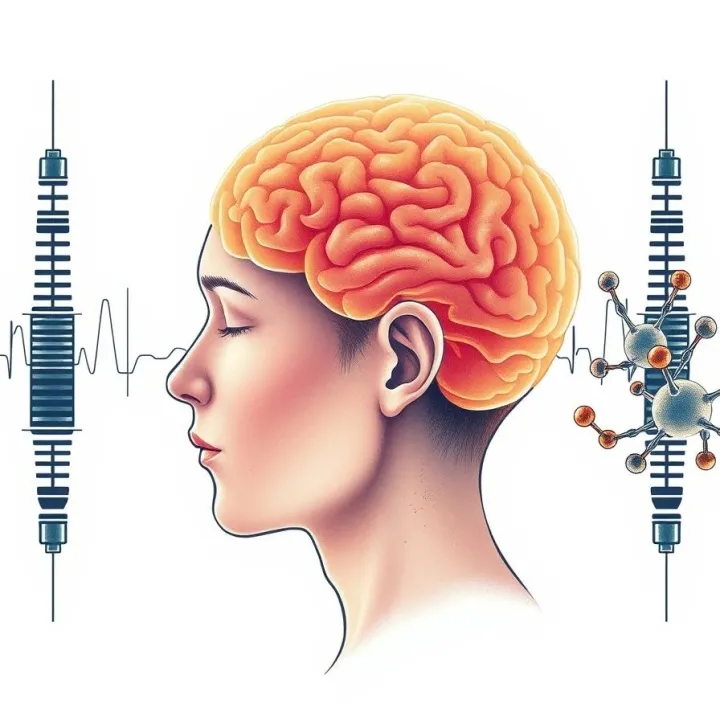
Understanding how the brain transforms the chemical complexity of odors into meaningful perceptual categories remains one of sensory neuroscience's central challenges. Unlike vision and audition, where the stages of feature extraction are comparatively well mapped, human olfaction has long lacked precise temporal markers for how early sensory inputs evolve into higher-level representations. In particular, it has been unclear whether the earliest neural responses to odors primarily reflect low-level physicochemical features, perceptual qualities such as pleasantness, or some blend of both. A new study published in the Journal of Neuroscience addresses this gap by demonstrating that early theta-band activity in the human brain encodes the structural features of odor molecules and directly supports behavioral odor discrimination.
In this work, researchers recorded EEG signals from male and female participants as they inhaled a broad panel of odors spanning varied molecular structures and perceptual qualities. The same individuals completed standardized tests assessing odor detection, discrimination, and identification, as well as questionnaires measuring affective responses to odors. This combination of neural, perceptual, and questionnaire-based data enabled the team to examine how specific temporal components of the EEG signal relate to distinct aspects of olfactory ability.
Time-resolved decoding analyses showed that the first meaningful neural representations emerged in the theta frequency band, beginning around 80 milliseconds after odor onset and peaking near 370 milliseconds. Crucially, these early-theta patterns did not correspond to subjective qualities such as pleasantness. Instead, the decoding aligned specifically with the physicochemical properties of the odor molecules themselves. Representational similarity analysis supported this interpretation, revealing that the structure-based similarities among odors were mirrored in the early neural patterns.
The behavioral relevance of this coding became clear when the researchers examined individual differences. Participants who scored higher on standardized odor discrimination tests showed significantly stronger alignment between early-theta representations and odor physicochemical properties. The fidelity of this molecular-level coding predicted discrimination performance at the trait level, but not detection thresholds or identification accuracy. This selective relationship indicates that the earliest neural representations are most relevant to distinguishing odors rather than simply sensing or naming them.
In contrast to the rapid emergence of theta-based molecular coding, delta-band activity appeared later in the time course, beginning around 720 milliseconds. These delta representations correlated with participants' reported affective responses to odors, particularly pleasantness. However, unlike early-theta patterns, these later signals did not relate to behavioral measures of olfactory ability. The distinction between the two frequency bands suggests that the brain separates structural decoding from affective evaluation in both time and function.
To strengthen their conclusion about behavioral relevance, the researchers conducted a separate EEG experiment in which participants performed an odor discrimination task. They compared trials in which individuals responded correctly with those in which they made errors. Early-theta decoding accuracy was reliably higher on correct trials, demonstrating that the strength of early molecular-level representation varies from moment to moment and predicts trial-by-trial performance. This evidence argues that early-theta coding is not merely correlated with discrimination ability; it actively contributes to the sensory decisions that guide behavior.
Taken together, the findings refine the sequence of events in human olfactory processing. Within the first 80 to 370 milliseconds, the brain extracts low-level molecular information encoded in theta-band frequencies. This early stage supports the perceptual capacity to differentiate one odor from another. Only later in the process does the brain generate representations of affective qualities such as pleasantness, and these are captured in slower delta-band activity. The functional split underscores the idea that structural decoding is a prerequisite for, and distinct from, affective interpretation.
The study adds clarity to an area where temporal boundaries have been difficult to define. Previous work has shown that the olfactory system can respond rapidly, but the specificity of what is coded early and how this influences behavior has remained ambiguous. By combining time-resolved neural decoding with behavioral and questionnaire-based measures, the researchers were able to isolate early-stage representations and determine their functional relevance. The results offer an empirical timeline: structural features arrive first, shaping discrimination performance, followed by affective evaluations that do not track immediate perceptual success.
Although the study focuses on EEG signals and molecular similarity, its implications extend to broader questions in sensory neuroscience. Odor discrimination is a complex task involving both bottom-up input and top-down modulation from memory and experience. The clear dissociation between theta-based structural analysis and later affective evaluation suggests that the olfactory system ensures reliable decoding of physical stimuli before integrating emotional or hedonic components. This ordering may help guarantee perceptual stability in a sensory system known for its variability.
From the perspective of Seven Reflections' Dimensional Systems Architecture (DSA), the findings illustrate a fundamental principle: early-stage coding reflects a system's structural field, while later affective components reflect interpretive fields layered on top of the initial signal. DSA emphasizes that cognition emerges through sequential transformations, beginning with low-level structural inputs that form the stable base of perceptual decision-making. The early-theta signals identified in this study exemplify this structural tier - rapid, precise, and directly tied to functional performance. They provide the initial configuration from which later interpretive layers, such as hedonic evaluation, can arise without disrupting the system's foundational stability.
In DSA terms, the separation between early molecular coding and later pleasantness-related activity indicates a functional decoupling between structural and affective fields. The structural field governs discrimination and guides behavior with minimal latency, while the affective field contributes contextual meaning only after the core perceptual decision has formed. This ordering helps maintain cognitive coherence, preventing interpretive layers from overwhelming early sensory computations. The study therefore aligns with the DSA view that well-timed structural encoding is essential for efficient perception and adaptive behavior.