Explore current research and scientific developments curated by Seven Reflections. This section serves as our future home for official press releases - bridging the gap between discovery, structure, and meaning across science and society.
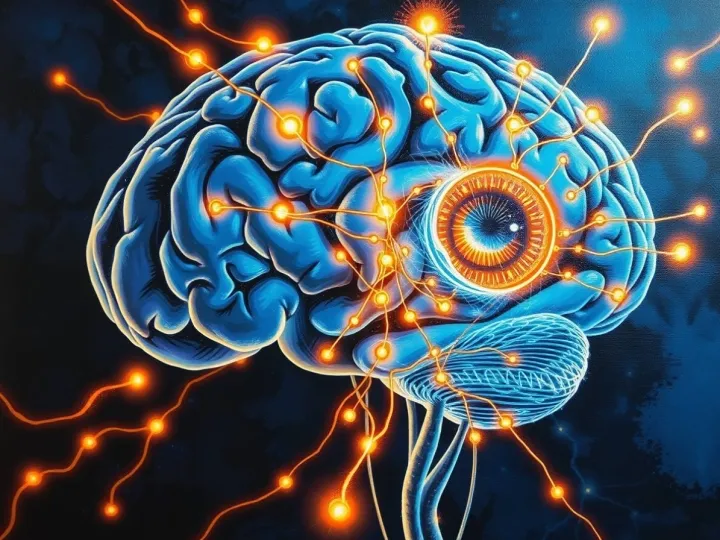
A new open-access study in Neuron reveals that vision is not a passive recording of the world but a dynamic, state-dependent computation shaped by internal brain signals. Researchers at MIT's Picower Institute mapped a specialized feedback circuit linking the prefrontal cortex with visual and motor areas in mice. They found that arousal and movement send targeted instructions that sharpen certain visual features while suppressing others. The findings show that what we see depends strongly on how alert, active, or behaviorally engaged we are - not only on the stimulus itself.
A new open-access study in Archives of Clinical Neuropsychology examines how handedness shapes working memory performance across verbal, visuospatial, and tactual modalities. While left- and right-handed participants showed similar overall working memory ability, the study uncovered subtle but meaningful modality-specific patterns: left-handers excelled on visuospatial recall, whereas right-handers outperformed left-handers on backward tactual sequencing. These findings highlight how hemispheric lateralization contributes to task-specific strengths and refine how clinicians interpret working memory assessments.
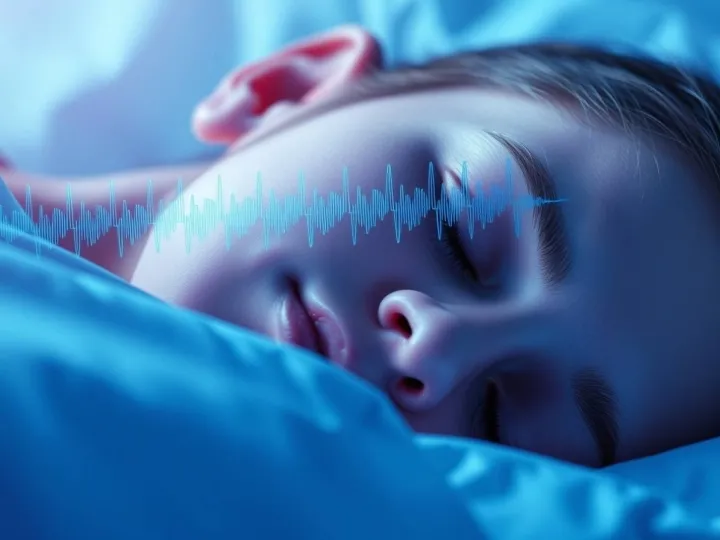
A new open-access study in Brain Communications charts human sleep with unprecedented precision, using ultra-long subscalp EEG recordings collected continuously over weeks. Despite night-to-night variability, the researchers discovered stable oscillatory patterns shared across individuals that allow NREM - REM transitions to be predicted minutes in advance. By analyzing frequency-band dynamics across more than 30 nights per person, the study offers a deeper view of sleep architecture and its potential use in future clinical interventions.
A new open-access study in the Journal of the European Economic Association presents a refined model of early childhood skills formation, revealing that child allowance policies may have larger and more lasting impacts than earlier research suggested. By integrating a more realistic account of parental decision-making, income risk, time allocation, and the joint development of cognitive and non-cognitive skills, the analysis shows that parental investments are more effective than previously estimated. This enhanced understanding reshapes how policymakers can evaluate the long-term benefits of supporting families.
A new article in Mind examines the complex relationship between Arthur Schopenhauer and the charge of misanthropy, revealing a philosophical stance far more nuanced than simple hatred of humankind. While Schopenhauer publicly resisted the misanthrope label, his writings acknowledge the ubiquity of human failings and the disappointment they generate. The study argues that Schopenhauer proposed two distinct responses to these failings - contempt and compassion - and ultimately favored compassion as the only coherent antidote to hatred and despair.
A new study published in Schizophrenia Bulletin introduces a set of innovative natural language processing metrics that disentangle two core features of formal thought disorder: derailment and semantic perseveration. Using generative language models to simulate different types of disorganized speech, the researchers identified structural patterns that traditional semantic-distance metrics miss. Their findings suggest that density-based measures can more accurately detect repetitive or stuck thinking, offering clearer insights into disordered cognition across psychiatric conditions.
A new randomized controlled pilot trial published in Annals of Behavioral Medicine reports that both calming and stimulating stress-resilience practices can reduce depressive symptoms and perceived stress within weeks. The study tested mindfulness, slow breathing with warm showers, the Wim Hof Method, and high-intensity interval training among highly stressed women. While all approaches led to short-term improvements, participants who followed the Wim Hof Method showed modestly more sustained gains three months later. The findings refine how both low- and high-arousal strategies support human stress regulation.
A new 12-month study published in ISME Communications reveals how wild Tibetan macaques preserve a remarkably stable gut microbiome despite living through dramatic seasonal changes in diet, temperature, and rainfall. By combining plant DNA metabarcoding, detailed feeding observations, and 16S rRNA sequencing of 209 fecal samples, researchers found that while food diversity shifted sharply each season, the macaques' gut microbiota remained far more consistent. This microbial resilience appears to buffer the animals against nutritional fluctuations, supporting digestion, metabolism, and year-round energy balance.
As workforces become older and more age-diverse, leadership no longer functions the same way for everyone. A new systematic review of nearly 40 years of research shows that leadership styles interact with employee age in complex, measurable ways - boosting wellbeing for some groups while influencing retention or performance for others. Younger, midlife, and older workers respond differently not because of stereotypes, but because motivation, goals, and cognitive priorities shift across the lifespan. Understanding these patterns may help organizations build healthier, more adaptive, and more age-inclusive workplaces.