Sleep is essential for memory, emotional regulation, and cognitive restoration, yet its internal structure remains difficult to measure accurately in real-world conditions. Most sleep research relies on recordings from single nights in laboratory environments. A new open-access study published in Brain Communications takes a different approach by monitoring brain activity continuously over several weeks, revealing how sleep varies from night to night - and how its core transitions follow surprisingly predictable patterns.
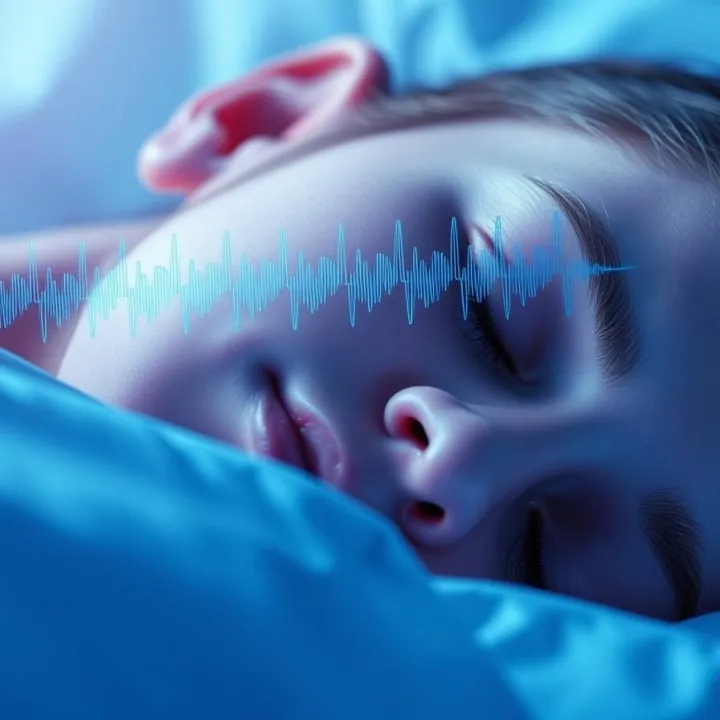
To achieve this, researchers used a minimally invasive subscalp EEG device to record brain activity in eight healthy adults for an average of thirty consecutive days. This approach allowed the team to capture a naturalistic picture of human sleep, free from the artificial disruptions often introduced by sleep labs. Their goal was to determine how stable each person's sleep architecture is over long periods and whether transitions between sleep stages can be forecasted in advance.
The team analyzed brain rhythms by separating EEG signals into standard frequency ranges associated with slow-wave activity, relaxed wakefulness, sleep spindles, and higher-frequency patterns. These rhythms define the depth and character of sleep. By mapping how these patterns evolved over time, the researchers applied two methods: dynamic time warping to measure night-to-night variability, and supervised models to predict stage transitions, especially from NREM sleep to rapid eye movement (REM) sleep.
The first key finding was that each individual's sleep was highly variable night to night. The timing and strength of slow waves and spindle activity shifted substantially across nights. Yet the differences between individuals were significantly larger than the differences within individuals. In other words, people have their own "sleep signatures" - distinctive oscillatory styles that remain identifiable even across weeks of variation.
Next, the researchers looked for patterns that could reliably precede a transition into REM sleep. They extracted "archetypal" sleep cycles that represented each person's most characteristic NREM - REM architecture. A consistent sequence emerged: as the brain moved toward REM, spindle activity rose sharply and then dropped in a narrow time window just before the transition. This dynamic shift served as a reliable internal marker of the brain preparing to enter REM.
Using this pattern, the team developed predictive models that could forecast an upcoming NREM-to-REM transition up to two minutes in advance. The models achieved high accuracy, demonstrating that sleep-stage shifts - which often appear spontaneous - follow measurable internal dynamics that unfold in a stable, repeatable way.
These insights have important implications for sleep science and clinical care. Many neurological conditions, such as epilepsy and certain parasomnias, involve symptoms that appear only during specific sleep stages. If clinicians can anticipate stage transitions with sufficient lead time, it opens the possibility for precisely timed interventions - whether through neural stimulation, targeted therapy, or behavioral guidance.
The study also highlights the value of long-term monitoring. Traditional sleep studies provide only brief snapshots, which can obscure meaningful patterns that emerge only over weeks. In contrast, subscalp EEG allows for continuous, minimally intrusive recording, offering a more complete picture of how sleep behaves across changing daily contexts.
Another important insight is the dual nature of sleep variability: it fluctuates significantly from night to night, yet remains anchored by deeper personal rhythms that shape each person's sleep structure. This tension between flexibility and stability is central to understanding how the brain regulates its restorative cycles.
Viewed through Seven Reflections' Dimensional Systems Architecture, these findings reveal sleep as a rhythmic alternation between coherence and generative openness. During deep NREM sleep, the brain enters a highly organized state marked by strong synchronization, a period of elevated Conscious Structural Coherence (CSC). As the brain approaches REM, this coherence loosens. The rise and sudden drop in spindle activity mark the moment the system reorganizes into a more fluid REM state, characterized by increased internal imagery, dream-like processing, and associative thinking - an expansion of Awareness Content Ratio (ACR). The ability to predict these transitions minutes in advance indicates that sleep does not shift randomly; instead, it follows stable attractor dynamics in which coherence contracts and expands in a repeating rhythm. In this view, sleep operates as a structured cycle of integration, release, and renewal that maintains cognitive balance and long-term adaptability.
Together, these results show that while sleep varies from night to night, it is governed by reliable patterns that reflect the underlying architecture of the brain. By tracking sleep across weeks, researchers can uncover the hidden regularities that shape cognitive restoration, offering new insights into how sleep supports health and how clinicians may one day intervene with precision.