Proust grew up in a prosperous and cultivated household. His father, Adrien Proust, was a prominent doctor and public-health official, while his mother, Jeanne Weil, came from a wealthy Jewish family and shared with her son a love of literature. As a boy, Proust spent holidays in the town of Illiers, which later supplied the model for Combray in his novel. Chronic asthma made his childhood fragile and interrupted his schooling, but he excelled at the Lycée Condorcet, where he formed friendships with future writers and artists.
After military service at Orléans, Proust studied law and political science in Paris. He became a familiar figure in fashionable salons, where he observed the aristocracy and upper bourgeoisie with a sharp eye. In the 1890s he contributed to literary reviews and published Les Plaisirs et les Jours (1896), a collection of stories and sketches. He also translated works by John Ruskin, an apprenticeship that deepened his thinking about art and perception. An unfinished autobiographical novel, Jean Santeuil, remained unpublished in his lifetime.
The deaths of his father in 1903 and his mother in 1905 marked a turning point. Grief, illness, and a sense of wasted time pushed Proust toward the long work that became In Search of Lost Time (À la recherche du temps perdu). He wrote largely at night in a room lined with cork to muffle noise, filling notebooks with scenes drawn from memory and social observation. The first volume, Swann's Way, appeared in 1913 after several publishers, including André Gide at Gallimard, turned it down; it was issued by Grasset at Proust's expense. Gallimard later took over the project.
In 1919 Within a Budding Grove won the Prix Goncourt, bringing Proust wide recognition. The succeeding volumes, including The Guermantes Way, Sodom and Gomorrah, The Prisoner, Albertine Gone, and Time Regained, appeared in the years after the First World War; the last three were published posthumously. The novel follows an unnamed narrator from childhood to maturity, using events, places, and people from Proust's own life to examine memory, desire, jealousy, social ambition, and the making of art. Its treatment of involuntary memory, most famously the episode of the madeleine dipped in tea, changed the way later writers thought about time and recollection. Proust died in Paris in 1922, before the final volumes reached print.
Marcel Proust was born on April 10, 1871 in Paris, Ile-de-France, France. In Cardology (Destiny Cards), April 10, 1871 corresponds to the Jack of Diamonds, making the Jack of Diamonds his Birth Card.
In numerology, the name adds another layer to the birth-date profile. The letters of a person’s name are used to explore inner motivation, personality, expression, and the qualities they bring into relationships and everyday life. Explore how his original name Valentin Louis Georges Eugène Marcel Proust influences his life and personality.
Marcel Proust Quotes
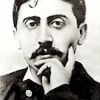
“Let us leave pretty women to men with no imagination.” - Marcel Proust
Famous Aries People
Discover famous Aries people, from actors and musicians to writers, athletes, and historical figures. Explore their birthdays and biographies, and see who shares the Aries zodiac sign.









View All Famous Aries People →
Famous People born on April 10


View All Famous People Born on April 10 →
Jack of Diamonds Famous People



View All Famous Jack of Diamonds People →