L. Ron Hubbard grew up in Nebraska and Montana and later attended George Washington University, where he studied engineering before leaving without a degree. His father was a U.S. Navy officer. Hubbard later gave vivid accounts of world travel, adventure, and hardship in his youth, but documentary records point to a more conventional middle-class upbringing. That gap between his own storytelling and the historical record would shadow much of his later career.
In the 1930s Hubbard became a prolific pulp-fiction writer. He published adventure, western, mystery, fantasy, and science-fiction stories in magazines such as Astounding Science Fiction and under several pen names. His output included novels and novellas such as Final Blackout and Fear, and his pulp work gave him both a steady income and a reputation for imaginative, fast-paced storytelling.
During World War II Hubbard served as a U.S. Navy officer. After the war he turned to a new project: Dianetics, a system of mental therapy that he claimed could clear the mind of painful memories and psychosomatic illness. Dianetics: The Modern Science of Mental Health, published in 1950, became a popular sensation and inspired local study groups and clinics. Medical and scientific critics rejected its theories, and disputes over money and control soon split the early Dianetics movement.
Hubbard recast Dianetics as Scientology, a religious system built around auditing, past-life recall, and a hierarchy of spiritual states. The first Church of Scientology was established in Los Angeles in 1954. Hubbard centralized the movement, later based it at Saint Hill Manor in England, and in 1967 launched the Sea Organization, a uniformed group that operated from ships. Scientology attracted celebrities and members around the world, while also drawing lawsuits, government investigations, and criticism from former members.
In the 1970s Hubbard's organization became entangled in legal trouble. A Scientology campaign to infiltrate and obstruct U.S. government agencies led to federal prosecutions and the conviction of senior officials, including Hubbard's wife Mary Sue Hubbard; Hubbard himself was named an unindicted co-conspirator. He withdrew from public view and returned to science fiction, publishing Battlefield Earth in 1982 and the ten-volume Mission Earth series beginning in 1985. He died in 1986 at his ranch in California. Scientology continued after his death and remains one of the most controversial religious movements to emerge from twentieth-century America.
L Ron Hubbard was born on March 13, 1911 in Tilden, Nebraska, United States. In Cardology (Destiny Cards), March 13, 1911 corresponds to the Ten of Diamonds, making the Ten of Diamonds his Birth Card.
In numerology, the name adds another layer to the birth-date profile. The letters of a person’s name are used to explore inner motivation, personality, expression, and the qualities they bring into relationships and everyday life. Explore how his original name Lafayette Ronald Hubbard influences his life and personality.
L Ron Hubbard Quotes
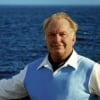
L Ron Hubbard Personal Life
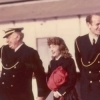
L Ron Hubbard & Mary Sue Hubbard
Compatibility: Ten of Diamonds & King of Clubs
Famous Pisces People
Discover famous Pisces people, from actors and musicians to writers, athletes, and historical figures. Explore their birthdays and biographies, and see who shares the Pisces zodiac sign.








View All Famous Pisces People →
Ten of Diamonds Famous People

View All Famous Ten of Diamonds People →