George Washington grew up on Virginia's Potomac frontier, the eldest son of a tobacco planter who died when Washington was eleven. Lacking the formal English education given to his older half-brothers, he taught himself practical skills such as surveying and, by his late teens, was mapping lands in the Shenandoah Valley. Through his half-brother Lawrence he entered the orbit of the influential Fairfax family, whose patronage helped advance his early career.
In 1753 Virginia's governor sent Washington to warn French forces in the Ohio Country to withdraw, a mission that helped set off the French and Indian War. His 1754 skirmish at Jumonville Glen and the subsequent surrender at Fort Necessity brought him controversy, but his composure under fire and his service alongside General Edward Braddock earned him respect. He went on to command Virginia's militia before turning his attention to his Mount Vernon plantation.
In 1759 he married Martha Dandridge Custis, a wealthy widow with two young children, and settled into the life of a planter and member of Virginia's House of Burgesses. As tensions with Britain deepened, he joined the resistance and served in both the First and Second Continental Congresses.
In June 1775 the Continental Congress named him commander in chief of the Continental Army. He kept the army in the field through years of hardship and defeat, won a crucial victory at Trenton in 1776, endured the bitter winter at Valley Forge, and forced the British surrender at Yorktown in 1781. He resigned his commission in 1783, deliberately demonstrating that military power answered to civil authority.
Washington presided over the Constitutional Convention of 1787 and in 1789 was elected the first president under the new Constitution. Over two terms he established precedents such as the cabinet system and the tradition of stepping down after two terms, and his Farewell Address warned against permanent foreign alliances and the dangers of factional strife.
He retired to Mount Vernon in 1797 and died there in December 1799. His will provided for the eventual emancipation of the enslaved people he owned, and his voluntary surrender of power left a lasting model for republican leadership.
George Washington was born on February 22, 1732. In Cardology (Destiny Cards), February 22, 1732 corresponds to the Three of Diamonds, making the Three of Diamonds his Birth Card.
In numerology, the name adds another layer to the birth-date profile. The letters of a person’s name are used to explore inner motivation, personality, expression, and the qualities they bring into relationships and everyday life. Explore how his original name George Washington influences his life and personality.
George Washington Quotes
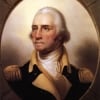
Famous Pisces People
Discover famous Pisces people, from actors and musicians to writers, athletes, and historical figures. Explore their birthdays and biographies, and see who shares the Pisces zodiac sign.









View All Famous Pisces People →
Famous People born on February 22


View All Famous People Born on February 22 →
Three of Diamonds Famous People



View All Famous Three of Diamonds People →