Nietzsche grew up in a family shaped by Lutheran piety. His father, a pastor, died when Nietzsche was a young child, and he was raised in Naumburg by his mother, grandmother, and aunts. An exceptional student, he attended the boarding school Schulpforta, then studied classical philology at the universities of Bonn and Leipzig. His academic promise led to an appointment as professor of classical philology at the University of Basel in 1869, when he was 24. He served as a medical orderly in the Franco-Prussian War in 1870 and contracted illnesses that damaged his health.
At Basel he became close to composer Richard Wagner, whose music and Bayreuth project initially excited him. His first book, The Birth of Tragedy (1872), argued that Greek tragedy arose from the tension between Apollonian order and Dionysian ecstasy; it won attention but also criticism from fellow philologists. His essay collection Untimely Meditations included a defense of Wagner and Schopenhauer. By the late 1870s his health had deteriorated, and his thinking moved away from Wagner and from Schopenhauer's pessimism. He resigned his professorship in 1879 and began a nomadic life, living on a modest pension in Switzerland, Italy, and southern France.
The 1880s were his most productive period. Human, All Too Human (1878) marked a turn toward aphoristic, skeptical prose. The Gay Science (1882) announced the death of God and introduced the eternal recurrence; Thus Spoke Zarathustra (1883 - 85) presented the Übermensch, or overman, as a goal for humanity after traditional values lose their authority. Beyond Good and Evil (1886) and On the Genealogy of Morality (1887) attacked Christian and democratic morality, distinguished "master" and "slave" moralities, and called for a revaluation of values. In 1888, a burst of writing produced Twilight of the Idols, The Antichrist, and Ecce Homo.
Nietzsche never married. His friendship with Lou Salomé and Paul Rée ended in painful estrangement in the early 1880s, and his relationship with his sister Elisabeth was often strained. In early 1889 he suffered a mental collapse in Turin and never recovered his intellectual powers. He lived under family care until his death. Elisabeth later controlled his manuscripts and promoted a distorted, nationalist reading of his work, which Nazi ideologues exploited; postwar scholars recovered more accurate texts. His ideas influenced existentialism, psychoanalysis, literary modernism, and postmodern philosophy, and his books remain widely read and debated.
Friedrich Nietzsche was born on October 15, 1844 in Rocken, Saxony-Anhalt, Germany. In Cardology (Destiny Cards), October 15, 1844 corresponds to the Seven of Clubs, making the Seven of Clubs his Birth Card.
In numerology, the name adds another layer to the birth-date profile. The letters of a person’s name are used to explore inner motivation, personality, expression, and the qualities they bring into relationships and everyday life. Explore how his original name Friedrich Wilhelm Nietzsche influences his life and personality.
Friedrich Nietzsche Quotes
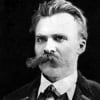
“I'm not upset that you lied to me, I'm upset that from now on I can't believe you.” - Friedrich Nietzsche
“It is not a lack of love, but a lack of friendship that makes unhappy marriages.” - Friedrich Nietzsche
Famous Libra People
Discover famous Libra people, from actors and musicians to writers, athletes, and historical figures. Explore their birthdays and biographies, and see who shares the Libra zodiac sign.




View All Famous Libra People →
Seven of Clubs Famous People


View All Famous Seven of Clubs People →