Margaret Hilda Roberts grew up in the rooms above her family's grocery store in Grantham, a market town in Lincolnshire. Her father, Alfred Roberts, ran the shop and served as a Methodist lay preacher and local alderman, and his emphasis on thrift, hard work, and self-reliance shaped her outlook. She won a scholarship to Kesteven and Grantham Girls' School and went on to Somerville College, Oxford, where she studied chemistry and graduated in 1947. At Oxford she became active in Conservative politics and served as president of the university's Conservative association.
After university she worked briefly as a research chemist, including a period developing food additives. She then took up the law, qualifying as a barrister in 1953 with a specialty in tax. In 1951 she married Denis Thatcher, a businessman, and their twins, Mark and Carol, were born in 1953. She entered Parliament in 1959 as the member for Finchley, a north London constituency she would represent for more than three decades.
After holding junior ministerial posts, she became Secretary of State for Education and Science in 1970 under Prime Minister Edward Heath. In 1975 she defeated Heath for the leadership of the Conservative Party, becoming the first woman to lead a major British party. The Conservatives won the 1979 general election, and she took office as prime minister.
Her government pursued a program of privatization, deregulation, and reduced trade-union power, aiming to shrink the state and bring inflation under control. The policies proved divisive, bringing a sharp early recession and widespread industrial unrest, though growth returned later in the decade. A Soviet newspaper labeled her the Iron Lady, a nickname she embraced. In 1982 she led Britain through the Falklands War against Argentina, a victory that strengthened her standing at home, and she won further elections in 1983 and 1987 while building a close working alliance with U.S. President Ronald Reagan.
Opposition to her overhaul of local taxation and tensions within her own party led to a leadership challenge in 1990. She resigned that November and was succeeded by John Major. She remained a member of Parliament until 1992, when she entered the House of Lords as Baroness Thatcher. She died in London on April 8, 2013, and received a ceremonial state funeral. Her time in office reshaped British economics and politics and remains among the most debated chapters in modern British history.
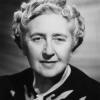
Margaret Thatcher was born on October 13, 1925 in Grantham, England, United Kingdom. In Cardology (Destiny Cards), October 13, 1925 corresponds to the Nine of Clubs, making the Nine of Clubs her Birth Card.
In numerology, the name adds another layer to the birth-date profile. The letters of a person’s name are used to explore inner motivation, personality, expression, and the qualities they bring into relationships and everyday life. Explore how her original name Margaret Hilda Roberts influences her life and personality.
Margaret Thatcher Quotes

Famous Libra People
Discover famous Libra people, from actors and musicians to writers, athletes, and historical figures. Explore their birthdays and biographies, and see who shares the Libra zodiac sign.




View All Famous Libra People →
Nine of Clubs Famous People


View All Famous Nine of Clubs People →