Wilde came from an intellectually ambitious household. His father, William Wilde, was a prominent surgeon and folklorist, and his mother, Jane Francesca Elgee, wrote poetry under the name Speranza and was involved in nationalist politics. He studied classics at Trinity College Dublin, where he excelled, and then at Magdalen College, Oxford, where he encountered the ideas of Walter Pater and John Ruskin and began shaping his philosophy of Aestheticism - the belief that art should be valued for beauty rather than moral instruction.
After Oxford, Wilde settled in London and made himself conspicuous in literary and artistic circles through his wit, dress, and public lectures. He published Poems in 1881 and toured the United States in 1882, lecturing on aesthetics and interior decoration. In 1884 he married Constance Lloyd, with whom he had two sons, Cyril and Vyvyan. He edited Woman's World and published fairy tales collected in The Happy Prince and Other Tales (1888).
Wilde's only novel, The Picture of Dorian Gray, appeared in 1890 and in revised form in 1891; its treatment of beauty, corruption, and hidden sin drew criticism. He also wrote the play Salomé, then turned to the stage with the society comedies Lady Windermere's Fan (1892), A Woman of No Importance (1893), and An Ideal Husband (1895). The Importance of Being Earnest, a comedy of mistaken identities and invented personas, opened in London in 1895.
Wilde's relationship with Lord Alfred Douglas drew him into conflict with Douglas's father, the Marquess of Queensberry, who publicly accused Wilde of homosexuality. Wilde sued Queensberry for libel but lost; evidence from the trial led to Wilde's own arrest and prosecution for gross indecency. After a first trial ended without a verdict, he was convicted in 1895 and sentenced to two years' hard labor. He served time in Wandsworth and Reading prisons, where he wrote the long letter later published as De Profundis.
Released in 1897, Wilde went into exile in France and did not return to Britain. He published The Ballad of Reading Gaol in 1898, a poem shaped by his prison experience. His health declined, and he died in Paris in 1900. His plays, essays, and epigrams survived the scandal that ended his career; The Importance of Being Earnest and The Picture of Dorian Gray are still performed and read, and his trials became a landmark case in the history of Victorian attitudes toward homosexuality.
Oscar Wilde was born on October 16, 1854 in Dublin, Leinster, Ireland. In Cardology (Destiny Cards), October 16, 1854 corresponds to the Six of Clubs, making the Six of Clubs his Birth Card.
In numerology, the name adds another layer to the birth-date profile. The letters of a person’s name are used to explore inner motivation, personality, expression, and the qualities they bring into relationships and everyday life. Explore how his original name Oscar Fingal O'Flahertie Wills Wilde influences his life and personality.
Oscar Wilde Quotes
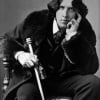
Famous Libra People
Discover famous Libra people, from actors and musicians to writers, athletes, and historical figures. Explore their birthdays and biographies, and see who shares the Libra zodiac sign.





View All Famous Libra People →
Six of Clubs Famous People


View All Famous Six of Clubs People →