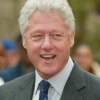
William Jefferson Blythe III grew up in small-town Arkansas, where his widowed mother, Virginia, worked as a nurse anesthetist. His father, a traveling salesman, had died in a car accident before his son was born. When Virginia remarried Roger Clinton, the family settled in Hot Springs, and the boy eventually adopted his stepfather's surname. An outgoing student with an early appetite for politics, he met President John F. Kennedy as a delegate to Boys Nation in 1963. He went on to Georgetown University, won a Rhodes Scholarship to study at Oxford, and earned a law degree from Yale, where he met Hillary Rodham.
Returning to Arkansas after Yale, Clinton taught law at the University of Arkansas and made his first run for Congress in 1974, losing narrowly. He was elected state attorney general in 1976 and, two years later, governor at age 32, then the youngest governor in the country. Voters turned him out in 1980, a defeat he later linked to an unpopular vehicle fee and a perception of aloofness, but he won the office back in 1982 and held it for a decade. As governor he championed education standards and became a leading voice among centrist Democrats and the National Governors Association.
In 1992 Clinton defeated President George H. W. Bush and independent Ross Perot, campaigning on the economy with the internal rallying cry "It's the economy, stupid." His first two years brought the North American Free Trade Agreement, the Brady handgun bill, and a deficit-reduction package, alongside bruising fights over gays in the military and a failed health care overhaul led by Hillary. After Republicans captured Congress in 1994, Clinton adapted and won reelection easily in 1996 over Bob Dole.
His second term combined centrist policy with expanding prosperity. He signed the 1996 welfare reform law and the Children's Health Insurance Program, and, working with a Republican Congress, produced balanced budgets and surpluses. Abroad, he pushed NATO expansion, helped broker the Dayton Accords that ended the Bosnian war, and ordered airstrikes during the Kosovo conflict. His presidency was shaken by revelations about an affair with White House intern Monica Lewinsky; the House impeached him in December 1998 on charges of perjury and obstruction, and the Senate acquitted him in February 1999.
After leaving office, Clinton built the Clinton Foundation into a global philanthropic operation focused on public health, climate, and economic development, and launched the Clinton Global Initiative. He campaigned for Hillary Clinton in her 2016 presidential run. The couple married in 1975 and have one daughter, Chelsea. Clinton remains an active fundraiser, speaker, and advocate, and he wrote the 2004 memoir "My Life."
Bill Clinton was born on August 19, 1946. In Cardology (Destiny Cards), August 19, 1946 corresponds to the Seven of Clubs, making the Seven of Clubs his Birth Card.
In numerology, the name adds another layer to the birth-date profile. The letters of a person’s name are used to explore inner motivation, personality, expression, and the qualities they bring into relationships and everyday life. Explore how his original name William Jefferson Blythe III influences his life and personality.
Famous Leo People
Discover famous Leo people, from actors and musicians to writers, athletes, and historical figures. Explore their birthdays and biographies, and see who shares the Leo zodiac sign.






View All Famous Leo People →
Famous People born on August 19
View All Famous People Born on August 19 →
Seven of Clubs Famous People

View All Famous Seven of Clubs People →