Pope grew up in a Roman Catholic family during a period when English Catholics faced legal disabilities and deep suspicion. His father, a linen merchant, settled the family at Binfield in Windsor Forest, where the young Pope read widely in classical and English literature. A tubercular infection of the spine in childhood left him chronically ill and severely curved his spine; he remained short in stature and needed help with some physical tasks. His formal education was limited by his religion and health, so he largely educated himself. The countryside around Binfield and his reading in classical poetry shaped his early verse.
Pope's early poems won attention in literary London. His Pastorals appeared in 1709 in Jacob Tonson's Miscellany, and An Essay on Criticism (1711) displayed the critical principles and polished couplets that became his trademark. The Rape of the Lock (1712; enlarged 1714) turned a fashionable quarrel into a mock-heroic masterpiece, and Windsor Forest (1713) reflected his attachment to the English countryside. Around this time he joined Jonathan Swift, John Gay, Thomas Parnell, and John Arbuthnot in the informal Scriblerus Club, whose satirical projects influenced much of his later work.
His translation of Homer's Iliad, published by subscription between 1715 and 1720, was a commercial triumph that made him financially independent. He followed it with the Odyssey (1725 - 26), produced with William Broome and Elijah Fenton, and an edition of Shakespeare (1725) that drew criticism for its textual methods. In 1719 he leased a villa at Twickenham, where he created a famous garden and grotto and received friends and literary visitors. His mother lived with him there until her death in 1733.
The 1720s and 1730s brought Pope's sharpest satire. The Dunciad (1728; expanded 1729 and 1743) attacked literary hacks and the cultural marketplace in mock-epic form, while An Essay on Man (1733 - 34) set out a philosophical vision of humanity's place in the universe. Moral Essays, the Epistle to Dr Arbuthnot (1735), and Imitations of Horace showed his mastery of verse epistle and personal satire. His feuds with critics, editors, and former friends were public and often literary in form.
Pope never married. His long friendship with Martha Blount was central to his later life, and his carefully prepared letters became an important part of his literary reputation. He died at Twickenham in 1744 and was buried at St Mary's Church there. His pointed couplets and satirical wit shaped English verse satire and remained a standard against which later poets measured themselves.
Alexander Pope was born on May 21, 1688 in London, England, United Kingdom. In Cardology (Destiny Cards), May 21, 1688 corresponds to the Jack of Clubs, making the Jack of Clubs his Birth Card.
In numerology, the name adds another layer to the birth-date profile. The letters of a person’s name are used to explore inner motivation, personality, expression, and the qualities they bring into relationships and everyday life. Explore how his original name Alexander Pope influences his life and personality.
Alexander Pope Quotes
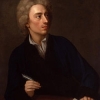
“Blessed is he who expects nothing, for he shall never be disappointed.” - Alexander Pope
Famous Taurus People
Discover famous Taurus people, from actors and musicians to writers, athletes, and historical figures. Explore their birthdays and biographies, and see who shares the Taurus zodiac sign.






View All Famous Taurus People →
Jack of Clubs Famous People


View All Famous Jack of Clubs People →