The only child of George Hearst, a mining magnate and U.S. senator, and Phoebe Apperson Hearst, a former teacher and philanthropist, Hearst grew up with wealth, political connections, and an appetite for public attention. His mother oversaw his education and took him on European travels. At Harvard College in the early 1880s he worked on the Harvard Lampoon, a humor magazine, but left without a degree after disciplinary trouble.
In 1887 his father handed him the San Francisco Examiner, reportedly to give him a focus. Hearst turned the struggling paper into a lively, profitable daily by emphasizing crime, scandal, illustrations, and civic crusades. He poached talent, promoted stunts, and treated journalism as a fight for readers. The Examiner became the template for the chain he soon assembled.
Hearst moved into New York in 1895 by buying the New York Journal and immediately challenged Joseph Pulitzer's New York World. Their circulation war, with screaming headlines, crime stories, and intense coverage of Cuba's rebellion against Spain, helped define yellow journalism. The Journal's reporting built American sympathy for Cuban rebels and, critics charged, pushed the country toward the Spanish-American War in 1898. Hearst's political ambitions grew alongside his press power: he served in the U.S. House of Representatives from 1903 to 1907, sought the Democratic presidential nomination in 1904, and ran unsuccessfully for mayor of New York in 1905 and governor of New York in 1906.
Hearst expanded nationally with newspapers in Boston, Chicago, Los Angeles, and other cities. He added magazines such as Cosmopolitan, Good Housekeeping, and Harper's Bazaar, the King Features Syndicate, the International News Service, and radio stations, creating a vertically integrated media company. At its height the Hearst press reached millions of readers and gave him enormous political influence, which he used to support favored candidates and attack enemies. The mix of investigative crusades and sensationalism made him both admired and feared.
In 1903 Hearst married Millicent Willson; they had five sons. From the late 1910s until his death, actress Marion Davies was his longtime companion, and he financed films in which she starred. He poured money into Hearst Castle at San Simeon, California, a sprawling estate filled with European art and antiques. The Depression strained his finances, but he kept most of his media holdings. He died in 1951 in Beverly Hills. Orson Welles's 1941 film Citizen Kane, a thinly veiled portrait of a newspaper tycoon, fixed Hearst's public image as a domineering press lord, while his papers' mixture of crusading and sensationalism remained a model and a caution.
William Randolph Hearst was born on April 29, 1863 in San Francisco, California, United States. In Cardology (Destiny Cards), April 29, 1863 corresponds to the Five of Clubs, making the Five of Clubs his Birth Card.
In numerology, the name adds another layer to the birth-date profile. The letters of a person’s name are used to explore inner motivation, personality, expression, and the qualities they bring into relationships and everyday life. Explore how his original name William Randolph Hearst influences his life and personality.
William Randolph Hearst Quotes
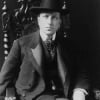
“It is a good thing that women are so easily manipulated. Otherwise, most of us wouldn't be here.” - William Randolph Hearst
Famous Taurus People
Discover famous Taurus people, from actors and musicians to writers, athletes, and historical figures. Explore their birthdays and biographies, and see who shares the Taurus zodiac sign.





View All Famous Taurus People →
Famous People born on April 29


View All Famous People Born on April 29 →
Five of Clubs Famous People

View All Famous Five of Clubs People →