The Power and Paradox of the Name
Every human life begins with a name. Before consciousness takes hold, a sound is assigned to us - a symbol that will carry our story, identity, and social status. Yet, as MacLochlainn shows, names are not mere linguistic conveniences; they are instruments of fixity in a world made of flow. To name something is to stop it for a moment, to pull it out of motion and declare: this is what you are.
Anthropology has long treated naming as a universal cultural act - a bridge between language and social order. From early ethnographies of naming rituals to modern analyses of hashtags, naming has remained a silent architecture beneath human systems of meaning. But as MacLochlainn notes, this architecture is inherently unstable. A name holds meaning only because it points toward something that is always changing. To call someone by name is to engage in an act of pursuit - a linguistic attempt to fix what refuses to stay still.
This tension, between the fixity of designation and the flow of identity, runs through every act of naming. Names locate us, but they also confine us. They open the door to recognition while inviting the risk of misrecognition - of being seen as less, other, or only one thing.
Naming as Power, and Refusal as Freedom
To name is also to wield power. From colonial maps to bureaucratic forms, names have long been the state's first mechanism of control. The anthropologist James C. Scott once described legibility as the cornerstone of governance - the process of making people, places, and things visible to authority. MacLochlainn builds on this idea, showing how the politics of naming define who counts as human, who belongs, and who can be erased.
Across the world, naming has been a tool of domination - slaves stripped of ancestral names, nations renamed by colonizers, landscapes redrawn to reflect ownership rather than relationship. Yet refusal also emerges within this act. The decision not to name - or to rename oneself - becomes a gesture of reclamation. From Malcolm X to Latinx, from indigenous name revivals to digital pseudonyms, people continuously negotiate between visibility and autonomy.
To remain nameless is not necessarily to be absent. It can mean existing in the fluid spaces between systems - a refusal to be reduced. As MacLochlainn notes, anonymity can be an act of survival, an insistence that one's essence not be fully translated into institutional language. In this sense, the nameless carry a kind of sacred freedom: they remain undefined by the categories that would otherwise confine them.
Anthropology's Mirror: The Science That Names
MacLochlainn's review turns anthropology's gaze inward, exposing a deep irony: the discipline that studies naming is itself built on it. Every ethnographic map, every kinship diagram, every theoretical model depends on assigning names to people, relations, and concepts. Even when researchers use pseudonyms to protect anonymity, the act of renaming still enacts power - replacing lived identities with scholarly ones.
He points out that anthropology's language has often mistaken classification for comprehension. To "name" a people or practice is to risk turning dynamic human relations into stable categories. Yet anthropology cannot escape the name; it is the discipline's very method. Naming, in this light, becomes both its strength and its ethical dilemma.
The problem is not that names exist, but that they harden. Once a word becomes a concept - "tribe," "race," "ritual," "belief" - it begins to circulate as if it were real. The same mechanism that enables recognition also enables misunderstanding. Anthropology, MacLochlainn suggests, must therefore learn to treat names as temporary coordinates, not final truths.
Names as Systems of Relation
Beyond identity, naming constructs entire ontologies of relation. In many indigenous traditions, a name is not static but relational - tied to ancestry, geography, or spiritual lineage. Among the Western Apache, as Keith Basso famously showed, place-names encode entire stories about moral life and memory: "Wisdom sits in places." In such systems, to speak a name is to recall a relationship, not merely to label an object.
MacLochlainn revisits these perspectives to reveal a deeper lesson: naming is not only about the named, but about the act of addressing. Every name is a bridge between speaker and subject - an invocation. Whether through kin terms, honorifics, or pronouns, naming enacts recognition. It says, "I see you." But it also says, "I define you."
The politics of gendered and racial naming make this double edge visible. To be misnamed is to be unseen; to be unnamed can be to vanish. Yet self-naming - the deliberate choice of pronouns, nicknames, or redefinitions - becomes a creative act of resistance. Through language, people rebuild the relational architecture that the world often distorts.
The Economics and Afterlife of Names
In modern society, names circulate like currencies. They are owned, trademarked, monetized, and protected by law. Corporations invest billions into names that evoke trust, power, or belonging. Nations rebrand. Movements rename. Even in the digital sphere, algorithms categorize us by usernames and tags, where identity becomes both data and commodity.
MacLochlainn warns that naming has become an act of extraction as much as recognition. Every click, every registration form, every "real name" policy feeds into bureaucratic and algorithmic systems of legibility. The dream of transparency has turned the name into an instrument of surveillance.
And yet, names also resist. In online spaces, the play of aliases, pseudonyms, and coded speech re-introduces mystery into the system. Refusal re-emerges as creativity - the digital reincarnation of ancient practices of sacred anonymity.
Between Silence and Speech
What does it mean, then, to live between naming and namelessness? MacLochlainn concludes that recognition is always partial. To be named is to exist within a grammar of attention; to remain unnamed is to risk erasure. But both are necessary. Naming allows communication - the shared fiction that makes society possible. Namelessness preserves the infinite, the part of the self that language cannot contain.
In the end, anthropology's lesson mirrors a deeper human truth: we spend our lives balancing between the desire to be seen and the right to remain undefined. Perhaps the most ethical act is to name lightly - to recognize without possessing.
Names, like rivers, mark the world in passing. They etch meaning across landscapes and souls, but their waters never stand still. Between name and nothingness lies the living current of recognition - the point where self, language, and world briefly meet before flowing onward.
Seven Reflections Signature: The Hidden Science of Naming
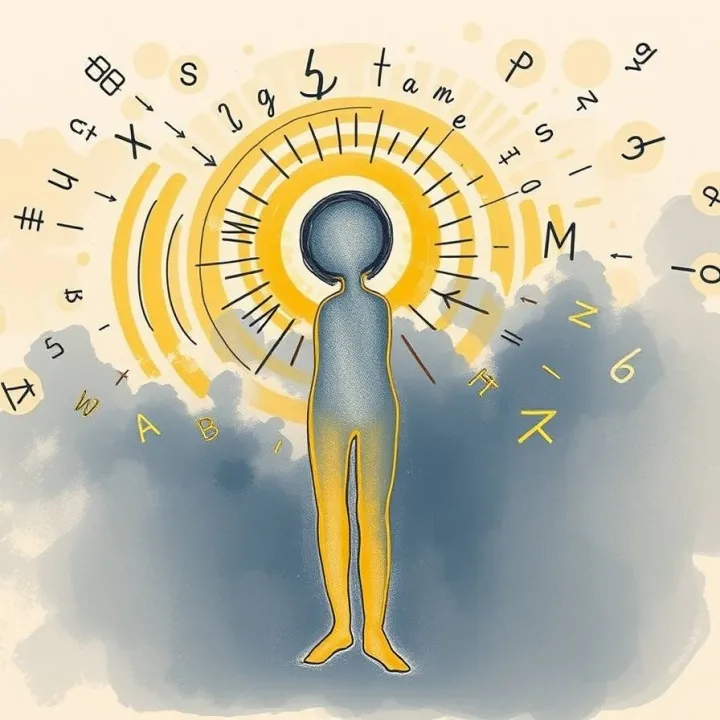
Long before anthropology, ancient numerologists and mystics understood that names are codes of vibration. Every letter, sound, and number resonates with a frequency that shapes perception and behavior. To name something is to set its frequency - to assign it a pattern within the field of potential.
In Pythagorean numerology, each letter corresponds to a number, and each number represents a principle of manifestation. The name becomes an equation - a matrix of resonance between the soul and the world. This insight, rediscovered across traditions from Egypt to India, suggests that naming is not merely symbolic but energetic: it encodes the vibrational identity of a being.
Even modern linguistics hints at this hidden symmetry. The rhythm of phonemes and the tonal quality of words evoke emotional and cognitive responses. The ancients saw this not as coincidence but as law - a reflection of the universe's harmonic structure.
To change a name, therefore, is to alter the field through which energy flows. This is why spiritual initiations often include new names, and why some cultures hold secret names never spoken aloud - preserving power in silence.
From the systemic lens, naming can be seen as the act of stabilizing a dynamic field - fixing a coordinate within an otherwise fluid continuum. Letters become vectors of vibration, translating frequency into form. The name does not merely describe; it creates a boundary through resonance.
And so, the act of naming - whether in anthropology or mysticism - always carries the same truth: it transforms the undefined into the defined. The key lies not in resisting the name, but in remembering that it is never the whole of what we are.
Our true identity, as the ancients whispered, remains beyond the spoken word - vibrating quietly between the letters, where sound becomes silence and being returns to its source.