Culture, long studied as a fixed set of traditions, is now understood as a system in motion. Alfred W. T. Lo's paper Culture Travellers: Theorizing Transculturing through Transcultural Fandom in the GenAI Age reframes cultural exchange as a dynamic and imaginative act - one shaped by movement, creativity, and interaction. Rather than being bound to geography or nationality, culture emerges through lived encounters, where people, ideas, and technologies meet, remix, and create meaning together.
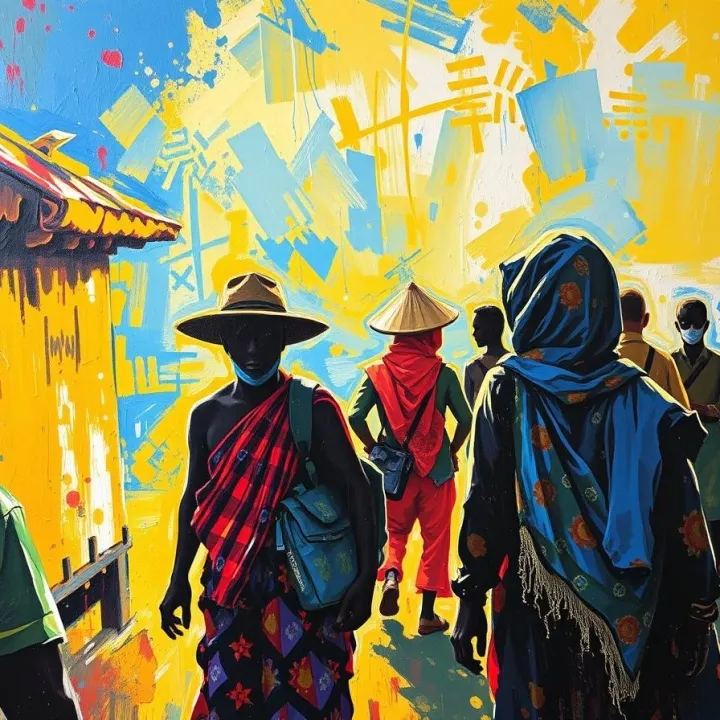
The study revisits anthropologist James Clifford's idea of "travelling cultures," which emphasized that cultural identity is always on the move. Building on this, Lo describes "culture travelers" not as passive carriers of tradition, but as active producers of meaning who reshape cultural forms in transit. The digital era magnifies this process, with online fandoms becoming laboratories of cultural experimentation - spaces where boundaries between East and West, mainstream and niche, human and machine are continuously renegotiated.
Fandom provides Lo's central case study. Once dismissed as subcultural or escapist, fandom today functions as a global arena of creativity. Fans are not just consumers but producers - what Henry Jenkins once called "textual poachers." Through memes, remixes, fan fiction, and performance, they adapt cultural artifacts for new audiences, often challenging hierarchies of power and authorship. These acts, Lo argues, form the foundation of "transcultural productivity" - the active labor of translating meaning across linguistic and symbolic systems.
Equally vital is "transcultural imaginativity" - the human capacity to envision new possibilities beyond existing forms. In Lo's analysis, imagination is not a retreat from reality but a method of cultural innovation. Through recontextualized fan videos and humorous reinterpretations of Squid Game, individuals transform high-budget narratives into participatory, local expressions of identity. A fan might replace life-or-death games with bubble tea rituals in Taiwan or restage scenes through the exaggerated politeness of Japanese etiquette. Such adaptations reveal how humor and creativity become tools of cultural translation.
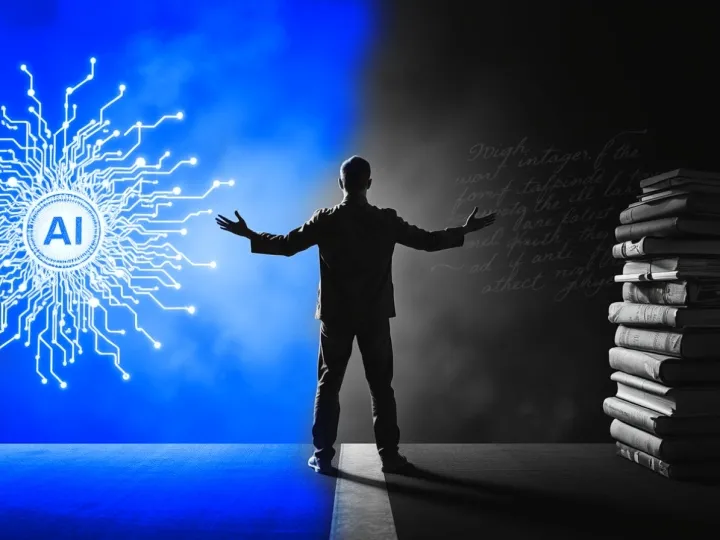
In this fluid ecosystem, Generative AI (GenAI) adds a new dimension. Deepfake technologies and voice synthesis allow fans to transform familiar characters into multilingual performers or remix political figures into satire. Rather than erasing human creativity, Lo sees these tools as part of a "human - community - machine ecology," where meaning is co-produced across organic and algorithmic intelligence. Yet this entanglement raises ethical and existential questions: What remains "authentic" when algorithms imitate expression? How can human imagination stay central as machines accelerate cultural production?
Lo situates transculturing at this intersection - where the utopian (what culture could be) meets the utilitarian (what it must become). His framework rejects the idea of culture as a static heritage and instead defines it as an ongoing negotiation between imagination and practicality. Just as microbiologists "culture" living cells under controlled conditions, small groups - or "small cultures," in Adrian Holliday's term - continually generate living forms of meaning within their own social ecologies. In this analogy, fandom is the laboratory where culture grows, mutates, and becomes observable.
What distinguishes transculturing from earlier models is its attention to the moment: brief, improvised instances where creativity surfaces unexpectedly. Borrowing from "moment analysis" in linguistics, Lo shows that culture is often made visible in spontaneous, everyday acts - a gesture, a remix, or a shared meme that captures both the human and technological layers of expression. Each moment reveals how imagination and structure coexist, forming a rhythm of innovation that resists classification.
The study also highlights the democratic and hopeful dimensions of this process. Transculturing affirms that everyone - not just professionals or academics - can participate in cultural creation. For marginalized or resource-limited communities, GenAI tools can amplify access and visibility, allowing individuals to visualize or voice ideas previously unreachable. Yet Lo warns that this promise remains fragile. The misuse of AI for exploitation or disinformation risks turning transculturing's collaborative space into one of homogenization and loss of meaning.
Through this lens, culture becomes a living architecture of connection - built through emotional, cognitive, and social resonance. It is neither wholly human nor fully machine-made but exists in the flow between the two. Lo's theory positions culture as "hope," suggesting that creativity grounded in empathy and ethical collaboration can sustain humanity even amid rapid technological change.
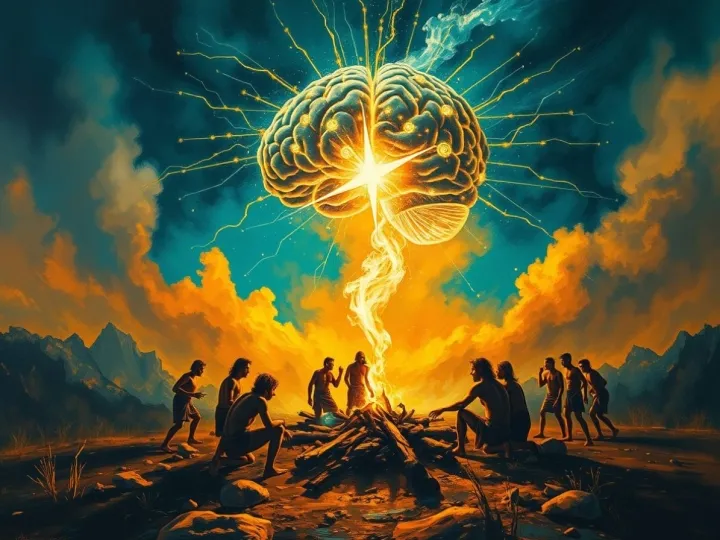
From the perspective of Seven Reflections' Dimensional Systems Architecture (DSA), transculturing represents a field dynamic between L1 (layered human creativity) and T-1 (dynamic adaptation in time). In this interaction, the human mind acts as a structural integrator, translating emotion, cognition, and machine output into coherent meaning. Fandom becomes a self-organizing system where consciousness negotiates between structure (cultural forms) and entropy (algorithmic variation). DSA interprets transculturing as evidence that consciousness itself evolves through structured interaction - each creative act forming a feedback loop that stabilizes identity while expanding possibility.
In the GenAI era, transculturing thus stands as a model of balance. It mirrors DSA's principle of recursive co-creation, where human and artificial systems learn from one another within shared semantic fields. Lo's study reminds us that even as technology grows in power, the imaginative link - the human touch - remains the organizing principle of cultural evolution.