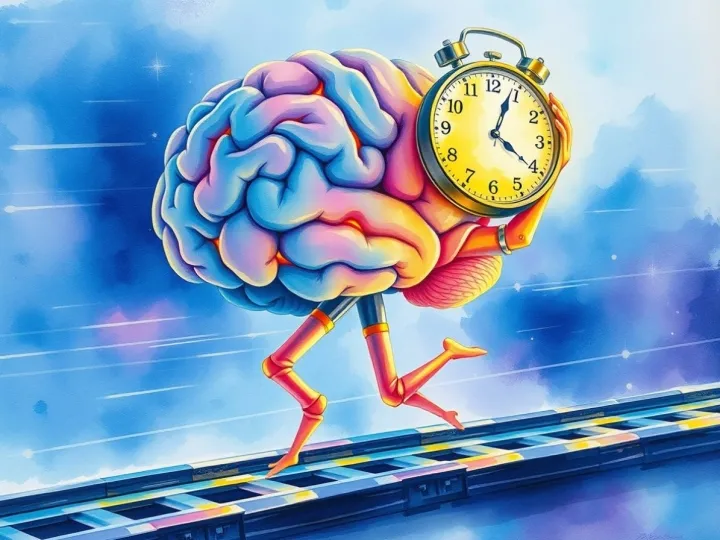
Sleep has always been humanity's most underestimated biological currency. While short nights are often worn as badges of productivity, the brain quietly pays compound interest on the debt. Cognitive neuroscience has shown that insufficient sleep impairs attention, memory, and emotion regulation - but until recently, little was known about how it affects the subtle process of sequential updating: the way we revise our beliefs about the world based on feedback.
In this new study, Jeryl Y. L. Lim, Daniel Bennett, and Sean P. A. Drummond asked how extended sleep restriction reshapes reward learning. Thirty-six healthy adults completed two laboratory conditions in counterbalanced order. In one, they spent seven nights with nine hours in bed (the well-rested condition); in the other, only five hours per night (the sleep-restricted condition). On the final day, each participant performed a Probabilistic Reversal Learning Task (PRLT) - a classic test of adaptive decision making where reward contingencies change unpredictably, requiring subjects to continuously adjust their choices.
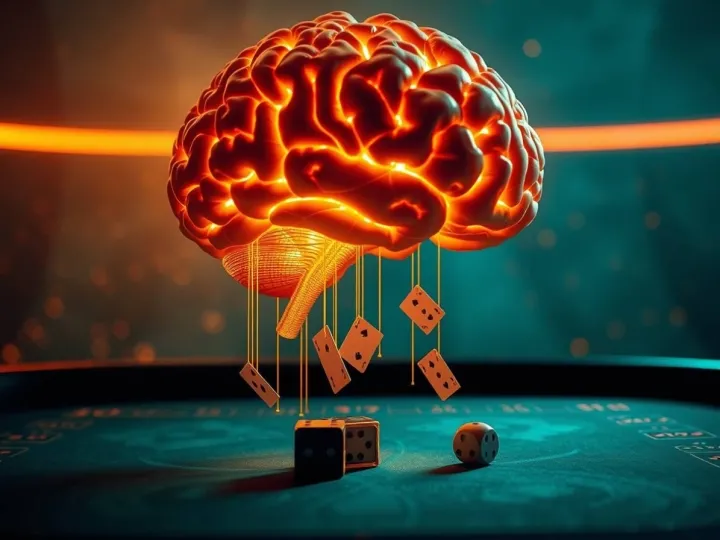
Using computational models derived from reinforcement-learning and Bayesian frameworks, the researchers fitted participants' trial-by-trial decisions using hierarchical Bayesian estimation. The Asymmetric Rescorla-Wagner model best described behavior, implying that individuals updated their expectations differently for rewards and non-rewards. Under sleep restriction, participants showed increased reward sensitivity and greater choice stochasticity - in other words, they were quicker to chase rewards and less consistent in strategy. Accuracy on the task did not significantly differ between conditions, suggesting that sleep loss alters decision style more than raw performance.
These findings challenge a common assumption. Earlier work had emphasized that acute sleep deprivation (one night without sleep) primarily dulls responses to punishment or loss. Lim and colleagues, however, show that chronic partial restriction - the kind many people experience during busy work weeks - creates the opposite pattern: an amplified pull toward positive feedback. This suggests that sleep pressure changes the weighting of reward versus control networks in the brain, producing behavior that is simultaneously more reactive and less deliberate.
Historically, the neuroscience of sleep and decision making emerged from research on the dopaminergic reward system in the early 2000s. Functional MRI studies showed that a single night of sleep loss boosts activation in the ventral striatum - an area linked to reward anticipation - while dampening prefrontal regions involved in evaluation and self-control. These effects mirror the patterns seen in risk taking, substance craving, and impulsive shopping after poor sleep. Over time, the field began to understand sleep as a regulatory gatekeeper between emotion and reasoning.
The new results refine that picture. By combining high-precision behavioral modeling with controlled, week-long sleep manipulation, Lim and colleagues reveal a dose-dependent mechanism: the brain under chronic restriction does not simply misjudge risk - it learns differently. Its updating algorithm favors immediate reward over long-term stability. The Asymmetric Rescorla-Wagner fit implies separate learning rates for positive and negative feedback, and sleep restriction amplifies the positive side of that equation. It is as if the cognitive system, fatigued and resource-depleted, doubles down on small wins to maintain motivation.
From a practical perspective, the implications stretch far beyond the laboratory. Many professions - medical residents, truck drivers, emergency workers - require decision-making under partial sleep deprivation. Even when accuracy appears intact, changes in reward weighting could bias judgments toward short-term gains, affecting safety, negotiation, and risk management. Chronic sleep restriction may therefore erode the very cognitive calibration that underlies disciplined reasoning.
The authors note that these effects likely arise from altered dopamine and noradrenaline signaling within cortico-striatal loops. Animal studies show that sleep loss increases extracellular dopamine in the striatum and disrupts prefrontal modulation of reinforcement signals. Similar mechanisms may explain why sleep-restricted humans exhibit "reward-chasing" behavior. Notably, this hyper-reactivity does not necessarily translate into better outcomes - much like overfitting in machine learning, excessive updating can make systems unstable when the environment changes.
Historically, understanding of reinforcement learning itself grew alongside neuroscience. The original Rescorla-Wagner model (1972) was inspired by Pavlovian conditioning but later became a cornerstone of computational psychiatry, describing how prediction errors guide learning in the brain. By embedding this model in sleep research, Lim and colleagues bring decades of theory full circle - linking the mathematics of learning to the physiology of rest.
From the perspective of Seven Reflections' Dimensional Systems Architecture (DSA), sleep serves as a recalibration cycle between structural (T-axis) and field (L-axis) layers of consciousness. Each night, the brain reorganizes energetic coherence between these layers, integrating new experiences and stabilizing predictive maps. When sleep is shortened, the system cannot complete this resonance loop; the field remains partially open, amplifying reward feedback and noise sensitivity. In DSA terms, chronic sleep restriction elevates the Ego Content Ratio (ECR) - the portion of the cognitive field occupied by immediate self-referential feedback - while reducing systemic coherence across time. The result is hyper-responsiveness without foresight: more reaction, less reflection.
This pattern mirrors what we see culturally in chronically sleep-deprived societies - fast adaptation, high stimulation, reduced depth of awareness. The findings thus transcend physiology, offering a microcosm of the modern cognitive field itself: accelerated updating, diminished integration.
In short, sleep is not simply rest - it is the nightly negotiation that keeps reward and reason aligned. Without it, the system chases signals it cannot fully interpret.