When Dopamine Neurons Work Too Hard, They Begin to Die

When Dopamine Neurons Work Too Hard, They Begin to Die

What if doing too much could kill your brain cells? A new study shows that chronic overactivation of dopamine neurons in the midbrain is enough to make them degenerate - offering fresh insight into why certain neurons die in Parkinson's disease.

August 27, 2025 in Cognitive Science


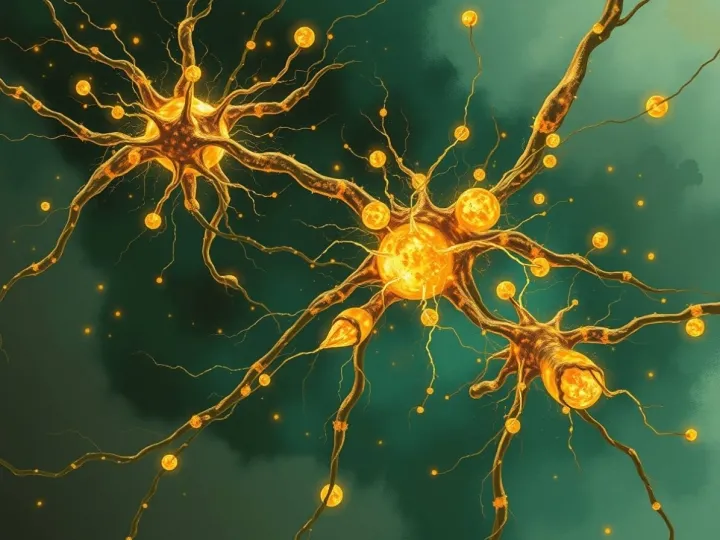
For decades, scientists have known that Parkinson's disease is marked by the death of dopamine-producing neurons in the substantia nigra (SNc). What remained unclear was whether changes in neural activity itself could drive that death. Now, researchers have developed a mouse model showing that simply pushing dopamine neurons into chronic overdrive is enough to start the degenerative process.

The team used a chemogenetic approach - a designer receptor (DREADD) that makes neurons more excitable when triggered. By keeping dopamine neurons hyperactive over weeks, they observed hallmark features of Parkinson's: disrupted movement patterns, rising calcium levels inside neurons, and selective vulnerability of SNc axons compared to those in the nearby ventral tegmental area (VTA).

Why does this matter?

  • A new Parkinson's model. Instead of relying on toxins to kill neurons, this model recreates axon-first degeneration over a realistic timeframe. That makes it more useful for testing treatments.
  • A mechanism of vulnerability. The results support the idea that SNc neurons die partly because of their enormous energy demands and reliance on calcium pumping. Chronic hyperactivity pushes them over the edge.
  • Bridging to humans. Transcriptomic changes in the hyperactivated mouse neurons matched gene expression patterns seen in early Parkinson's patient tissue.

Could this change treatment?

If too much activity drives degeneration, therapies may need to focus not only on replacing lost dopamine but on regulating neuronal activity itself. That could help explain why interventions like deep brain stimulation (which alters activity patterns) or even nicotine (which dampens dopamine neuron firing) show protective effects.

The study also raises new questions: Should future Parkinson's therapies aim to quiet overactive neurons before they burn out? And could calcium channel modulators or other activity-regulating drugs offer protection where dopamine replacement cannot?

While more work is needed, the findings provide compelling evidence that in Parkinson's disease, it may not only be what neurons lack - but how hard they are forced to work - that seals their fate.


References

Katerina RademacherZak DoricDominik HaddadAphroditi MamaligasSzu-Chi LiaoRose CreedKohei KanoZac Chatterton (2025). Chronic hyperactivation of midbrain dopamine neurons causes preferential dopamine neuron degeneration. [eLife] https://doi.org/10.7554/eLife.98775.3...

Why Parkinsons Drugs Can Trigger Compulsive Behavior: A New Striatal Circuit Model

Why Parkinson's Drugs Can Trigger Compulsive Behavior: A New Striatal Circuit Model

A new study from UCSF pinpoints the brain circuitry behind a troubling side effect of Parkinson's treatment. Dopamine agonist drugs, prescribed to ease motor symptoms, can in some patients trigger compulsive gambling, shopping, or risky behaviors. The research shows that the culprit lies in how these drugs rewire firing patterns in the striatum, driving impulsive decision-making.

Why the Brain Turns Its Own Minerals into Memories
Oct 8, 2025 Cognitive Science

Why the Brain Turns Its Own Minerals into Memories

In rare individuals, the brain builds its own fossils. Calcium crystals bloom across the basal ganglia and cortex, leaving a quiet constellation of stone within thought itself. Once called "Fahr's disease," primary brain calcification is more than a neurological curiosity - it is the story of the brain's internal geology, a slow translation of energy into matter. A new study from the German Fahr-NET register, published in Brain Communications, has uncovered the biological fingerprints of this transformation, showing that beneath every calcified region lies the signature of glial activation, neuronal wear, and a cellular decision to harden what cannot heal.

Why Our Brains Crave Risk When Reward Feels Near
Oct 8, 2025 Cognitive Science

Why Our Brains Crave Risk When Reward Feels Near

Every gamble begins in the same place - a pulse of anticipation that briefly suspends logic. Researchers in Japan have now traced that moment to a specific cluster of neurons: the orexin system, deep in the hypothalamus. When these neurons activate, the brain shifts its strategy - leaning toward risk, hunger, and reward. In new experiments published in PNAS Nexus, scientists found that stimulating orexin neurons in rats made them choose riskier options, while blocking orexin made them cautious. This discovery doesn't just explain gambling - it illuminates the biology of desire itself.

Energy and Memory: How Brain Glycogen Balances Neurotransmission and Protein Design
Oct 18, 2025 Neuroscience & Health

Energy and Memory: How Brain Glycogen Balances Neurotransmission and Protein Design

Long considered just an emergency energy reserve, brain glycogen is now emerging as a silent regulator of cognition. New research published in Brain (Trentini et al., 2025) reveals that glycogen doesn't simply feed neurons - it also separates two vital systems: neurotransmission and protein glycosylation. By providing glucosamine, brain glycogen prevents the depletion of glutamine - an amino acid crucial for recycling glutamate and GABA, the brain's main excitatory and inhibitory transmitters. This hidden balancing act may explain why disorders affecting glycogen metabolism often trigger seizures and cognitive decline: when energy storage and molecular design overlap, the brain's delicate chemistry begins to short-circuit.

The Hidden Symptom of Parkinsons: How Apathy Changes the Brain
Sep 15, 2025 Cognitive Science

The Hidden Symptom of Parkinson's: How Apathy Changes the Brain

Apathy is often overlooked in Parkinson's disease, yet it can transform daily life more profoundly than tremors or stiffness. A new study following hundreds of patients reveals that apathy progression is tied to both gray matter atrophy and white matter damage, especially in the brain's motivation circuits. Beyond the scans, these findings help explain why loved ones sometimes withdraw, lose interest, or seem unlike themselves. Apathy is not laziness - it is a measurable, biological shift that challenges how we understand illness, personality, and even the human approach to life's final stages.