Approach - avoidance conflict (AAC) is one of the most fundamental mechanisms in human decision-making. It emerges whenever we face a choice that promises both pleasure and risk - when the drive to approach something desirable collides with the instinct to avoid harm. From gambling to career moves, this internal tug-of-war shapes the texture of everyday life.
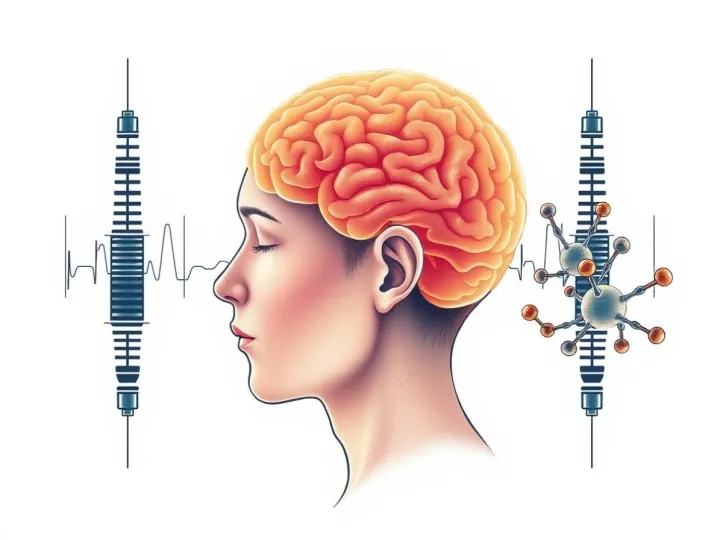
In their open-access paper Beyond Uniformity: Individual Sensitivities to Reward and Punishment Shape Midfrontal-Theta Responses to Approach - Avoidance Conflict, Shubham Pandey and Roman Osinsky of Osnabrück University examined how such conflicts unfold inside the brain. Published in Social Cognitive and Affective Neuroscience, the study used electroencephalography (EEG) to record oscillations in the midfrontal cortex - a region central to monitoring conflict and allocating cognitive control. The researchers wanted to know whether everyone experiences this control process in the same way, or whether each brain follows its own rhythm of self-regulation.
Participants performed a decision-making task that combined potential rewards and punishments with varying probabilities (0.25, 0.50, 0.75, 1.00). Each round presented two bars - green for reward, red for punishment - and participants decided whether to accept or reject the offer. Accepting could bring monetary gain, but also the chance of hearing an unpleasant noise. EEG sensors captured the brain's rhythmic responses during these split-second judgments.
Traditional studies define "high" and "low" conflict conditions uniformly for all subjects. Pandey and Osinsky challenged that assumption by building personalized conflict maps for each participant. They used three behavioral indicators - reaction time, reward-rejection rate, and a composite Behavioral Conflict Index (BCI) - to locate the trials that truly felt conflicting for each individual. The result: no two people shared the same pattern. One participant's maximal stress point was another's easy decision.
Analyzing EEG data through this individualized lens, the researchers found that midfrontal-theta (4 - 8 Hz) power surged during each person's high-conflict moments. These oscillations, lasting roughly one second after each cue, signaled the brain's internal effort to reconcile opposing drives. When the data were averaged across participants using uniform definitions, the effect vanished. Conflict, it turned out, cannot be standardized - it must be personalized.
The differences extended beyond behavior. Computational modeling revealed that participants weighted reward and punishment probabilities differently, reflecting distinct motivational profiles. Some leaned toward gain-seeking, others toward risk-avoidance. Moreover, those who scored higher on the Behavioral Inhibition System (BIS) scale - a measure of sensitivity to threat - showed stronger theta responses, suggesting their brains engaged more control effort when stakes felt uncertain.
These results reframe midfrontal-theta not as a generic alarm for "difficulty," but as a self-tuning feedback signal that adjusts to individual priorities. It oscillates most strongly when a person's internal motivations pull in opposite directions, dynamically balancing the brain's reward and avoidance systems. Pandey and Osinsky's approach demonstrates that cognitive control is not uniform but deeply personalized - an adaptive rhythm shaped by temperament, learning, and context.
The implications are wide-ranging. In clinical psychology, disorders such as anxiety or addiction often reflect distortions in how individuals evaluate reward versus punishment. Mapping each person's theta signature could help identify whether their control systems overreact (hyper-inhibition) or underreact (impulsivity). In artificial intelligence and behavioral economics, understanding these personalized feedback loops could inspire more adaptive algorithms that, like the brain, regulate behavior through flexible oscillation rather than fixed thresholds.
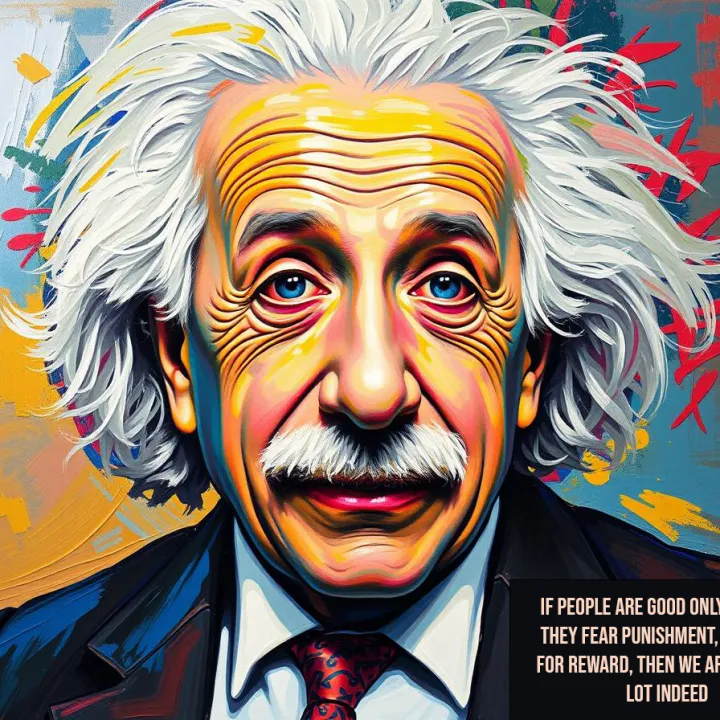
As Albert Einstein once warned, "If people are good only because they fear punishment, and hope for reward, then we are a sorry lot indeed." His observation captures the deeper human tension this study exposes: our behavior often oscillates between external incentives and internal integrity. Pandey and Osinsky's findings suggest that this tension is not merely philosophical - it is measurable in the brain. The same midfrontal-theta waves that balance reward and punishment also mirror the moral calibration between fear, desire, and choice.
From the perspective of Seven Reflections' Dimensional Systems Architecture (DSA), the study vividly demonstrates how self-regulation operates along the L/T axis - the interaction between L, representing the structural organization of cognition, and T, representing its temporal adaptation. Approach - avoidance conflict occurs at the crossing of L1, where layered motivational structures interact, and T-1, the domain of rapid regulatory adjustment. Midfrontal-theta oscillations manifest precisely at this intersection. They function as rhythmic feedback, balancing expansion along the L-axis - the drive toward reward and exploration - with contraction along the T-axis - the temporal containment that protects from harm.
Each person's unique theta pattern reveals their internal equilibrium along these axes. A consciousness dominated by structural expansion (high-L) pursues opportunity and novelty but risks instability; one dominated by temporal contraction (strong T-control) prioritizes safety but limits growth. Theta activity emerges as the synchronization mechanism between these polarities, restoring harmony when expansion and protection drift out of alignment. In DSA terms, the brain's rhythmic bursts are evidence of a continuous structural-temporal calibration - consciousness maintaining internal order in the face of uncertainty.
By demonstrating that conflict monitoring is individually tuned, Pandey and Osinsky provide empirical evidence for a central DSA principle: that cognition evolves not through uniform processing but through adaptive resonance between structural identity and temporal flow. Every oscillation of midfrontal-theta becomes a miniature negotiation between the will to expand and the need to preserve coherence. This rhythmic intelligence - neither purely emotional nor purely rational - embodies the field logic of living systems, where stability is sustained through movement rather than stillness.
Ultimately, the study offers a subtle reminder: the mind's balance between risk and restraint is not fixed by genetics or circumstance - it is learned, tuned, and retrained with every decision we make. Inside each fleeting pulse of theta rhythm, the brain rehearses its oldest lesson: how to move forward without losing equilibrium. In that oscillation lies the essence of adaptive intelligence - the structural-temporal dance of consciousness itself.