Why lifestyle matters in dementia
Alzheimer's disease is defined by the buildup of amyloid plaques and brain atrophy, but not everyone with these changes declines at the same pace. Some individuals perform surprisingly well, maintaining memory and function despite clear pathology. Scientists call this phenomenon cognitive resilience or cognitive reserve.
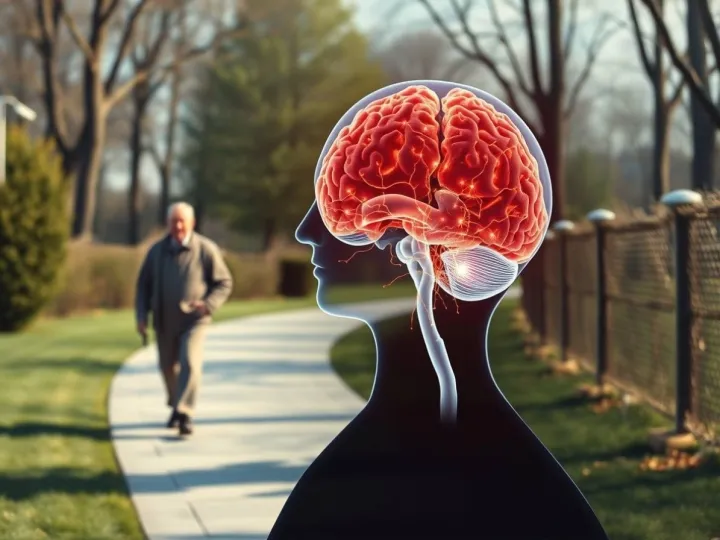
The idea is simple but powerful: lifestyle factors such as education, mentally stimulating activities, and physical exercise help build a "reserve" of neural connections. This reserve allows the brain to keep working, even in the presence of damage.
Until now, however, the clinical evidence for this idea has often been limited to small studies. The new research stands out because it examined more than 4,000 patients in a real-world memory clinic setting, making it one of the largest and most detailed investigations to date.
Inside the study: 4,000 memory-clinic patients
Researchers from Amsterdam University Medical Centers analyzed data from 4,033 individuals in the Amsterdam Dementia Cohort. All participants had completed questionnaires about their cognitive activity (past, lifetime, current) and physical activity (current).
The team looked at activity levels across different diagnostic groups:
- Alzheimer's and non-Alzheimer's dementias
- Mild cognitive impairment (MCI)
- Subjective cognitive decline (SCD)
They then focused on a subset of 904 individuals on the Alzheimer's continuum - those who were amyloid-positive with SCD, MCI, or Alzheimer's dementia. Using MRI scans, cognitive testing, and survival data, the researchers investigated how mental and physical activity related to cognition, brain atrophy, disease progression, and mortality.
The results: activity builds resilience
The findings showed clear associations:
- Lower activity in advanced groups: People with dementia reported less engagement in cognitive and physical activity compared to those with milder or subjective decline.
- Better cognition at baseline: Within the Alzheimer's continuum, at the same level of temporoparietal brain atrophy, those with higher past cognitive activity or higher current physical activity performed better on memory and executive function tests.
- Reduced mortality risk: Current cognitive activity was linked to a 18% lower risk of death, and current physical activity with a 12% lower risk. Past cognitive activity also reduced mortality risk in patients with mild cognitive impairment.
- No slowing of decline: Interestingly, while activity was associated with better baseline performance, it did not significantly change the rate of cognitive decline or clinical progression once the disease was underway.
What this means
The results suggest that lifetime mental activity builds a reserve that cushions the brain against the impact of Alzheimer's pathology. In other words, those who engaged in more cognitive stimulation earlier in life entered old age with more resilience.
Current activity - both cognitive and physical - was linked to better functioning and survival, but likely reflects both cause and effect. More active individuals may simply be healthier to begin with, yet the consistent associations with resilience and mortality suggest a genuine protective role.
Alzheimer's vs. dementia
The study highlights why using "Alzheimer's" rather than "dementia" matters. Cognitive and physical activity were specifically tied to resilience within the Alzheimer's continuum - people with amyloid-positive scans. This provides stronger evidence that lifestyle can buffer against the most common cause of dementia, not just aging in general.
Practical implications
The findings reinforce public health advice:
- Early and mid-life matter most. Cognitive activity across decades - learning, complex work, reading, cultural engagement - lays the groundwork for resilience.
- Stay active in later life. Even if the effect is partly due to reverse causality, physical activity and ongoing mental engagement are linked to better outcomes and longer survival.
- Reserve doesn't stop decline. Once Alzheimer's pathology progresses, activity doesn't slow the underlying disease. But it can make the difference between functioning independently versus becoming impaired earlier.
Seven Reflections view
This research tells a story beyond statistics: the mind we build in youth and middle age becomes our shield in old age. The reserve we accumulate by reading, solving problems, staying curious, and moving our bodies does not prevent Alzheimer's from arriving. But it changes the experience of the disease, giving us more time, more function, and more dignity.
In an era searching for cures, the lesson is humble but profound. Every crossword puzzle, every walk, every book read is not trivial - it is part of building a cognitive architecture strong enough to weather the storms of aging.
Alzheimer's may erode the brain, but lifestyle shapes how much of the self is preserved along the way.