What Is "Reserve"?
In neuroscience, reserve is the brain's hidden safety net - a physiological capacity that helps people maintain function despite stress, injury, or neurological change. Some call it "neural savings," others "cognitive backup." It's what explains why one person with Alzheimer's-like brain scans might still remember names and walk confidently, while another declines quickly.
Until now, reserve was estimated indirectly - through rough proxies like years of education, or brain size on MRI. But these are static measures. They don't show how a living brain performs under pressure.
The Multi-Modal Stress Test
The new study, led by Tal Kozlovski and colleagues, introduces an elegant solution: a graded motor-cognitive stress test that measures how the brain responds to escalating challenges in real time.
Participants - including healthy adults and people diagnosed with Parkinson's, Alzheimer's, Lewy-body dementia, and mild cognitive impairment - walked on a treadmill while navigating virtual-reality obstacles and completing mental tasks. Wearable sensors tracked balance, reaction, and rhythm. The team's semi-supervised machine-learning algorithm then transformed this complex data into a single number - the Motor-Cognitive Reserve (MCR) Index.
The index captured how smoothly the brain integrates thinking and movement - two systems long studied separately, but deeply intertwined in real life.
Quantifying Grace Under Pressure
The results were striking. As the virtual challenges grew harder, both motor and cognitive performance declined - but the pattern of decline revealed each individual's hidden reserve. Those with strong MCR scores could sustain performance longer, adapt faster, and coordinate thought and movement with elegant precision.
The model proved highly accurate, distinguishing healthy participants from those with neurological conditions with an AUC of 0.89 - outperforming all existing proxies like education or total brain volume.
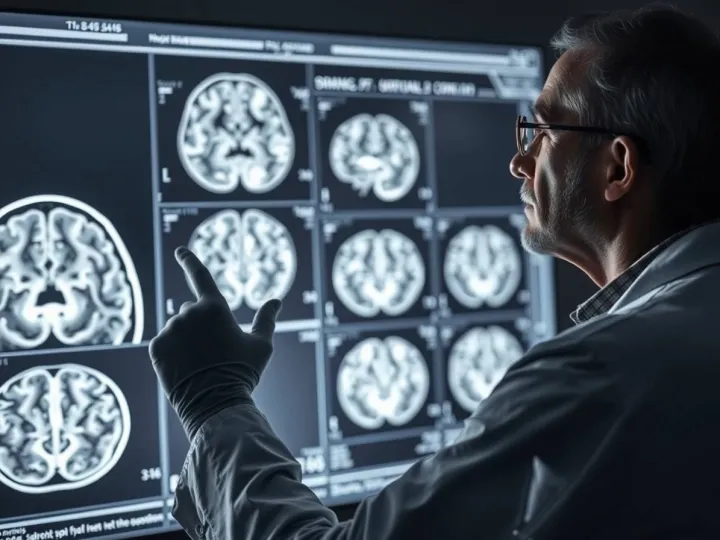
The MCR Index also correlated strongly with grey-matter and white-matter volume, especially in brain regions responsible for planning, rhythm, and decision-making - the caudate nucleus and inferior-frontal gyrus.
In plain terms: the test doesn't just measure how much brain tissue you have, but how intelligently you use it.
Resilience as an Active Process
This marks a shift in how science defines resilience. Rather than treating it as luck or personality, Kozlovski's team shows that resilience is a measurable system behavior - the brain's dynamic ability to maintain harmony under pressure.
It also dissolves the false divide between motor and cognitive health. Walking, balancing, speaking, and planning are not separate functions - they are a continuous dance of body and mind. The test captures that dance with remarkable precision.
Why This Matters
For clinicians, the implications are profound. The MCR Index could become an early-warning system for neurodegenerative disease - identifying subtle deficits before symptoms appear. For researchers, it opens a new frontier for testing therapies that aim not just to repair the brain, but to build reserve.
And for the rest of us, it offers a new lens on human strength: resilience is not only emotional - it is neurological.
The Inner Meaning of Reserve
In Seven Reflections language, reserve is the hidden field of coherence - the structural harmony that keeps consciousness balanced even when systems are stressed. It's the reason why two people with the same external challenges may react so differently: one collapses under strain, another finds rhythm.
This "multi-modal stress test" is, in essence, a scientific mirror of the inner test of life - how thought, motion, and meaning align when the system is under load. The stronger the integration between body, mind, and field, the greater the reserve - and the deeper the resilience.