Apathy Progression in Parkinson's Disease: What the New Study Shows
Apathy is one of the most common non-motor symptoms of Parkinson's disease (PD), and yet it remains one of the least understood. Unlike depression or fatigue, apathy does not necessarily involve sadness or tiredness; it is marked instead by a lack of motivation, interest, or initiative. For patients and their families, it can be devastating, eroding quality of life and reshaping relationships even more than tremors or rigidity.
A new study, drawing on longitudinal data from the Parkinson's Progression Markers Initiative (PPMI), sought to uncover the brain mechanisms that drive this troubling symptom. Researchers analyzed MRI scans and clinical records from 445 patients with newly diagnosed Parkinson's disease, tracking how apathy evolved over time and what neural changes predicted its progression.
Methods and Measures
The team used deformation-based morphometry (DBM) to quantify patterns of gray matter atrophy across the brain, alongside the BISON algorithm to identify white matter hyperintensities (WMHs) - small lesions often linked to vascular damage. Apathy was measured using the Movement Disorder Society's Unified Parkinson's Disease Rating Scale (MDS-UPDRS Part I).
Both cross-sectional and longitudinal analyses were performed. Cross-sectional models tested whether baseline atrophy or WMH burden correlated with apathy severity at the start of the study, while longitudinal models examined whether early brain changes predicted worsening apathy over the years that followed.
Key Findings
The cross-sectional results were modest, with no regional associations surviving multiple-comparison corrections. But the longitudinal analyses revealed a more telling picture:
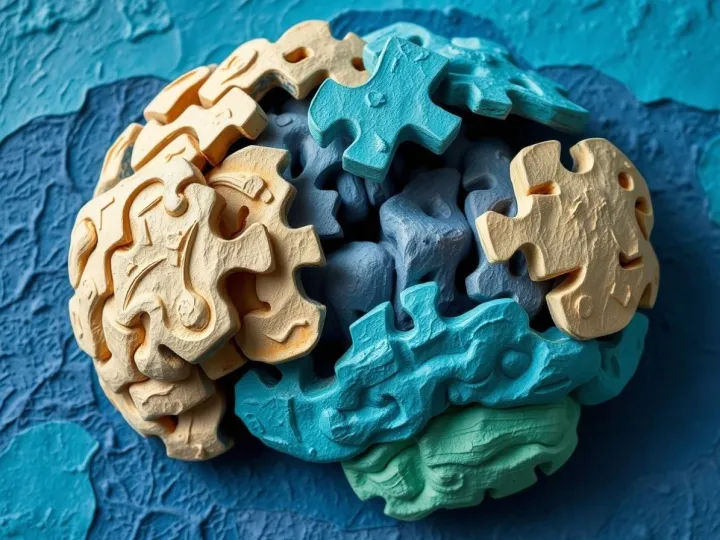
- Gray matter atrophy in specific regions - including the nucleus accumbens, putamen, insula, precuneus, cerebellum, hippocampus, thalamus, and orbitofrontal cortex - was strongly linked to future apathy progression.
- White matter damage, particularly in the frontal lobes, was also associated with worsening apathy.
- Taken together, these findings suggest that apathy in Parkinson's is not caused by one isolated deficit but emerges from the interaction of structural brain loss and disrupted neural connectivity.
The authors highlight that apathy is not a static trait but a symptom that worsens as the disease progresses, reflecting ongoing neural decline.
Implications
For clinicians, the results underline the importance of monitoring apathy as not just a psychological concern but a marker of underlying brain pathology. For patients and caregivers, it helps validate the experience of watching personality change - not as laziness or withdrawal but as the outcome of measurable, biological changes in the brain.
The findings also have safety and caregiving implications. Apathy can reduce adherence to medication, willingness to exercise, or motivation to follow treatment plans, which in turn accelerates health decline. Recognizing it early could lead to more supportive interventions and family education.
Reflections
Apathy is not just a medical symptom - it is a rhythm shift in the human story. Where once the self reached outward, seeking relation and shaping worlds, apathy pulls the current inward. In clinical terms, it signals changes in the brain: atrophy of gray matter, white matter damage, neural circuits slowing down. But on the threshold of life, it can also feel symbolic, as if the mind is conserving its last sparks of attention for what lies closest. Families often describe this as unsettling, even alien - watching a once-vivid person narrow their gaze to the most immediate concerns. Yet apathy may be less about absence than about transition, a recalibration of energy, a quieting before departure. Between neuroscience and lived experience, apathy asks us to consider not only what is failing but also what is shifting, and why the mind sometimes chooses silence over engagement.
Beyond Parkinson's: A Human Dimension
Although this research focuses on Parkinson's, apathy is a broader phenomenon. It is common in Alzheimer's disease, vascular dementia, and even in the general aging population. Sometimes it emerges months before death, when the outward drive of a person suddenly folds in on itself. Families often interpret this as a change in character, but neuroscience suggests it may be tied to late-stage structural changes in the brain, or even a terminal decline process that prioritizes inner focus.
Seen this way, apathy bridges two dimensions: the clinical, where it reflects degeneration of neural systems, and the symbolic, where it represents a turning inward, a withdrawal from the outer world at life's end. In both frames, it is a transformation rather than an absence - a different rhythm of being that unsettles those who remain.
Reading Apathy Beyond the Clinic
The new PPMI study shows that apathy in Parkinson's disease is deeply rooted in brain structure: gray matter atrophy and white matter lesions together predict its progression. Yet apathy also transcends the clinical lens. It is both a symptom and a sign, pointing to biological loss but also to the shifting ways humans approach relation, meaning, and the end of life. Understanding it requires not just measuring what is impaired but listening to what silence might signify.