As people age, changes in the brain often show up long before memory lapses or slowed problem-solving are noticed. A new open-access study published in Brain Communications highlights how higher-resolution brain imaging is helping scientists trace these subtle changes more precisely - and reveals why the brain's "wiring" may hold the key to understanding cognitive decline.
White Matter and the Aging Brain
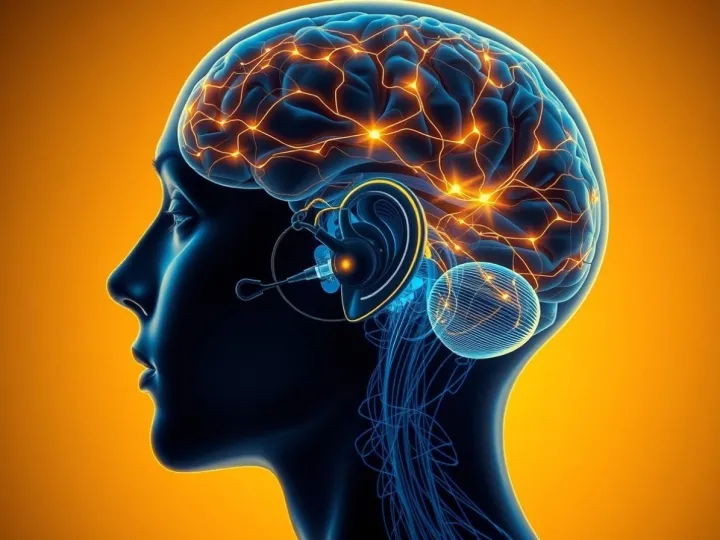
The brain is more than gray matter. Beneath the surface lies an intricate web of white matter pathways that connect distant regions, allowing us to think quickly, recall memories, and shift attention with ease. These pathways act like high-speed highways of neural communication.
Research over the last decade has shown that white matter integrity declines with age. This "wear and tear" disrupts the efficiency of communication across the brain, contributing to declines in fluid cognition - the ability to solve novel problems, adapt to new information, and think flexibly.
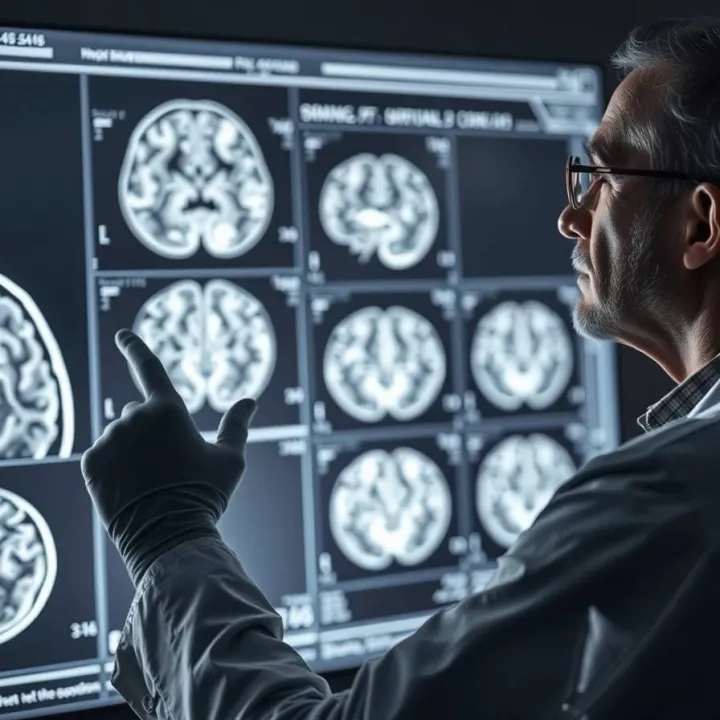
Until recently, however, most studies have relied on standard-resolution diffusion-weighted imaging (DWI) to measure white matter health. While useful, these scans have limitations, sometimes missing the fine-grained changes that occur as people grow older.
The New Study
In this new cross-sectional study, researchers Jenna L. Merenstein, Allen W. Song, and David J. Madden recruited 140 healthy adults ranging in age from 18 to 88. Participants completed tests of memory, executive function, and perceptual-motor speed, while undergoing both standard-resolution and high-resolution DWI, as well as resting-state functional MRI.
The goal was to compare how well each type of scan captured age-related structural changes in white matter - and whether these changes could help explain shifts in functional connectivity (how brain regions "talk" to each other during rest) and performance on fluid cognition tasks.
Sharper Images, Sharper Insights
The results showed that high-resolution imaging revealed more pronounced age-related declines in structural connectivity than standard scans, particularly in networks linked to sensorimotor function, attention, and subcortical processing.
In other words, the higher the resolution of the scan, the clearer the evidence that aging disrupts the wiring of the brain.
Crucially, the study also found that these structural changes mediated age-related differences in functional connectivity, especially within the default mode network - a hub for memory, self-reflection, and daydreaming. This mediation effect was strongest when using high-resolution data.
When it came to cognition, declines in fluid intelligence were explained by within-network connectivity measured only by high-resolution DWI. Between-network changes, however, were captured by both standard and high-resolution scans.
Why It Matters
These findings have important implications for both neuroscience and clinical practice. They suggest that higher-resolution brain imaging provides a more sensitive measure of how aging affects white matter - and how those changes ripple outward to influence brain function and cognitive performance.
In practical terms, this could mean earlier and more precise detection of age-related decline, potentially opening the door to better interventions. While the study focused on healthy adults, the methods may also help researchers investigate conditions such as Alzheimer's disease, Parkinson's disease, or age-related vascular decline.
The study reinforces the idea that white matter health is central to understanding aging. Just as a city depends on well-maintained highways to keep traffic moving smoothly, the brain relies on intact white matter tracts to support efficient thought. When those highways begin to break down, even subtle detours or bottlenecks can slow cognitive performance.
A Broader View of Cognitive Aging
This work also points to the importance of studying structural and functional connectivity together. Structural changes provide the scaffolding, while functional connectivity shows how brain networks operate in real time. By combining the two, scientists can gain a more comprehensive picture of why some people maintain sharp thinking into their 80s while others experience early decline.
The authors emphasize that their findings are not just about detecting decline, but also about highlighting the resilience of brain networks. Even with measurable white matter degradation, many adults maintain high levels of fluid cognition - suggesting that compensatory mechanisms and lifestyle factors may play protective roles.
Looking Ahead
The takeaway is clear: when it comes to understanding the aging brain, resolution matters. High-resolution imaging can capture the subtleties of white matter changes that standard scans may miss, offering sharper insights into how structure, function, and cognition are intertwined.
As brain imaging technology continues to advance, studies like this pave the way for more precise science - and potentially, more targeted approaches to supporting cognitive health across the lifespan.