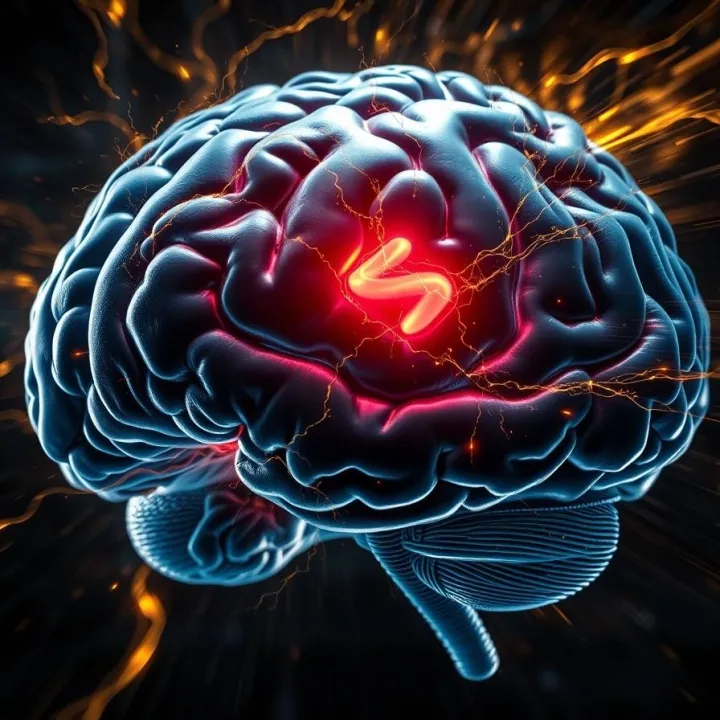
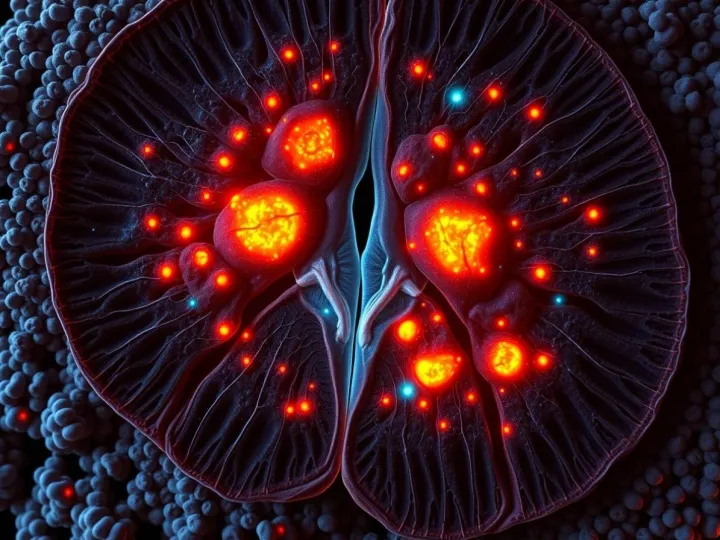
Human brain in deep indigo and silver, with glowing neural networks and a vivid red tumor, illuminated by swirling golden and silver light

Neuro-Oncology 2025: Signals from the Frontier of Brain Cancer Research

From neuron - tumor crosstalk to cutting-edge viral therapies, the October 2025 Neuro-Oncology supplement reveals a field racing ahead. Yet beneath the data lies a deeper question: how do we save lives without losing the self? This digest explores the science, the care, and the meaning of new frontiers in brain cancer research.

October 3, 2025 in Neuroscience & Health


The October supplement of Neuro-Oncology landed like a thunderclap: dozens of studies, each a window into the complex, fragile terrain where tumors and brains meet. Taken together, the abstracts reveal not just incremental findings but a shifting landscape - one where biology, technology, and human experience are colliding in real time.

At Seven Reflections, we see this kind of data surge as more than "new results." It is a snapshot of how science itself thinks: scattered threads that, when woven together, outline where the field is headed. And in this collection, four powerful themes stand out.


1. Biology and Neuron - Tumor Crosstalk

Brain tumors are not foreign invaders simply squatting in neural territory. They communicate with neurons, hijack signaling, and reshape circuits. Several studies in this issue show how gliomas modulate neurotransmission, while others track tumor-driven alterations in synaptic connectivity. The message is clear: gliomas live inside networks, not in isolation.

That matters because the future of treatment may not rest solely on "killing" the tumor, but on disrupting the dialogue between cancer cells and neurons. If tumors can be starved of their conversational footholds, their growth could be slowed. This is a shift in worldview - from tumor as static object to tumor as participant in the brain's ongoing electrical story.


2. Therapies at the Edge of Imagination

From CAR-engineered NK cells aimed at EGFR-positive glioblastoma, to oncolytic viruses ferried through monocytes across the blood-brain barrier, therapies are becoming as creative as they are precise. Early-phase results suggest these strategies are safe, and in some cases remarkably effective.

But such breakthroughs also carry echoes of fragility: viral therapies that trigger immune cascades, radiation protocols that extend survival yet chip away at cognition, and immunotherapies that spark fatigue and disturbances of thought. Here lies the paradox - progress that is bought at the price of altered consciousness. The field is learning that curing cancer cannot mean destroying the very personhood it inhabits.


3. The Patient Experience - More Than Biology

Perhaps the most poignant strand in this supplement is not molecular at all. It is human. Studies explore how patients with gliomas receive bad news, how families carry the burden of cognitive decline, how art and music interventions shift mood during radiotherapy, and how psychological support must be woven directly into neuro-oncology clinics.

These insights remind us: treating the tumor without treating the mind leaves the work unfinished. Patients report that their sense of self - memory, language, emotional resilience - is as threatened as their lifespan. The research community is beginning to hear this more clearly, designing survivorship programs, comfort-based radiotherapy environments, and hybrid mental-health models tailored to brain cancer.


4. Diagnostics and the Precision Horizon

If therapy is the spear, diagnostics are the lens. This issue is full of them: circuit-based white matter biomarkers to stratify glioblastoma survival; ferumoxytol-enhanced MRI to flag inflammation; whole-genome sequencing entering NHS care as a standard for glioma; 3D growth rate models for pituitary adenomas; and transcriptomic maps that track malignant transformation.

The common thread is scale. Imaging is no longer a picture, but a dataset. Sequencing is no longer experimental, but routine. And tumor biology is being measured not just at the cell, but at the circuit. These tools push medicine closer to what might be called "precision neuro-oncology" - not just predicting survival, but mapping the invisible architecture of brain - tumor interaction in real time.


The Deeper Current (SR Take)

To read through five dense pages of Neuro-Oncology abstracts is to feel the pulse of a system under pressure. The science is racing ahead, but the questions remain hauntingly human. What good is survival if the mind erodes? How do we classify success when the price is a permanent fog, or when patients themselves say their needs are existential, not just medical?

At Seven Reflections, we see in this supplement a lesson about connectivity. Brain tumors exploit connections - between neurons, immune cells, even family systems. Therapies try to re-engineer those connections, cutting some, rewiring others. And patients live in the tension between biology and biography, where the connections that matter most may be those that link them to memory, language, or loved ones.

The thicket of studies can feel overwhelming, but they converge on a single truth: the future of neuro-oncology will not be defined by a solitary breakthrough, but by a web of insights - scientific, clinical, and human - woven together. Like the brain itself, it is the pattern of connections, not the individual signals, that gives rise to meaning.

References

X Wang, at al. (2025). P12.37.B PROGNOSTIC MODEL STUDY BASED ON EVOLUTIONARY TRAJECTORY ANALYSIS OF GLIOMA-ASSOCIATED MACROPHAGES REVEALS THE IMMUNOTHERAPEUTIC MECHANISMS OF HISTONE DEACETYLASE INHIBITORS IN GLIOMA. [Neuro-Oncology] https://doi.org/10.1093/neuonc/noaf193.4...
K M Hotchkiss, at al. (2025). KS01.6.A INTRATUMORAL IL-12/ANTI-PD-1 ONCOLYTIC HSV1 (MVR-C5252) IS SAFE AND IMMUNOACTIVE IN RECURRENT HIGH-GRADE GLIOMA: PRELIMINARY PHASE 1 RESULTS FROM A MULTICENTER MULTISTAGE CLINICAL TRIAL. [Neuro-Oncology] https://doi.org/10.1093/neuonc/noaf193.0...
V Wykes, at al. (2025). P05.27.A INTRODUCTION OF WHOLE GENOME SEQUENCING AS NHS STANDARD OF CARE FOR GLIOMA PATIENTS IN TWO NEUROSURGICAL CENTRES: WEST MIDLANDS. [Neuro-Oncology] https://doi.org/10.1093/neuonc/noaf193.2...
R Paterra, at al (2025). P14.12.B CLINICAL AND MOLECULAR SPECTRUM OF NON NF2 RELATED SCHWANNOMATOSIS. [Neuro-Oncology] https://doi.org/10.1093/neuonc/noaf193.4...
L M Webb, at al. (2025). P14.13.B TREATMENT OF RECURRENT ADAMANTINOMATOUS CRANIOPHARYNGIOMA WITH A COMBINATION OF BEVACIZUMAB AND TOCILIZUMAB: A CASE SERIES. [Neuro-Oncology] https://doi.org/10.1093/neuonc/noaf193.4...
Z Abbas, at al. (2025). JS07.6.A AGE-APPROPRIATE MODELS OF PAEDIATRIC BRAIN TUMOURS REVEAL THE INFLUENCE OF AGE ON TUMOUR-IMMUNE INTERACTION. [Neuro-Oncology] https://doi.org/10.1093/neuonc/noaf193.0...
C Baek, at al. (2025). P14.29.B QUANTITATIVE BRAIN MRI ANALYSIS IN NEURODEGENERATIVE LANGERHANS CELL HISTIOCYTOSIS. [Neuro-Oncology] https://doi.org/10.1093/neuonc/noaf193.4...
A Simonetti, at al. (2025). P17.27.A AFFECTIVE TEMPERAMENT MODULATES BEHAVIOR IN PRIMARY BRAIN TUMORS: PRELIMINARY FINDINGS. [Neuro-Oncology] https://doi.org/10.1093/neuonc/noaf193.5...
k. lv, at al. (2025). OS11.7.A IMAGING OF MOLECULAR BOUNDARIES IN GLIOBLASTOMAUSING PROGRAMMABLE PH-RESPONSIVE DNA NANOPROBES. [Neuro-Oncology] https://doi.org/10.1093/neuonc/noaf193.0...
J Marco-Sanz, at al. (2025). P06.11.A CONVENTIONAL TYPE 1 DENDRITIC CELLS ENHANCE NEUROPROTECTION IN PEDIATRIC BRAIN TUMOR RADIOTHERAPY. [Neuro-Oncology] https://doi.org/10.1093/neuonc/noaf193.2...
J Falco-Roget, at al. (2025). OS02.4.A A CIRCUIT-BASED WHITE MATTER DENSITY NEUROIMAGING BIOMARKER TO STRATIFY, PREDICT, AND INTERPRET SURVIVAL RATES IN HUMAN GLIOBLASTOMA. [Neuro-Oncology] https://doi.org/10.1093/neuonc/noaf193.0...
L Ermini, at al. (2025). OS03.5.A FUNCTIONAL PRECISION MEDICINE SCREENING REVEALS PERSONALIZED THERAPEUTIC VULNERABILITIES IN HIGH-GRADE GLIOMA SUBTYPES. [Neuro-Oncology] https://doi.org/10.1093/neuonc/noaf193.0...
E Pali, at al. (2025). P12.39.B TUMOR-DRIVEN NEURONAL ALTERATIONS IN GLIOMA PATIENTS: EX VIVO ELECTROPHYSIOLOGICAL INSIGHTS FROM TUMORAL AND PERITUMORAL BRAIN CORTEX. [Neuro-Oncology] https://doi.org/10.1093/neuonc/noaf193.4...

A First Look at How Our Genes Act Differently Across the Body
Nov 17, 2025 Methods & Measurement

A First Look at How Our Genes Act Differently Across the Body

A new open-access resource called the Spatial GWAS Atlas offers the first large-scale look at how genetic traits appear in precise locations within real tissues. Published in Nucleic Acids Research, the project integrates thousands of genome-wide association studies with spatial transcriptomics, allowing scientists to see not only which genes influence a trait, but where in the body those effects emerge. The atlas spans multiple tissues, species, and platforms, giving researchers a powerful way to study complex diseases in their native biological context.

The Elephants of Time: What the Worlds Largest Brains Can Teach Us About Aging
Oct 5, 2025 Cognitive Science

The Elephants of Time: What the World's Largest Brains Can Teach Us About Aging

Elephants live as if time itself has slowed to match their memory. They mourn their dead, lead their families across generations, and rarely fall to the illnesses that ravage shorter-lived mammals. Now, scientists are discovering that elephants' biological resilience mirrors their emotional depth. With twenty copies of the TP53 "guardian" gene - far more than any other mammal - they repair cellular damage before it accumulates. But their real secret may lie in how they live: within bonds of memory, care, and shared knowledge. Together, these clues suggest that aging may be less about decay than about the architecture of connection.

When Viruses Breach the Brains Defenses: How Infections Disrupt the Blood-Brain Barrier
Sep 30, 2025 Neuroscience & Health

When Viruses Breach the Brain's Defenses: How Infections Disrupt the Blood-Brain Barrier

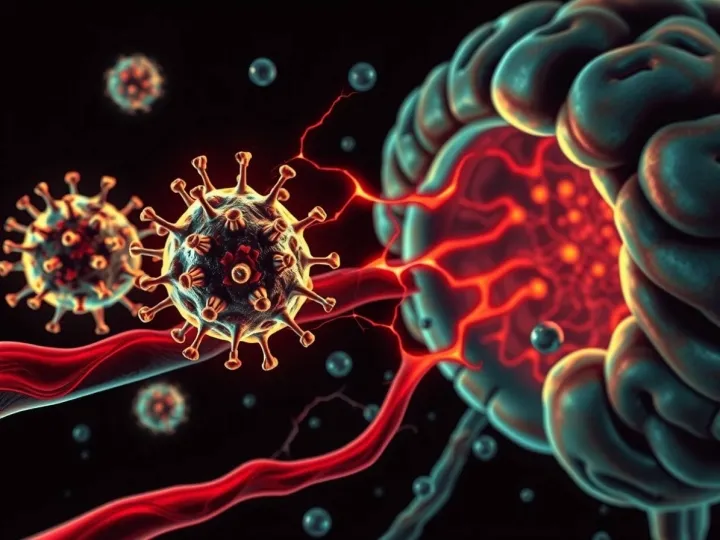
The brain has its own fortress - the blood-brain barrier - designed to keep invaders out. Yet many viruses, from herpes and varicella to HIV and SARS-CoV-2, find ways to weaken or slip past this protective shield. Once breached, the results can be devastating: encephalitis, stroke, and long-term cognitive decline. A new review reveals how viruses exploit molecular weaknesses in the brain's defenses, how immune responses sometimes do more harm than good, and what therapies could one day help seal the barrier back up.

Genos: The Foundation Model That Learns the Human Genome
Oct 22, 2025 Cognitive Science

Genos: The Foundation Model That Learns the Human Genome

For decades, scientists have dreamed of an intelligent system that could read the human genome as fluidly as we read language. Now that dream is taking form. Genos, a new human-centric genomic foundation model developed in China and published in GigaScience (2025), represents a turning point in biological AI. Designed to understand sequences a million base pairs long, Genos learns the "grammar of life" directly from human DNA - not across species, but within us. With its advanced Mixture-of-Experts architecture and precision at the single-nucleotide level, it opens the door to a new era of precision medicine, where genetic understanding becomes both scalable and personal.

Why the Brain Turns Its Own Minerals into Memories
Oct 8, 2025 Cognitive Science

Why the Brain Turns Its Own Minerals into Memories

In rare individuals, the brain builds its own fossils. Calcium crystals bloom across the basal ganglia and cortex, leaving a quiet constellation of stone within thought itself. Once called "Fahr's disease," primary brain calcification is more than a neurological curiosity - it is the story of the brain's internal geology, a slow translation of energy into matter. A new study from the German Fahr-NET register, published in Brain Communications, has uncovered the biological fingerprints of this transformation, showing that beneath every calcified region lies the signature of glial activation, neuronal wear, and a cellular decision to harden what cannot heal.