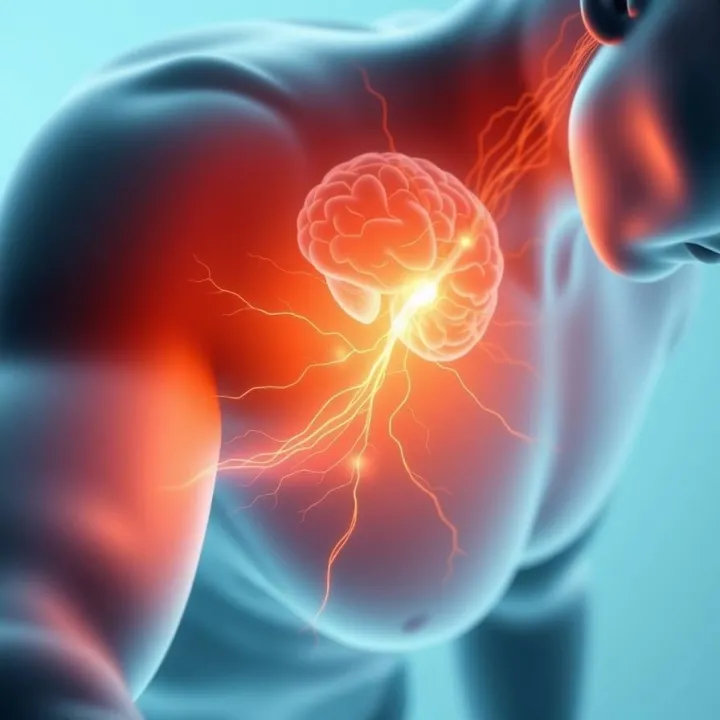
Chronic pain is one of medicine's most complex and persistent mysteries - a condition where the brain itself becomes part of the disease. A new coordinate-based meta-analysis published in Brain Communications now provides the clearest view yet of how this transformation occurs.
Researchers analyzed resting-state fMRI data from 61 studies encompassing over 2,000 patients with different forms of chronic pain, including headaches, musculoskeletal disorders, and visceral conditions. Using activation likelihood estimation (ALE) and connectome mapping, the team developed a unified model of the "pain dynome" - the dynamic, network-level structure through which pain is represented and sustained across the cortex.
The study revealed widespread disruptions across three of the brain's most crucial systems: the Default Mode Network (DMN), the Central Executive Network (CEN), and the Salience Network (SN). Together, these form the foundation of the brain's cognitive balance - integrating internal awareness, emotional evaluation, and external attention. In chronic pain, this equilibrium collapses.
The Default Mode Network, often described as the brain's resting or self-referential system, showed the most consistent dysfunction, accounting for nearly 80% of altered regions. Areas within the medial and superior frontal gyri, anterior and posterior cingulate cortices, and precuneus exhibited decreased activity compared to healthy individuals. The results suggest that chronic pain is not merely an ongoing sensory input but a reorganization of self-referential processing. In healthy conditions, the DMN operates as the background of consciousness, stabilizing the sense of self when attention turns inward. In chronic pain, this network remains underactive even during rest, implying that the mind's default mode has been replaced by an internalized pain state.
The Central Executive Network, responsible for reasoning and decision-making, also showed reduced coherence. Normally, the DMN and CEN alternate activity - when one activates, the other quiets. In pain patients, that reciprocal rhythm weakens, leaving the brain caught between internal focus and external demand. The Salience Network, which prioritizes emotional or bodily signals, displayed abnormal connectivity especially in cases of chronic visceral pain, linking emotional distress and pain sensitivity. Together, the three systems demonstrate how chronic pain reshapes the brain's allocation of cognitive and emotional resources, blurring the boundaries between sensation, attention, and identity.
When the data were stratified by pain type, distinct network "dynomes" appeared. Chronic musculoskeletal pain and chronic headache showed overlapping dysfunction within the posterior cingulate areas of the DMN and CEN, while chronic visceral pain displayed unique involvement of the anterior cingulate and insula - regions deeply tied to emotional interoception and body-state awareness. This difference may explain why visceral pain conditions are more frequently associated with anxiety, depression, and emotional dysregulation.
Beyond classification, the dynome model carries major therapeutic implications. Understanding chronic pain as a network disorder could guide the next generation of treatments, from neuromodulation and neurofeedback to precision-targeted interventions that retrain rather than suppress brain circuits. The researchers note that chronic pain syndromes overlap anatomically with many psychiatric and affective disorders, underscoring their shared architecture of disrupted self-regulation.
From the perspective of Seven Reflections' Dimensional Systems Architecture (DSA) framework, the study's results illustrate what happens when recursive feedback loops that sustain conscious coherence become unstable. In DSA terms, the Default Mode Network can be understood as the Self-Referential Field - the internal space through which perception organizes continuity. The Salience and Executive networks act as Exchange Fields, managing attention and response. Chronic pain arises when these recursive fields lose synchrony, amplifying internal noise until it is mistaken for an external signal.
Rather than a malfunction in one brain region, chronic pain represents a breakdown in the system's ability to filter its own feedback. Awareness loops inward and stabilizes around the signal of pain, effectively constructing a self-reinforcing perceptual echo. In this sense, pain becomes not only a symptom but a structural state - a form of consciousness trapped within its own recursive cycle.
Restoring coherence, whether through neuromodulation, meditation, or cognitive reframing, may therefore depend on re-teaching the system to distinguish between what is self-generated and what is externally real. The DSA framework interprets this as a restoration of field integrity - a return to balanced recursion where feedback once again becomes information, not identity.