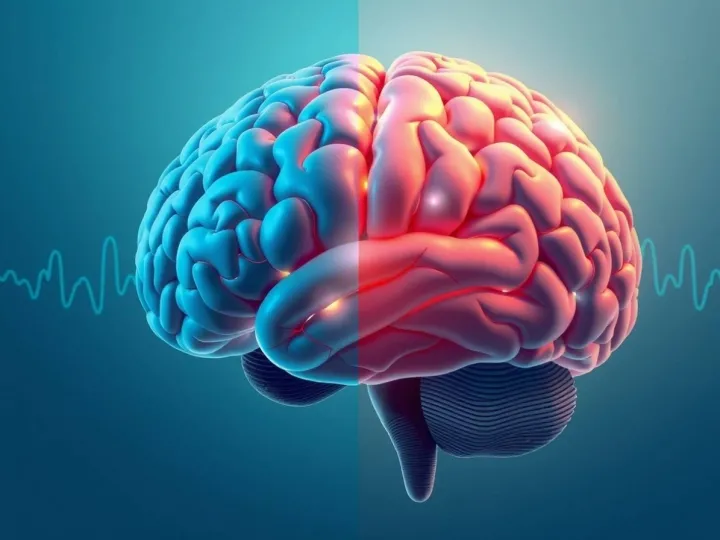
Reinforcement-learning models have long provided a powerful framework for explaining how humans and other agents update beliefs, make decisions, and adapt to changing environments. These models typically revolve around prediction errors - the difference between expected and actual outcomes - treated largely in terms of objective rewards. Yet human learning rarely unfolds on a purely reward-based axis. Emotional expectations, affective experiences, and the subjective "feel" of an outcome are deeply woven into real-world cognition. A new commentary in Trends in Cognitive Sciences argues that these emotional ingredients may substantially refine the models we rely on to explain human behavior.
The article discusses recent findings by Heffner and colleagues, who used EEG to explore whether emotional prediction errors can be empirically distinguished from reward prediction errors. Their study builds on a growing body of behavioral evidence suggesting that how an outcome feels compared to how it was expected to feel - the emotional prediction error - can shape behavior above and beyond reward signals alone. While reward itself is usually experienced subjectively, reinforcement-learning models operationalize it as an external outcome. Emotion, in contrast, captures valence and arousal states reported by participants, potentially revealing computational processes that would otherwise remain hidden.
Using high-temporal-resolution EEG, Heffner et al. identified separate neural correlates for reward and emotion prediction errors. This marks an important advance, given that earlier fMRI work successfully separated the two at the level of multivariate pattern analysis but failed to detect decodable neural signatures unique to emotion prediction errors. By measuring both processes at the same moment in time - rather than across different stages of processing - the EEG data provide clearer evidence that emotional learning signals are not merely noisy or derivative versions of reward computations. Instead, they form distinct pathways that may influence decision-making in unique ways.
The commentary highlights how self-reported valence captures elements of the learning process that reinforcement-learning models typically neglect. While many theories of emotion emphasize that affect is multidimensional, the study found that valence prediction errors - not arousal prediction errors - explained unique variance in both EEG signals and social behavior. This supports a growing consensus that arousal, while historically embedded in emotion theory, may play a more limited role in shaping learning than previously assumed. The differential contribution of valence underscores the importance of focusing not only on outcome magnitude but also on the emotional meaning attached to it.
Another notable finding concerns the neural dynamics linking emotional prediction errors to social behavior. The study observed that valence prediction errors correlated with the P3b component, a well-established event-related potential associated with updating beliefs and attentional resource allocation. This suggests that violations of emotional expectations may modulate decision processes by shaping how strongly individuals attend to - or cognitively update from - new information. Importantly, the effect was driven by unsigned prediction errors, meaning that it was the size of the emotional mismatch, not its positive or negative direction, that carried predictive power. This aligns with appraisal theories of emotion, which emphasize that relevance or significance can matter as much as hedonic valence.
The article notes that emotion theories provide useful conceptual tools for interpreting these findings. Each major theoretical tradition - core affect theory, appraisal theory, basic emotion theory, motivational theories, and interoceptive models - emphasizes different "ingredients" of emotion, such as bodily arousal, cognitive evaluation, expression, or action tendencies. These components may all leave signatures in self-reported emotion and EEG measures. The observation that valence prediction errors drive P3b responses raises the possibility that appraisal-related mechanisms, such as perceived relevance or goal alignment, might be embedded within what participants report as simple shifts in affect.
The commentary also raises an important conceptual issue: emotional outcomes may inherently blend prediction and experience. When participants report how an event feels, their answer may already reflect both anticipatory processes and their violation. In contrast, reward outcomes and reward prediction errors can often be isolated more cleanly. This complicates direct comparisons between emotional and reward prediction errors and suggests that emotional outcomes themselves might be a more powerful driver of behavior than the prediction errors derived from them. Indeed, in the joint behavioral models reported by Heffner et al., emotion outcomes alone predicted behavior, whereas reward prediction errors and reward outcomes jointly explained choices. This asymmetry hints at deeper computational differences between how the brain handles affective information and external reward information.
The implications for future research are substantial. If emotional signals shape learning through mechanisms that do not map neatly onto standard reinforcement-learning parameters, then new models may be required - ones that incorporate multiple components of emotional dynamics. Such models would need to capture the nuances of emotion construction, appraisal, and subjective valuation, as well as their interactions with classical reward-based processes. Integrating these elements could significantly improve predictions of social behavior, moral decision-making, and real-world adaptation.
Viewed through Seven Reflections' Dimensional Systems Architecture (DSA), these findings illustrate how emotional prediction errors operate as field-level signals rather than simple scalar values. In DSA, cognition arises from interactions across layered fields of expectation, relevance, and meaning. Emotional mismatches - especially unsigned valence shifts - can be understood as disturbances within the system's coherence field, prompting reorganization of attention and behavioral priorities. Unlike reward prediction errors, which represent deviations along a single functional axis, emotion prediction errors reflect multidimensional structural tension within the cognitive field itself. This makes them uniquely suited for explaining social-learning processes, where meaning, expectation, and self-referential appraisal converge.
The study's contribution is not simply the identification of distinct neural signatures but an invitation to imagine learning as a richer, more layered process - one in which emotional expectation and cognitive prediction are deeply intertwined. As reinforcement-learning models continue to evolve, incorporating emotion may not merely refine them but fundamentally expand their structural vocabulary.