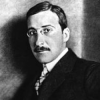
Blake grew up in a modest household as the son of a hosier and showed an early gift for drawing. His parents sent him to drawing school, and at fourteen he was apprenticed to the engraver James Basire for seven years. That training gave him a lifelong command of line and printmaking, while his reading of the Bible, John Milton, and Emanuel Swedenborg fed the symbolic language that shaped his art. In 1779 he entered the Royal Academy schools, but he found their emphasis on oil painting uncongenial and preferred the linear clarity of engraving and the art of the past.
In 1782 Blake married Catherine Boucher, who became a practical collaborator in his printing workshop and remained with him until his death. He supported himself mainly through engraving and illustration while producing original designs. Around 1788 he developed relief etching, a method that let him write and draw directly on copper plates and print books in his own hand. The process produced the illuminated books, among them Songs of Innocence (1789) and its darker companion Songs of Experience (1794).
During the 1790s Blake issued a series of prophetic books, including The Marriage of Heaven and Hell, America a Prophecy, Europe a Prophecy, and The Book of Urizen. These works attacked tyranny, orthodox religion, and mechanical philosophy while celebrating energy, imagination, and liberty. He also engraved designs for Edward Young's Night Thoughts and illustrated Milton's Paradise Lost, finding commissions but little public fame.
At the invitation of the poet William Hayley, Blake moved to Felpham, Sussex, in 1800. The arrangement brought commissions and a change of scene, but it also produced friction; in 1803 Blake was accused of sedition after a confrontation with a soldier, tried at Chichester, and acquitted. He returned to London and began the long illuminated epics Milton and Jerusalem, which retold Christian myth through his personal mythology of figures such as Los and Albion.
Blake's later years brought some of his most admired visual work: engravings for the Book of Job and watercolors illustrating Dante's Divine Comedy, left unfinished at his death. He depended on a small circle of patrons and admirers, notably the painter John Linnell. Blake died in 1827 with his poetry and art still little known beyond that circle. In the decades that followed, admirers including Dante Gabriel Rossetti and Algernon Charles Swinburne helped establish his reputation, and his poem beginning "And did those feet in ancient time" later became the hymn "Jerusalem," set to music by Hubert Parry in 1916.
William Blake was born on November 28, 1757. In Cardology (Destiny Cards), November 28, 1757 corresponds to the Five of Hearts, making the Five of Hearts his Birth Card.
In numerology, the name adds another layer to the birth-date profile. The letters of a person’s name are used to explore inner motivation, personality, expression, and the qualities they bring into relationships and everyday life. Explore how his original name William Blake influences his life and personality.
William Blake Quotes

“It is easier to forgive an enemy than to forgive a friend.” - William Blake
Famous Sagittarius People
Discover famous Sagittarius people, from actors and musicians to writers, athletes, and historical figures. Explore their birthdays and biographies, and see who shares the Sagittarius zodiac sign.