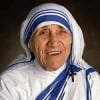
The youngest child of an Albanian family in Skopje, then part of the Ottoman Empire, Anjezë Gonxhe Bojaxhiu grew up in a devout Catholic household. Her father, a merchant, died when she was a child, and her mother raised the family on modest means while encouraging charitable work. Drawn to religious life early, she left home as a teenager and joined the Sisters of Loreto in Ireland, where she learned English and prepared for missionary service. She took the name Teresa after Thérèse of Lisieux. In 1929 she traveled to India and, after a novitiate in Darjeeling, made her first vows in 1931 and spent nearly two decades teaching at a girls' school in Calcutta.
A 1946 train journey from Calcutta to Darjeeling reshaped her life. During it she felt a call to leave the convent and serve the poorest people directly. After receiving permission, she left the Loreto order in 1948 and began working in the Calcutta slums. In 1950 she founded the Missionaries of Charity, a new religious community whose members took the usual vows of poverty, chastity, and obedience along with a special promise of free service to the poorest of the poor.
The order's work expanded quickly. In 1952 she opened Nirmal Hriday, a home where the dying could be cared for with dignity, in a building near the Kalighat temple. The Missionaries of Charity went on to run orphanages, clinics, and centers for people with leprosy, and by the 1960s it had established houses outside India, beginning in Venezuela. The organization eventually spread to dozens of countries.
International attention arrived with a 1969 documentary, Something Beautiful for God, by Malcolm Muggeridge, which introduced her work to Western audiences. She received the 1979 Nobel Peace Prize and was also honored with India's Bharat Ratna, the U.S. Presidential Medal of Freedom, and the Congressional Gold Medal. She met with world leaders and popes, but her approach also drew criticism from commentators who questioned the medical standards of some facilities and the handling of the large sums donated to her order.
Her health declined in later years, and she stepped back from day-to-day leadership of the order in 1990. She died in Calcutta in 1997 at age 87, and India honored her with a state funeral. The Catholic Church beatified her in 2003 and canonized her as Saint Teresa of Calcutta in 2016. Her order continues its work around the world.
Mother Teresa was born on August 26, 1910 in Skopje, Karpos, Macedonia. In Cardology (Destiny Cards), August 26, 1910 corresponds to the King of Hearts, making the King of Hearts her Birth Card.
In numerology, the name adds another layer to the birth-date profile. The letters of a person’s name are used to explore inner motivation, personality, expression, and the qualities they bring into relationships and everyday life. Explore how her original name Anjezë Gonxhe Bojaxhiu influences her life and personality.
Mother Teresa Quotes
Famous Virgo People
Discover famous Virgo people, from actors and musicians to writers, athletes, and historical figures. Explore their birthdays and biographies, and see who shares the Virgo zodiac sign.




View All Famous Virgo People →
King of Hearts Famous People

View All Famous King of Hearts People →