The eldest son of Thomas Arnold, the reforming headmaster of Rugby School, Matthew Arnold grew up in an intellectual household shaped by serious religious and educational debate. He attended Rugby and then Balliol College, Oxford, where he won the Newdigate Prize for poetry in 1843. After graduating, he was elected a fellow of Oriel College and later worked as private secretary to Lord Lansdowne before taking a post as a school inspector in 1851, the same year he married Frances Lucy Wightman. The job took him across England and gave him firsthand knowledge of the classroom conditions and social problems that later informed his criticism.
Arnold's literary reputation rests on poetry that often measures Victorian confidence against doubt and loss. The Strayed Reveller, and Other Poems appeared in 1849, followed by Empedocles on Etna in 1852 and a selection of Poems in 1853. His classical training and elegiac temper are evident in "Thyrsis," an elegy for his friend Arthur Hugh Clough, while "The Scholar-Gipsy" turns an old Oxford legend into a meditation on modern doubt. "Dover Beach," published in New Poems in 1867, became his best-known poem for its image of a retreating "Sea of Faith." From 1857 to 1867 he was Professor of Poetry at Oxford, using his lectures to press for a criticism that sought the best that had been thought and said.
In prose, Arnold became a leading critic of Victorian society. Essays in Criticism (1865) established him as a major prose writer, and Culture and Anarchy (1869) attacked complacency, introduced his categories of "Philistines" and "Barbarians," and argued that culture - "sweetness and light" - could elevate public life. He also wrote about religion in Literature and Dogma (1873) and about education in several influential reports and essays. His work as an inspector continued until 1886, two years before his death. His ideas about disinterested criticism and the social value of culture shaped later debates over literary education and public criticism.
Matthew Arnold was born on December 24, 1822 in London, England, United Kingdom. In Cardology (Destiny Cards), December 24, 1822 corresponds to the Seven of Hearts, making the Seven of Hearts his Birth Card.
In numerology, the name adds another layer to the birth-date profile. The letters of a person’s name are used to explore inner motivation, personality, expression, and the qualities they bring into relationships and everyday life. Explore how his original name Matthew Arnold influences his life and personality.
Matthew Arnold Quotes
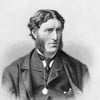
Famous Capricorn People
Discover famous Capricorn people, from actors and musicians to writers, athletes, and historical figures. Explore their birthdays and biographies, and see who shares the Capricorn zodiac sign.





View All Famous Capricorn People →
Famous People born on December 24



View All Famous People Born on December 24 →
Seven of Hearts Famous People

View All Famous Seven of Hearts People →